
Isola Santa: Lake, Trails and History
Accommodation in Isola Santa
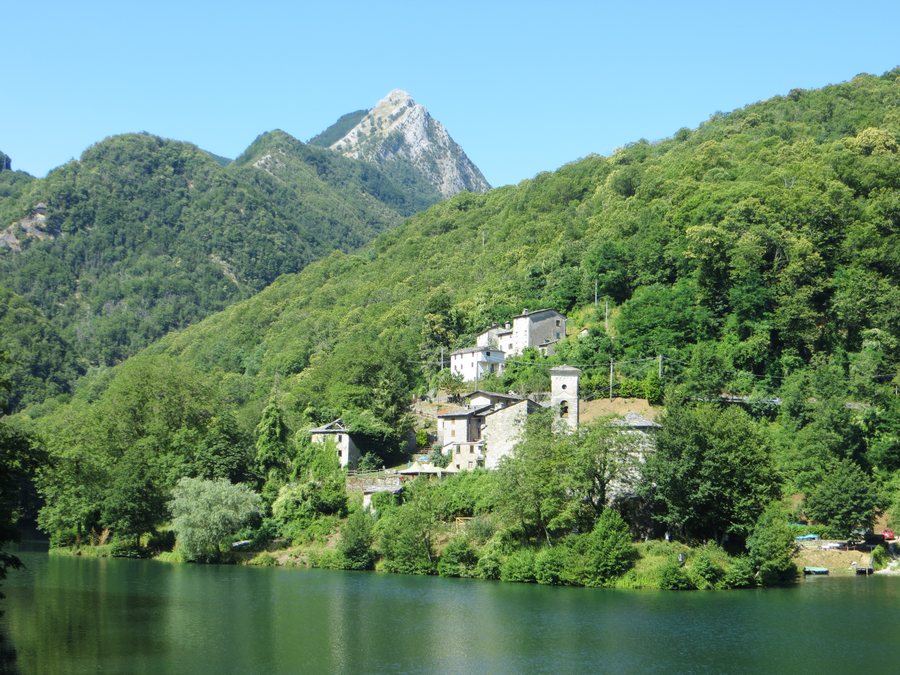
Isola Santa combines the lake of Isola Santa with historical traces and various options for a stay: an easy walking path along the right bank of the lake, hiking trails to Monte Corchia, and a specially regulated fishing area. If you are looking for accommodation in Isola Santa, you can decide whether to focus your stay primarily on the landscape, hiking, or the cultural history of the place. You can arrive either by car or by a combination of train and bus.
Key facts
- The lake of Isola Santa is an artificial lake created by damming the Torrente Turrite Secca at a dam built in 1948–49.
- An easy walking path runs along the right bank of the lake to Pollaccia.
- Hiking trails lead from Isola Santa to Monte Corchia.
- Isola Santa is accessible by car; a short walk follows.
- By public transport, you can reach the area by train to Castelnuovo Garfagnana and then by bus E36.
- The church of San Jacopo is mentioned in 1260 and is now deconsecrated.
- Archaeological excavations established the existence of an open-air settlement from the late phase of the Paleolithic and the subsequent Mesolithic.
- The village has a specially regulated fishing area for catching brown trout.
Landscape and Historical Traces by the Lake
The lake of Isola Santa is not a naturally formed body of water. Its creation is connected with the damming of the Torrente Turrite Secca and a dam built in 1948–49. The hydroelectric dam constructed in 1949 flooded the remains of the old Mulino Mosceta. This history helps place today’s landscape in context and also makes the lake a place where the natural environment and human engineering interventions are closely intertwined.
Pollaccia is also a notable point of reference: it is one of the important springs in the Apuan Alps area. The path along the right bank of the lake leads to Pollaccia, offering a concrete opportunity to combine your stay with a walk. For a different kind of day, hiking trails lead from Isola Santa to Monte Corchia. This means that an easy walk along the shore and hiking trails to Monte Corchia are available as different options when planning your day.
Combining Culture and Activities Effectively
Those interested in the history of the place can explore the context of the church of San Jacopo. It is mentioned as early as 1260 and is now deconsecrated. As a historical point of reference, it complements the landscape and local history of Isola Santa.
The archaeological excavations in Isola Santa provide another historical layer. They established the existence of an open-air settlement that was inhabited during the late phase of the Paleolithic and subsequently in the Mesolithic. Together with the history of the dam and the flooded remains of the Mulino Mosceta, this creates broad cultural and historical interest. The regulated fishing area adds an activity on the water to this range of options. It is used by numerous anglers to catch brown trout.
Getting There and Choosing Accommodation
If you travel by car, you should bear in mind that a short walk follows. If you prefer public transport, the route is described as a train journey to Castelnuovo Garfagnana followed by bus E36 to Isola Santa.
When looking for accommodation in Isola Santa, you can therefore use your preferred type of trip as a starting point: the lake, the paths to Pollaccia and Monte Corchia, the fishing area, and the historical traces offer various starting points for planning. What matters is which of these options you actually want to use during your stay.
FAQ
How was the lake of Isola Santa formed?
The lake of Isola Santa is an artificial lake. It was created by damming the Torrente Turrite Secca at a dam built in 1948–49.
What trails are there from Isola Santa?
An easy walking path runs along the right bank of the lake to Pollaccia. There are also hiking trails from Isola Santa to Monte Corchia.
How can Isola Santa be reached by car?
Isola Santa is accessible by car. A short walk follows.
How do you get there by public transport?
You travel by train to Castelnuovo Garfagnana and then take bus E36 to Isola Santa.
What is known about the church of San Jacopo?
The church of San Jacopo is mentioned in 1260 and is now deconsecrated.
Can you fish in Isola Santa?
Isola Santa has a specially regulated fishing area used by numerous anglers to catch brown trout.
What archaeological significance does Isola Santa have?
Archaeological excavations established the existence there of an open-air settlement from the late phase of the Paleolithic and the subsequent Mesolithic.
To the broader travel overview: Careggine.

