
Crodo: History, Museums and Hiking Route
Accommodation in Crodo
Geology and Early Traces
The Centro Visita di Crodo features a geological educational laboratory equipped for multimedia projections.
At Arvenolo, archaeological finds from the Iron Age and Roman period at the Muro del Diavolo bear witness to the site's ancient use. The panoramic location of the Muro del Diavolo suggests that it served as a place of worship. The Muro del Diavolo is a dry-stone wall made of large stone blocks and is approximately 6.30 metres high. Its front initially measures 20 metres, then steps back by 13 metres and continues for a further 40 metres.
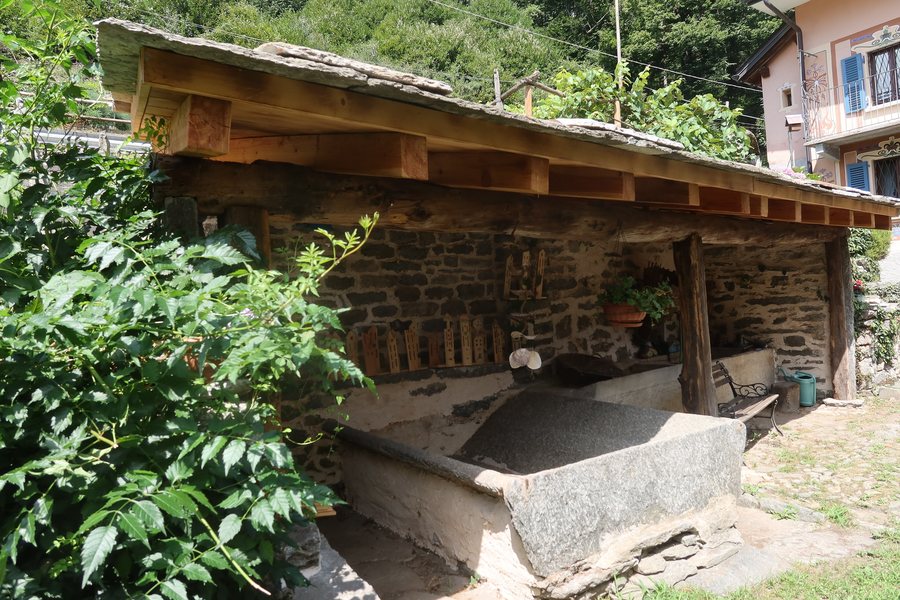
At the Muro del Diavolo, archaeological traces from two periods stand alongside a dry-stone wall with a stepped front profile. For those interested in culture, the approximately 6.30-metre height, the first section of the front, the setback and the continuation over 40 metres provide specific points of reference when examining the structure.
Chapels, Churches and Hydropower
On the way from Cravegna to Salera, you can admire the chapels of the Stations of the Cross at the Sacro Monte di Salera. The chapels of the Sacro Monte di Salera were built between 1731 and 1738 and fully decorated.
The Chiesa Parrocchiale di S. Stefano was originally Romanesque; its bell tower is dated to 1026. Another historical highlight is the Ettore Conti hydropower plant in Verampio. It was built between 1912 and 1914 by Ettore Conti from Verampio.
Their construction dates are far apart: the bell tower is dated to 1026, while the hydropower plant was built between 1912 and 1914.
Mineral Water and Minerals
The Museo Nazionale delle Acque Minerali Carlo Brazzorotto displays five complete historic mineral-water bottling plants, more than 15,000 full bottles and over 80,000 labels.
The mineralogical section of the Museo Mineralogico Ossolano Roggiani-Bianchi displays scientifically significant minerals from the Verbano-Cusio-Ossola basin.
The two museums focus on different areas, ranging from historic mineral-water bottling to minerals from the Verbano-Cusio-Ossola basin. For those interested in nature and geology, Crodo offers two distinct subject areas with its geological educational laboratory and mineralogical section.
Hiking Route and Summits in the Surrounding Area
The Arvenolo hiking route begins at the car park of the Latteria Antigoriana in Crodo and leads back to Crodo.
The car park of the Latteria Antigoriana is a fixed starting point for planning the hike. Crodo likewise remains the fixed reference point for the return journey.
The Colmine summit is located in the immediate vicinity of Crodo. The Colmine di Crevola summit is located in the immediate vicinity of Crodo. The Pizzo Cortefreddo summit is located in the vicinity of Crodo. The La Pizzetta summit is located in the vicinity of Crodo.
The Parrocchia Ss. Gervasio E Protasio church is located in the vicinity of Crodo. The ruins of Gmeinalp are located in the wider regional surroundings of Crodo. The Chiesa Parrocchiale della Beata Vergine del Rosario church is likewise located in the wider regional surroundings of Crodo.
A Name from Crodo
The Crodino beverage originated in Crodo in 1965.
Further destinations: Bracchio, Gurro, Miazzina, Cannero Riviera, Cresseglio, Domodossola, Premeno, Casale Corte Cerro
To the higher-level travel overview: Verbano-Cusio-Ossola.

