
Castelveccana between history, trails and water
Accommodation in Castelveccana
Castelveccana reveals itself as a place with many different facets: Caldè is the municipality’s main lakeside village and lies below the rocky promontory of the same name. History, village culture, trails and a freely accessible beach offer different destinations for planning your days. Those looking for accommodation in Castelveccana can therefore shape their stay around cultural interests, activities by the water or short hikes.
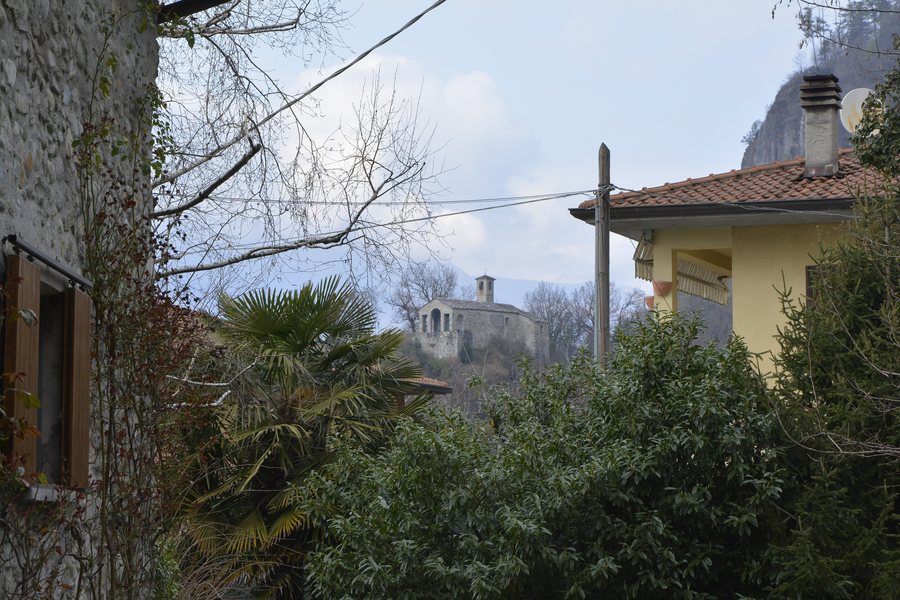 File:Chiesa di Santa Veronica - Castelveccana (1).jpg
Photo: CristianNX via Wikimedia Commons, CC BY-SA 4.0
History and sacred buildings
On the Rocca di Caldè, a lighthouse tower commemorates those who died in all wars. It was built as a monument in the 1920s. However, the history of the rocky promontory goes back further: the Rocca di Caldè was destroyed in 1513 during the conflicts between the dukes of Milan and the Swiss.
The Chiesa dei Santi Apostoli Pietro e Paolo also spans several eras. An original building dates back to the 13th century. Its present form was created through an expansion carried out between 1760 and 1780. The church also contains a carved pulpit and a main altar against the wall with gilded stucco. Both furnishings date from the mid-17th century.
Another historic destination is the Oratorio Sant'Antonio al Monte. The oratory dates back to the 11th century and stands on a viewing terrace. This location therefore combines Castelveccana’s religious history with an elevated position within the village landscape.
Sarigo: art and village history
Sarigo is an art village. Every summer, it hosts the event series “Sotto gli archi di Sarigo”. The programme includes painting and photography exhibitions as well as gatherings devoted to poetry, theatre and music. If you appreciate cultural events and smaller village settings, Sarigo forms a distinct focal point within Castelveccana.
Sarigo’s historic character also includes its covered washhouse. Inside are ceramic bas-reliefs depicting events from the village’s history. The Museo Etnografico di Castelveccana, by contrast, displays household objects and tools used by generations of farmers and craftspeople. The museum was founded in 2000.
The old working world in Parco di Caldè
The disused lime kilns in Parco di Caldè bear witness to an old craft and industrial economy. Their documented period of use extends from 1200 to the beginning of the 19th century. The lime kilns complement the religious and village attractions with an insight into Castelveccana’s former working life.
Hiking, cycling and sailing
For a short hike, the trail to the Cascata della Froda in Nasca, a hamlet of Castelveccana, starts there and takes about 30 minutes. Another path leads to the Chiesetta di Santa Veronica in just a few minutes. The different trail details help distinguish between a short detour and a hike specifically beginning in Nasca.
A cycling route leads through the hamlets of Caldè, Nasca and Sarigo to the Cascata della Froda. Along the way, it passes old washhouses, mills and waterways. In addition, the Circolo Nautico Caldè offers a FIV-recognised sailing school. The programme includes intensive five-day courses as well as weekend courses.
Beach and planning your days
Spiaggia 5 Arcate in Castelveccana is a freely accessible beach. Together with Caldè, Sarigo, the historic buildings, the lime kilns and the trails to the Cascata della Froda, it provides a selection of different destinations for your days. You can focus on local history and art, plan a hike or cycling tour, or spend time by the water. When choosing your accommodation, it is therefore particularly relevant which of Castelveccana’s different sides you wish to include in your stay.
More destinations
If you would like to choose more destinations: Monvalle, Germignaga, Pino Sulla Sponda Del Lago Maggiore, Reno, Bassano, Agra, Laveno-Mombello and Leggiuno.
For the higher-level travel overview: Varese.

