
Colledara: Nature, Churches and Historic Sites
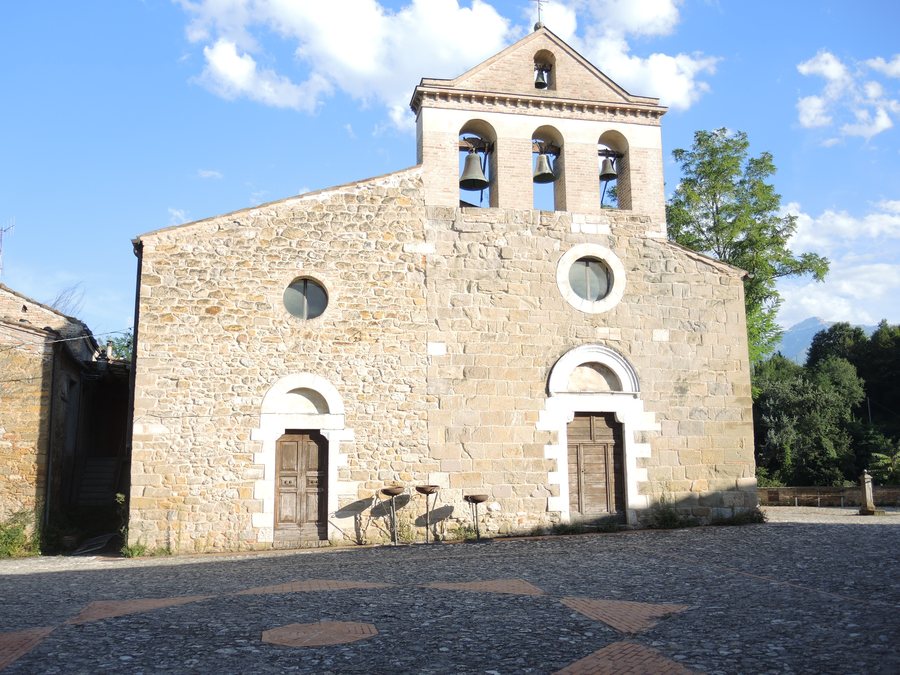 File:Colledara - Chiesa di San Michele Arcangelo 01.jpg
Photo: Pietro via Wikimedia Commons, CC BY-SA 4.0
File:Colledara - Chiesa di San Michele Arcangelo 01.jpg
Photo: Pietro via Wikimedia Commons, CC BY-SA 4.0
Colledara combines natural landscapes, historic townscapes and events to create a varied stay. When choosing accommodation in Colledara, it is therefore worth looking at the specific places and themes: Castiglione della Valle leads to medieval architectural history, the Fiumetto Nature Reserve to trails and natural history facilities, while two August events take up regional tradition and history. The individual destinations are not interchangeable sights, but offer different reasons to structure your stay.
Churches and Historic Traces
In the district of Castiglione della Valle, the Chiesa di San Michele Arcangelo stands in the center of the medieval square. The church dates from the 12th century. The remains of the old bastion and the surrounding walls are also still visible in Castiglione della Valle. In this way, sacred architectural history and traces of the former fortifications come together within a compact thematic area. Colledara is also the hometown of the writer Fedele Romani.
San Paolo offers another distinct cultural point of interest. San Paolo is open during the day and has a single nave, a Baroque wooden altar and a high altar made partly of wood and partly of plaster. The interior furnishings are therefore just as clearly defined as the opening information. Visitors who consider churches not only by their age but also by their layout and furnishings will find a distinct focus here within a tour of the town.
In Villa Petto, Santa Lucia lies among the old houses of the historic town center. Visible traces of the castle fortifications can be found in the structural elements on which the church was built. Santa Lucia also houses two Renaissance altars and a valuable holy-water font dating from 1568. The townscape of Villa Petto is arranged on two levels, separated from each other by the main square. The spatial layout and preserved architectural features make the town particularly interesting for visitors who want to trace historic structures directly in the townscape. The Chiesa di San Salvatore in Villa Petto is now a ruin, creating a markedly different accent from Santa Lucia.
The Chiesa di San Nicola in Vico was rebuilt in 1811. Its stone portal has a flat architrave, two square side windows and a round window above. The church stands on the road connecting the districts of Vico, Ornano Grande and Forca di Valle. In Collecastino, the Chiesa di San Rocco probably dates from 1755 and was extensively restored in 1881. Its portal, made entirely of brick, features small side columns and consoles as well as a curved architrave. The Chiesa di San Pietro in Bascianella was completed in 1591.
Fiumetto Nature Reserve: Trails and Natural History
The Fiumetto Nature Reserve in Colledara was established in 1990 and covers slightly more than 74 hectares along the Fiumetto stream near Castiglione della Valle. Its size and location along the stream give the natural area a clearly defined geographical structure. For planning a stay, this means that alongside churches and historic town centers, a continuous landscape area is one of Colledara’s key themes.
The nature reserve is crossed by numerous trails. These include a Botanical Trail used for guided educational visits. The visitor center contains a herbarium, a xylotheque, an insectarium, an educational pond and a thematic panel about the fauna of the Fiumetto River. A xylotheque is a collection of wood samples; together with the herbarium and insectarium, these facilities point to different approaches to natural history. The educational pond and the panel on river fauna add the observation of waterways and wildlife to this focus.
Colledara can therefore be explored not only through individual buildings, but also through different ways of discovering the area: historic details on portals and altars, visible traces of fortifications, and trails and facilities in the Fiumetto Nature Reserve. The guided use of the Botanical Trail is expressly documented as an educational visit. Accommodation or a hotel in Colledara can therefore be chosen as a base for a stay whose program you divide between local history and natural history; this does not imply specific distances or travel times.
August Events and Practical Context
In August, Colledara hosts the Sagra della porchetta. There is also a historical reenactment in August of the presumed stay of Lucrezia Borgia and Alfonso d'Aragona in Castiglione della Valle. Together with the churches and the nature reserve, this creates a theme for a stay that brings together regional food culture, cultural remembrance and landscape.
Colledara is connected to Rome, L'Aquila and Teramo via the A24 motorway. This connection is a concrete part of orientation, but it does not replace any statement about driving times, local routes or access to the individual sights. When planning your stay, you can therefore arrange the destinations according to your interests: Castiglione della Valle for its medieval square, church, fortification remains and historic August event, Villa Petto for its town structure and sacred art, other places for individual church features, and the Fiumetto Nature Reserve for trails and natural history facilities.
To compare other places in the same geographical area, you can include Civitella Del Tronto, Ornano Grande and Pietracamela.
For the broader travel overview: Teramo.
Check prices, availability and amenities for your travel dates directly on Booking.com.
View accommodations and offersAdvertisement · Affiliate link to Booking.com
