
Esztergom: Basilica, Museums and Historic Sites
Accommodation in Esztergom
Explore Esztergom through its buildings, collections and routes: the basilica sets a striking standard with its height, while museums cover topics ranging from water management to local history. To plan your trip, you can group places by interest: sacred architecture, archaeological traces or a walk on Szent Tamás Hill each offer a different perspective on the city.
Basilica and Churches
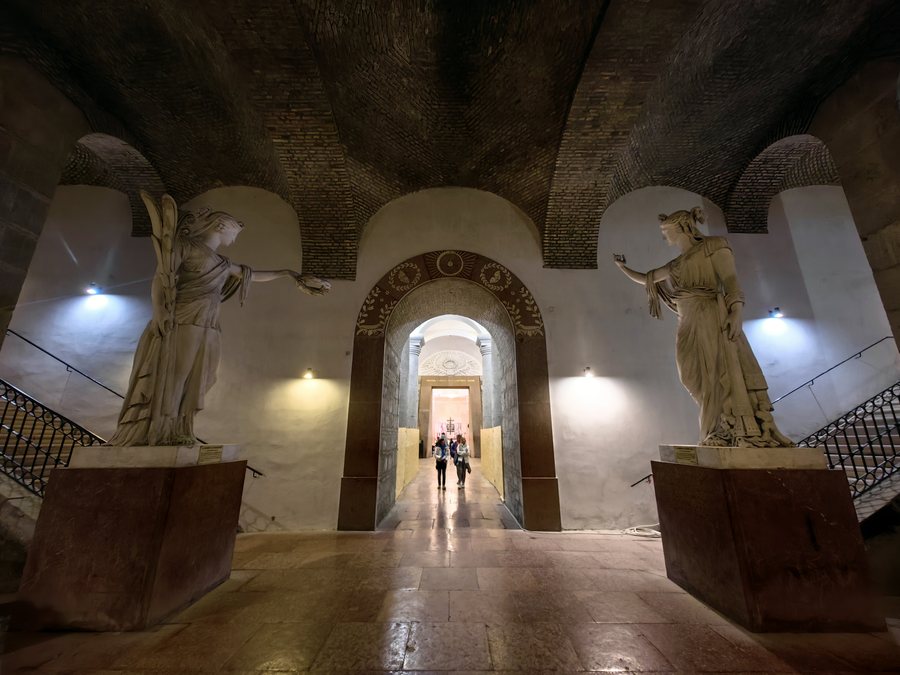
Esztergom Basilica is Hungary’s largest church building and is 100 metres high, measured from the lower level of the crypt to the finial of the dome. This precise measurement makes clear what distance the height refers to. The Panorámaterem, a series of spaces in the basilica, also serves a range of purposes: it hosts exhibitions, discussions, lectures, concerts and children’s programmes. Here, the architecture and a broad range of event formats sit side by side.
The Szent Anna Plébániatemplom, also known as the Round Church, can be recognised by its perfectly circular ground plan and the tall central dome above the nave. The Loyolai-Szent-Ignác Church in Víziváros offers a different historical connection: Bishop Mihály Althann of Vác consecrated it in 1738. These details offer two distinct ways to approach sacred buildings—the unusual ground plan of one church and the recorded consecration date of the other.
Museums and Historic Collections
At the Duna Múzeum, the permanent exhibition Vízeum explores the past and present of water management. The Balassa Bálint Museum spans a broad period: its permanent exhibition is devoted to the history of Esztergom and its surroundings, from prehistory to the 20th century. Their focus is therefore clearly different: one centres on a subject across different eras, while the other traces the history of a city and its surroundings over a long period.
The Christian Museum’s collection is housed on the second floor of the Primate’s Palace in Esztergom. At the Esztergom Castle Museum, visitors can walk across a glass floor beneath which lie 2,000-year-old archaeological layers. The Castle Museum is a branch of the Hungarian National Museum. The collection and the archaeological layers thus offer different points of interest for a visit focused on the city’s history.
A 12-metre-high sculpture by Miklós Melocco stands on the northern bastion of Castle Hill. It depicts the coronation of Saint Stephen, the first king of Hungary. Its height and subject offer two specific clues to the work: its scale and the historical scene it portrays. Another trace of the city’s history is the Einczinger-sütőház. Esztergom’s oldest known bakery operated in this house for more than 200 years.
City History on the Danube and in its Neighbourhoods
The Esztergom Mosque, also called the Özicseli Hadzsi Ibrahim Mosque, is a visible monument to Ottoman architecture on the banks of the Danube and is closely connected with the city’s history. Its architectural heritage differs from that of the churches and the subjects covered by the museums; at the same time, it is one of the historic sites named along the river. The history of crossings between Esztergom and Párkány dates back to Roman times. This historical connection complements the individual buildings with the long history of a link between the two places.
At the southern end of Erzsébet Park, by the bridgehead of Kossuth Bridge, stands a bronze bust of Queen Elisabeth of Hungary. Its precise location makes it a clearly identifiable landmark in the park. Together with the mosque on the banks of the Danube and the churches in Esztergom, it illustrates how different historical connections can be seen in different parts of the city.
A Walk on Szent Tamás Hill
On Szent Tamás Hill, a walk follows a seven-section Calvary staircase from the intersection of Batthyány Lajos utca and Basa utca to the Fájdalmas Szűz Chapel. Both the starting point and destination are clearly named, and the seven stations shape the route. This route offers a different focus from a museum visit or viewing a building: here, a religious connection unfolds along a walk. When choosing among city sightseeing options, you can decide whether you are most interested in collections, architecture or a route with a named destination.
Discover more destinations: Mogyorósbánya, Kertvaros, Dömös, Pilismarót.
Return to the main travel overview: Esztergomi.

