
Discover Nordharz: Village Life and Local History
Accommodation in Nordharz
Nordharz can be explored through its diverse village landscapes and stories. In Veckenstedt, farmhouses, orchards and mill ditches with fords shape this agriculturally influenced village. Wasserleben, Stapelburg and Abbenrode each have their own focus: from a historic park and a local history room to mill history and border history. If you are looking for accommodation in Nordharz, these topics can help you narrow down your travel interests; each of the places mentioned has its own character.
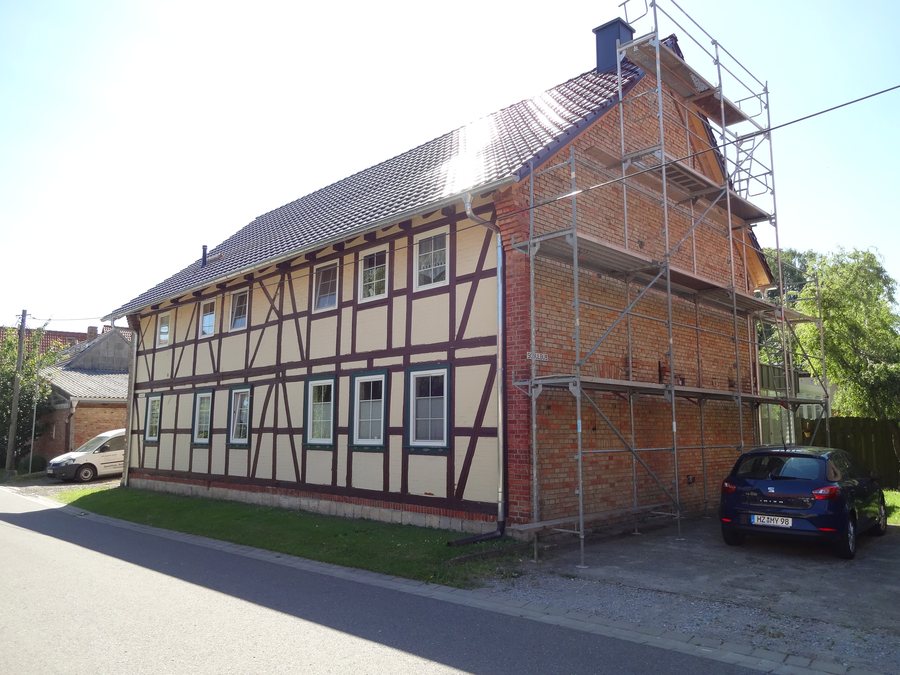
Rural Village Character and Links to Water
In Veckenstedt, farmhouses, orchards and numerous mill ditches with fords are part of the village landscape. Its agricultural character is reflected both in the buildings and in the surrounding countryside. The River Illse connects Veckenstedt and Wasserleben—a local geographical link between the two places.
Veckenstedt also has a long history: the village was first mentioned in a document in 1040 and was held for a long time as an estate for the table by the Lords of Veckenstedt. A new exhibition on local topics opens at the local history museum every year. If you would like to visit, check the current programme in advance. This lets you combine the historical background with a look at changing local topics.
Museums, a Park and Border History
In 1852, Henneberg, the estate’s tenant farmer at the time, laid out a park in Wasserleben in the English landscape style. The grounds add an example of historic garden design to the village’s history. The Ilsestrandbad also has a clearly dated local history: residents built it on their own initiative in 1938, and it was completely renovated in 1997.
In Stapelburg, the local history room explores the village’s eventful past. Another historical trace is the Jungborn spa, which brought Stapelburg to prominence from 1896 onwards. At the exit from the village towards Bad Harzburg is also the former underground command bunker of the GDR border troops, one of the local attractions. A memorial on the L85 commemorates the opening of the inner German border on 11 November 1989. Together, these places offer different insights into Stapelburg’s history, representing different periods and topics.
Mills and Border History in Abbenrode
In Abbenrode, the Otto Mill is put into operation every year on Whit Monday for German Mill Day. If this date is important to your plans, check the programme for the year in question. A 1.5-kilometre Mill Trail also starts in Abbenrode. The local history museum provides information about the former border security installations. The village therefore offers three different points of interest: an annual mill day, a trail of a specified length and a museum with a specific historical focus.
This overview helps you see the villages as distinct destinations rather than interchangeable stops: Veckenstedt is known here for its farmhouses, orchards and mill ditches; Stapelburg for its several historical topics; and Abbenrode for its mill, hiking trail and border history.
The Harz as a Wider Travel Region
In the wider Harz travel region, Harz National Park has eight visitor centres and national park houses with information about the park, hiking tips, exhibitions and film screenings. The national park also has 560 kilometres of signposted trails leading to particularly scenic viewpoints.
Discover more destinations: Blankenburg Am Harz, Oberharz Am Brocken, Tanne, Wernigerode, Ilsenburg.
Return to the wider travel overview: Harz.

