
Cochem-Zell: Castle, Nature and Excursions
Accommodation in Cochem-Zell
When looking for accommodation in Cochem-Zell, you can plan your stay around the excursions that interest you: the Reichsburg represents medieval history and neo-Gothic architecture, Jungferweiher is known for bird migration, and Geierlay is a striking suspension bridge. These highlights also differ in terms of the season and type of visit. Consider which themes you would like to include in your plans; information about bus and train routes can also help you find your way to tourist destinations.
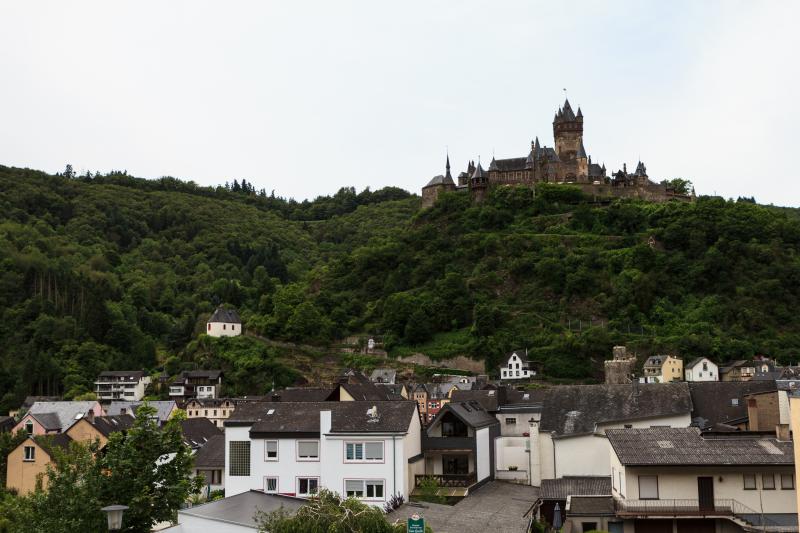
A visit to the castle in Cochem
The medieval Reichsburg Cochem was restored and rebuilt in the neo-Gothic style in the 19th century by Louis Ravené, as part of the Romantic revival of castles. The interiors open to visitors include the Knights’ Hall, dining room, hunting room and private chamber. If you are interested in historic architecture, a visit combines a specific building history with several named interiors.
On Fridays and Saturdays, the Reichsburg serves rustic medieval banquets under the name “Gasterey nach Art der alten Rittersleut.” As the schedule may change, check the dates before your visit. When planning your stay, you can treat the castle visit and the dining experience as separate activities.
Nature and striking destinations
Jungferweiher is an important breeding and resting area for numerous bird species, especially during spring and autumn migration. If birdlife is your main interest, these two seasons are particularly relevant when planning your visit. The Geierlay suspension bridge offers a different experience: it is 360 m long and 100 m above the Mörsdorfer Bachtal. It lies between Sosberg in Cochem-Zell district and Mörsdorf in Rhein-Hunsrück district. This lets you choose between a seasonal nature experience and a structure with clearly specified length and height.
Public transport and route planning
Many tourist destinations in Cochem-Zell are well connected to the public transport network. The visitor programme published in July 2025 lists the relevant bus or train route for each destination. Specific routes may change. If you are planning to travel by public transport, match the listed route to the destination and check the current service and timetable for your chosen day before setting out.
Further destinations across Rhineland-Palatinate
The wider travel destination of Rhineland-Palatinate offers additional routes to help with your trip planning. The Calmont via ferrata was built in 2002 as a joint project by the municipalities of Bremm, Ediger-Eller and Neef. It is secured with steel cables, ladders, and numerous footholds and climbing pins. The trailheads are in Eller by the railway bridge and in Bremm above the church; the hike takes about three hours. You can take this approximate duration into account when planning a hike of this kind.
The Moselle Cycle Route is a different type of route. It follows the Moselle for 248 kilometres from the tripoint near Perl to its confluence with the Rhine in Koblenz and is part of the Rhineland-Palatinate cycle route network. The route runs mainly along paved, mostly flat paths that are largely separated from motor traffic. This distinguishes the cycling route from the several-hour hike on the Calmont. For detailed route planning, check the operator’s latest route information, as it may be updated.
Discover more destinations: Ulmen, Ahrweiler, Birkenfeld, Vulkaneifel, Eifelkreis Bitburg-Prüm, Landkreis Altenkirchen (Westerwald), Westerwald, Mayen-Koblenz.
Back to the main travel overview: Rhineland-Palatinate.
