
Neerdar – Hiking, Landscapes and Regional Culture
Accommodation in Neerdar
Neerdar lies in the valley of the stream of the same name and is surrounded by mixed forests and meadows. Rural tranquillity, gently rising hills and an idyllic landscape characterise the village. If you choose accommodation in Neerdar, you will find a place where nature experiences, hiking and regional culture can be combined.
Landscape and hiking trails around Neerdar
For orientation when hiking, the Neerdar hiking car park provides a specific starting point. From here, various hiking trails lead into the landscape of the Qualitätsregion Wanderbares Deutschland quality region. The Willingen–Neerdar hiking trail, designated N1, starts and ends at the Neerdar village community centre, Neerdartalstraße 10, 34508 Willingen (Upland). This circular route is therefore clearly linked to a starting and finishing point in the village.
The N1 reaches around 600 metres above sea level and leads to a charcoal kiln and an old kiln site. Along the way, it reveals traces of charcoal burning and ironworking crafts. Another way to include several villages in your hiking plans is the Dreidörferweg trail, which passes through Neerdar, Bömighausen and Welleringhausen. The two routes described have different focal points – one centres on traces of craftsmanship and the kiln site, while the other connects several villages.
Church and craftsmanship as cultural points of interest
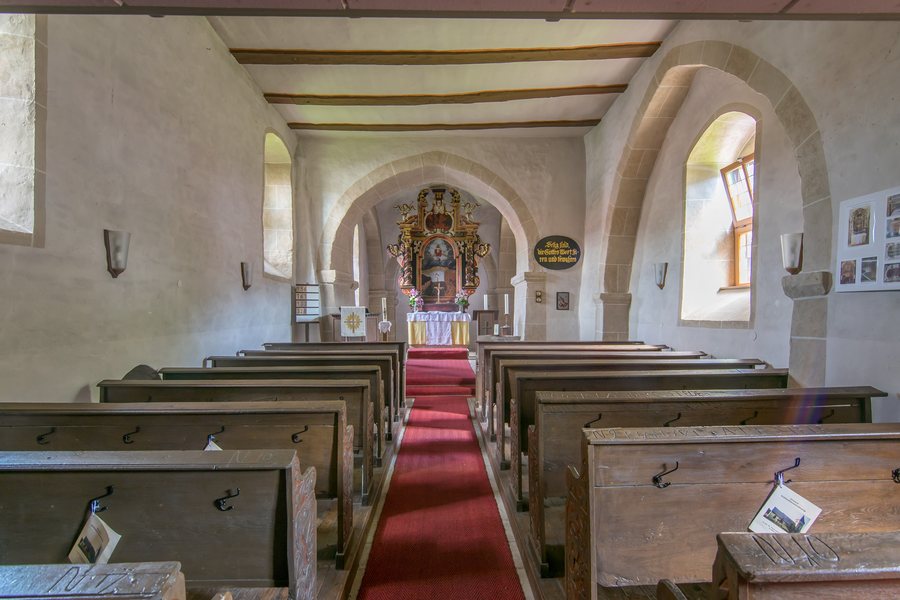
St. Pancratius Church in Neerdar was built at the beginning of the 13th century according to the basic design of the stepped churches in the Upland region. Its rectangular nave and square choir are characteristic of this architectural style. Inside, there is a Baroque altarpiece created by the Waldeck Baroque artist Josias Wolrat Brützel. The reverse bears the signature “Meister Josias Wolrat Brützel Anno 1692”, while the altarpiece shows the Last Judgement.
The church’s sandstone baptismal font also bears a historical detail: the Waldeck Star can be seen in the panel, and the font itself dates from the 17th century. Together with the kiln site, it forms a cultural focal point that directly links architectural history, craftsmanship and the memory of earlier working methods in Neerdar to specific locations. During demonstrations and events at the kiln site, visitors can learn more about the traditional technique of charcoal making and its significance for the region.
Barbecue station and local participatory tradition
The Neerdar barbecue station is another meeting place in the village. It has a covered outdoor barbecue, a fire pit, tables and benches, and offers a view of the village. Its use must be registered in advance with the Neerdar local mayor. This information is particularly important when planning your stay if you specifically want to use the barbecue station.
A special combination of regional customs and community experience is the annual potato roasting event in Neerdar. This is a sociable participatory tradition at the barbecue station, where potatoes are cooked directly in the hot fire. Alongside hikes and historical sights, this event offers an insight into a local way of coming together.
Neerdar is therefore particularly appealing to visitors who want to combine a peaceful landscape, clearly described hiking trails, historical details and local traditions. When searching for suitable accommodation, you can compare these focal points with your own plans for trails, culture and time spent together in the village.
For further comparisons with other villages, you can also include Bömighausen, Eimelrod, Usseln, Rattlar, Schwalefeld and Welleringhausen in your planning.
For the overarching travel overview: Willingen.

