
Eimelrod in Winter: Cross-Country Skiing, Tobogganing and Hiking Trails
Accommodation in Eimelrod
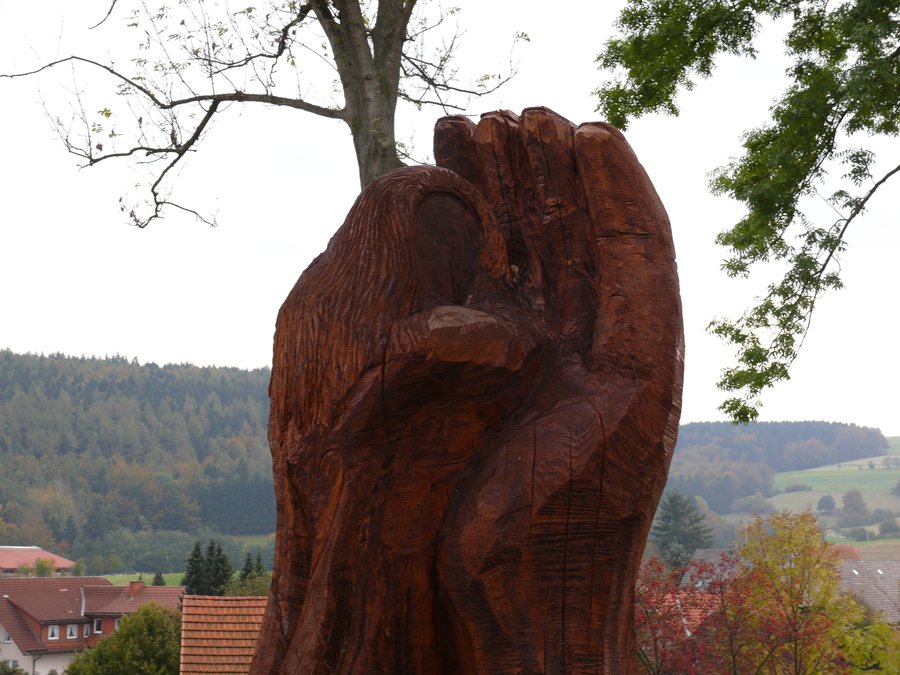
When comparing accommodation for a ski holiday in Eimelrod, the documented winter focus is on a cross-country ski trail and tobogganing slopes. There are also hiking trails of varying lengths, a nature forest educational trail, as well as village-history and cultural attractions. Eimelrod therefore offers several ways to organize your stay around winter sports, outdoor activities and regional history, without having to devote every day to the same activity.
Winter activities ranging from cross-country skiing to tobogganing
In winter, Eimelrod has a cross-country ski trail. This means that the village itself offers a dedicated winter sports activity for cross-country skiers. There are also tobogganing slopes in winter. This combination is interesting for travel groups in which not everyone prefers the same activity: while cross-country skiing enables sporty travel along the trail, the tobogganing slopes offer a different kind of winter experience.
There are also specific opportunities for shared activities beyond winter sports. A romantic torchlight hike for the whole family in Eimelrod leads to the Wirbelau barbecue station. Village-history tours are also offered. For families, couples or mixed groups, such activities can complement the stay with a guided or thematically focused experience. The torchlight hike is explicitly designated for the whole family; no additional childcare, courses or children’s activities are associated with it.
Hiking trails with different profiles
The Willingen-Eimelrod hiking trail (E1) is an easy 5.7-kilometre circular route around the Mühlenberg. Along this route, the trail passes through the Mülmeke Valley and reaches open farmland after passing under a railway line. The change between the valley area and the open landscape describes the character of the tour more precisely than a mileage figure alone. If you are looking for a manageable hike, the stated length together with its classification as an easy circular route provides clear guidance for planning.
The Willingen-Eimelrod hiking trail (E3) has a different focus. It runs through the Diemel Valley along the River Diemel to the district of Hemmighausen and then returns to Eimelrod over a small hill. E3 therefore differs not only in its route but also in its combination of a valley path, waterway, district and return route over an elevation. The two trails can consequently be compared by landscape impression and trail character, without either being considered generally better suited to every travel group.
The Goldspur Eimelrod offers another thematic combination of activity and landscape. The themed trail is approximately 7.5 kilometres long and includes eight stations. These provide information about the gold deposits around Eimelrod, their formation over the course of geological history and their extraction since the Middle Ages. The Goldspur passes the disused “Heinrich-Stollen” mine, the Eimelrod forest educational trail, as well as other adits and mining pits. The mine’s status remains explicitly that of a disused site; the route itself makes no statement about current use or an accessible mining operation.
Nature and landscape around Eimelrod
Eimelrod also has a nature forest educational trail. Together with the Mülmeke Valley, the open farmland along E1 and the Diemel Valley along E3, it creates a varied setting for walks and hikes. The trails pass through different types of landscape: E1 connects the valley and open farmland, E3 initially follows the Diemel and returns over a small hill, while the Goldspur focuses on geological and mining-history themes. For planning your day, you can therefore choose between an easy circular route, a longer themed trail and a route with river and valley sections.
Church and Jewish cemetery as historical attractions
Eimelrod’s history includes several specific sites. The Romanesque church was first mentioned in documentary records in 1310. Its nave was completely rebuilt in 1827, while the present-day tower dates from 1928. The tower contains a tympanum relief from the predecessor church. These individual construction phases make the church a historical attraction where the medieval reference, later rebuilding and present-day tower come together in the history of the village.
The Jewish cemetery in Eimelrod preserves historic gravestones and serves as a memorial site commemorating the village’s Jewish community and its persecution during National Socialism. Today, the cemetery is a place of remembrance and reflection. It therefore complements the church and the village-history tours with another historical reference that calls for a quiet and respectful visit.
Getting to the hiking trails
The hiking trails in Eimelrod can be reached from Willingen railway station or Usseln railway station by bus or train. From there, continue by bus or the on-demand shared taxi service (AST) to Eimelrod, Mühlenbach stop. For the choice of accommodation, this means that the documented journey to the hiking trails includes, depending on the starting point, a connection to Willingen or Usseln followed by onward travel to Eimelrod. You should take this sequence into account when planning if you want to organize your stay without driving all the way by car.
For comparing other villages and planning a broader trip, you can also consider Rattlar, Welleringhausen, Usseln, Bömighausen, Schwalefeld and Neerdar.
For the overarching travel overview: Willingen.

