
Eppenhain: Nature, Views and Local History
Accommodation in Eppenhain
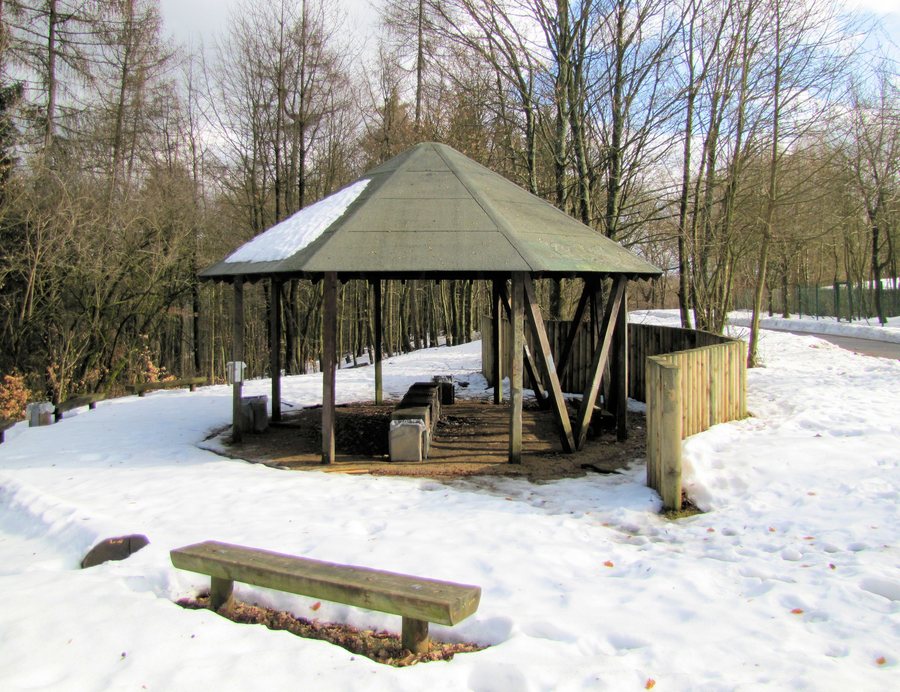
If you are looking for accommodation in Eppenhain, you will find a place with clear points of interest relating to culture, landscape and hiking routes. The Catholic Parish Church of St. Joseph, the history of the former “Zum Taunus” inn, the Rossert-Hainkopf-Dachsbau FFH area and the Atzelberg Tower each offer a different focus. For your planning, it is worth considering these topics separately: Some information describes the local history, while other information concerns the protected landscape or specific route sections.
Local history surrounding St. Joseph
The Catholic Parish Church of St. Joseph was built in 1908. Stones from the Eppenhain quarries and basalt stones from the Westerwald were used for its construction. This also allows the church to be viewed from the perspective of regional materials. The colourful windows have been preserved inside; in addition, three altars still date from the time of construction.
When finding your way around the village, note the access to the distinctive entrance: It can be reached via a steep, covered staircase.
The former “Zum Taunus” inn at Wirtsstraße 3 is also part of Eppenhain’s history. It is considered Eppenhain’s oldest house because the vaulted cellars beneath it probably date back to the Middle Ages. Its historical status is essential here: It is a former inn, not a current restaurant business or present-day service.
Forest landscape in the FFH area
The Rossert-Hainkopf-Dachsbau FFH area also extends across the municipal district of Eppenhain. For travellers interested in nature, the area’s objectives are particularly informative. These include near-natural, structurally diverse Luzulo-Fagetum beech forests with standing and fallen deadwood, cavity trees and tree species typical of the habitat. The trees are intended to occur in different stages of development and age.
If you choose your accommodation based on landscape-related topics, you can therefore regard Eppenhain as a starting point for planning a trip focused on forest habitats and regional nature.
Views and marked hiking trails
The 27-metre-high Atzelberg Tower is the landmark of the Eppenhain district of Kelkheim (Taunus). Its viewing platform offers a panorama overlooking prominent Taunus peaks and Königstein Castle. Alongside the local history, this places a clear viewpoint at the centre of your orientation. The height of 27 metres refers to the tower itself; it should not be confused with a route length or hiking duration.
The European long-distance hiking trail E3 is also relevant when considering longer hiking connections. Its marking consists of a blue St. Andrew’s cross on a white background. Another specific route reference is the R9 circular hiking trail at Rettershof. Along its route, it leads downhill to Eppenhain, passing the cemetery and the war memorial via Rossertstraße to Nickelskreuz. If you choose accommodation based on hiking-related topics, this information helps distinguish between a long-distance trail marking and a specific circular hiking trail.
Which focuses suit your stay?
For those interested in cultural history, the focus is on St. Joseph and the former “Zum Taunus” inn. Those who place landscape and forest habitats at the forefront will find a different thematic connection in the Rossert-Hainkopf-Dachsbau FFH area. Views and hiking can be considered through the Atzelberg Tower, the E3 and the R9.
FAQ
What is the Catholic Parish Church of St. Joseph?
St. Joseph was built in 1908 from stones from the Eppenhain quarries and basalt stones from the Westerwald. The colourful windows and three altars from the time of construction have been preserved.
How can the church entrance be reached?
The distinctive entrance of the Catholic Parish Church of St. Joseph can be reached via a steep, covered staircase.
Which house is considered Eppenhain’s oldest house?
The former “Zum Taunus” inn at Wirtsstraße 3 is considered Eppenhain’s oldest house. The vaulted cellars beneath it probably date back to the Middle Ages.
What characterises the Rossert-Hainkopf-Dachsbau FFH area?
The area also extends across the municipal district of Eppenhain. Its conservation objectives include near-natural Luzulo-Fagetum beech forests with deadwood, cavity trees and different stages of development and age.
How high is the Atzelberg Tower?
The Atzelberg Tower is 27 metres high. From its viewing platform, you can see prominent Taunus peaks and Königstein Castle.
How is the European long-distance hiking trail E3 marked?
The E3 is marked with a blue St. Andrew’s cross on a white background. Along its route, the R9 circular hiking trail at Rettershof leads downhill to Eppenhain and onwards via Rossertstraße to Nickelskreuz.
To the main travel overview: Kelkheim.

