
Weißenburg i.Bay.: Roman Times and Imperial City History
Accommodation in Weißenburg in Bavaria
Weißenburg i.Bay. brings together several strands of history: Roman finds and baths, the city’s fortifications, and its history as an Imperial City. If you are looking for accommodation, you can first consider which of these topics you would like to spend time exploring during your stay.
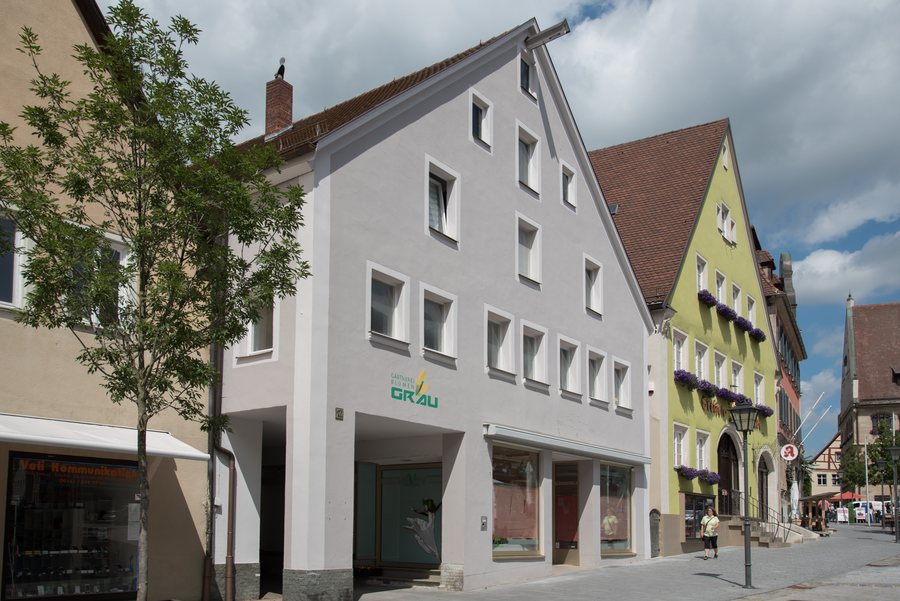 File:Weißenburg in Bayern, Marktplatz 12-20160813-002.jpg
Photo: Tilman2007 via Wikimedia Commons, CC BY-SA 4.0
Roman Heritage: Treasure Find, Daily Life and Baths
The Weißenburg Roman Museum displays the Weißenburg Roman Treasure, comprising 17 figurines of gods. It also features votive plaques, vessels from sacred contexts, everyday objects and parts of parade armour. The museum thus brings together a range of exhibits: objects from religious and everyday life, as well as equipment and the treasure find.
The exhibition also focuses on life along the Limes and the cultural exchange between Romans and Germanic peoples. It explores the daily lives of soldiers in the fort, as well as those of merchants and family members in the civilian settlement. For children, the museum offers an activity sheet with tricky questions about life along the Limes, Roman jewellery and the Weißenburg treasure find. This approach encourages visitors to ask their own questions about subjects also covered in the exhibition.
The Roman Baths add a focus on architectural history. A scale model and the docudrama “Power, Splendour and Decline” give visitors an impression of the baths’ and fort’s former size and appearance. Thanks to conservation and restoration work in the early 1980s, the baths’ architectural development can also be followed in detail. Anyone interested in Roman architecture will find not only a model of the building but also its development as a distinct topic.
City Walls and Imperial City History
The Weißenburg City Wall Trail is 2.2 kilometres long and takes about an hour to walk. It passes the fully preserved sections of the city wall at Seeweiher and Schießgraben. The circular route provides a practical way to explore these parts of the fortifications. Its length and approximate walking time can help you fit it into your plans alongside visits to the museums.
The Ellinger Gate stands in the north of Weißenburg’s old town. It was originally part of the city wall built around 1200. The gate bears Weißenburg’s first city coat of arms, dating from 1241, and opposite it is the second, from 1481. The older coat of arms shows half a white castle and half an imperial eagle, referring to the city’s status as an Imperial City directly subject to the emperor. The two dates and coat-of-arms designs link a visible landmark with the city’s history.
For five centuries, Weißenburg was a Free Imperial City subject only to the emperor. Buildings that bear witness to this period of prosperity today include the city fortifications with 38 towers and the Imperial City Museum. In its themed rooms, documents, everyday objects and treasures tell the story of the Empire, the Imperial Constitution and the special constitutional status of Imperial Cities. Another section is the Kaaden House: it recounts the flight and expulsion of Germans from eastern Europe as a result of the Second World War, and their integration into their new home in Weißenburg.
The Region
The wider Weißenburg-Gunzenhausen destination includes the Limes, which runs for around 40 kilometres across Weißenburg-Gunzenhausen district and has been a UNESCO World Heritage Site there since 2005.
The old Ansbach Hohenzollern fortress of Wülzburg, above Weißenburg, is also part of the wider Weißenburg-Gunzenhausen destination. It stands on the highest hilltop in the southern Franconian Jura, at 630 metres, and is an impressive example of Renaissance fortress architecture in Germany. This regional addition broadens the view to include a historical focus distinct from the Roman finds and Weißenburg’s city fortifications.
Discover more destinations: Muhr am See, Gunzenhausen, Thalmannsfeld, Nennslingen
To the wider travel overview: Weißenburg-Gunzenhausen.

