
Sandberg: Circular Trails and Woodcarving
Accommodation in Sandberg
When choosing accommodation, Sandberg can be explored through two specific themes: circular trails connected to the town and a culture centered on woodcarving. You can plan your trip according to whether you are mainly interested in hiking routes or changing exhibitions. The local connections are tangible: one route passes the historic Pfarrer-Straub-Haus, and an exhibition pavilion on Schulstraße hosts exhibitions by woodcarvers and wood sculptors.
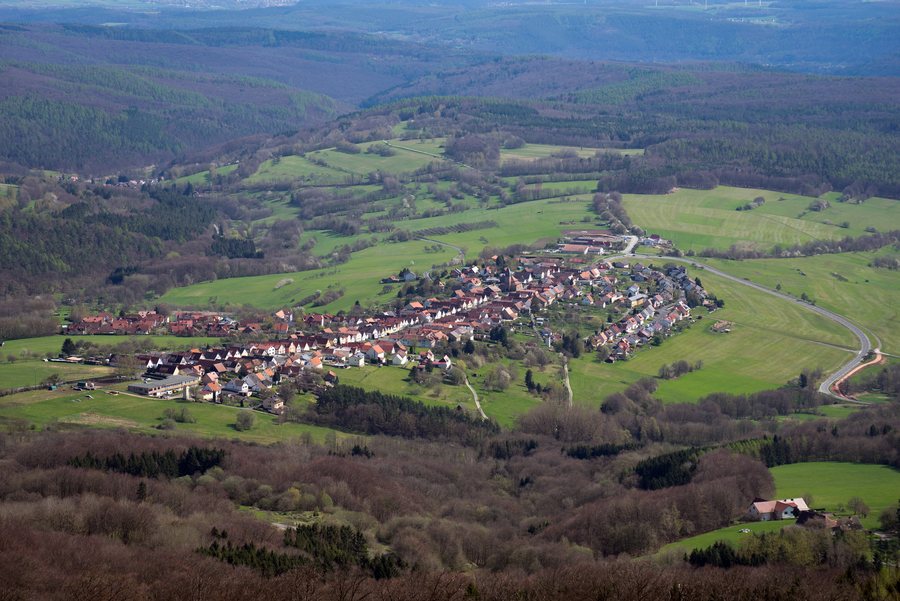
Circular Trails and Culture in Sandberg
The scenic Rhön Circular Trail 3 Walddörfer includes Sandberg among its destinations; in Sandberg, it passes the historic Pfarrer-Straub-Haus. The “Kreuzbergtour” special route is another trail connection and leads to the outskirts of Sandberg. The directions therefore differ clearly: the Rhön Circular Trail passes a named historic building in the town, while the Kreuzbergtour reaches the outskirts. Before setting out, check the current trail markers. Some Rhön circular trails are being renumbered or discontinued; checking the trail markers is also recommended for the Kreuzbergtour.
The exhibition pavilion on Schulstraße hosts changing exhibitions by renowned woodcarvers and wood sculptors. This adds a different cultural dimension to the historic connection at the Pfarrer-Straub-Haus: here, the focus is on woodcarving and wood sculpture. Since the exhibitions change, check current visiting options before your visit. This lets you plan your cultural activities around the exhibitions on display at the time, without treating a trail connection and an exhibition visit as the same thing.
Rhön-Grabfeld as the wider setting
The wider travel destination of Rhön-Grabfeld lies within the Rhön UNESCO Biosphere Reserve. The Lange Rhön is Bavaria’s largest nature reserve outside the Alps. The Black Moor is also among the region’s natural attractions: it is strictly protected as a core zone in the biosphere reserve. A wooden boardwalk leads visitors through parts of the moor, information boards explain the route, and an observation tower offers an impressive view of the Black Moor. These details convey different perspectives on the area: protected status, information along the route, and views are each distinct aspects.
The Ostheim vor der Rhön fortified church is part of the region’s cultural heritage. In 2003, it was declared a monument of national importance and is considered Germany’s largest and particularly well-preserved fortified church. The Church Fortifications Museum in Ostheim presents a dozen other fortified churches from the region, including those in Nordheim, Oberstreu, and Kaltensundheim. This makes it possible to consider the individual fortified church in the context of other examples of this architectural style.
The Franconian Open-Air Museum Fladungen uses faithfully reconstructed houses and farmsteads to tell 350 years of rural everyday history in Lower Franconia and the Rhön. Around 30 historic buildings stand across the 12-hectare museum grounds, including farmsteads, craft buildings, and a village school. Hands-on activities focused on crafts and traditions include demonstrations, practical courses, and events. The Rhön-Zügle museum railway offers a different regional highlight: it runs through the Streu Valley with steam and diesel locomotives.
Nature reserves, fortified churches, the open-air museum, and the museum railway broaden the picture of the wider travel destination of Rhön-Grabfeld.
Discover more destinations: Oberelsbach, Bischofsheim in the Rhön, Ostheim vor der Rhön, Bad Neustadt an der Saale, Fladungen
Back to the overview of the wider travel destination: Rhön-Grabfeld.

