
Großgressingen between Monastic History and the Steigerwald Heights
Accommodation in Großgressingen
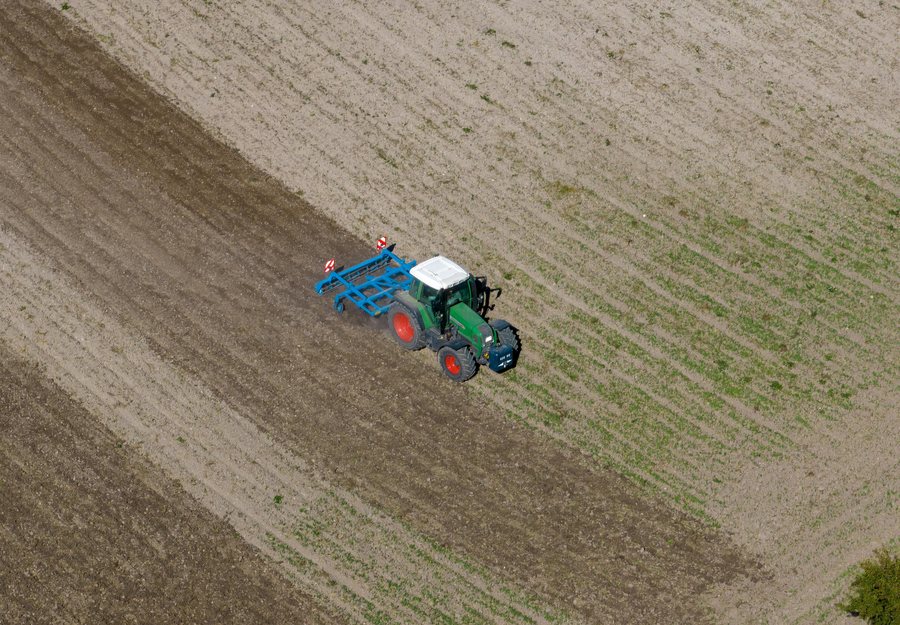 File:Großgressingen Traktor Luftbild-20230906-RM-151427.jpg
Photo: Reinhold Möller via Wikimedia Commons, CC BY-SA 4.0
File:Großgressingen Traktor Luftbild-20230906-RM-151427.jpg
Photo: Reinhold Möller via Wikimedia Commons, CC BY-SA 4.0
Großgressingen combines monastic history that has developed over centuries with trails, viewpoints, and historic destinations in the surrounding area. If you are looking for accommodation in Großgressingen, you can therefore tailor your stay to different interests: the local history surrounding St. Rochus, the connection with Ebrach, or the landscapes of the Steigerwald Heights.
Historical Influence of Ebrach
Historically, Großgressingen is closely connected with the former Cistercian monastery in Ebrach. For many centuries, the village was owned by the monastery and belonged to its extensive manorial estate. The farmers of Großgressingen were also required to pay tithes to the monastery. This influence is not merely a subject of local history: traces can still be seen today in the villagescape, field, and ownership structures. Those who look closely at the village will encounter a past that extends across various areas of the village and its surroundings. The manorial system and the obligation to pay tithes concerned both the monastery's property and the levies paid by the farmers of Großgressingen.
A specific historical reference point is the former monastery building known as the Jägerhaus at St.-Rochus-Straße 3. The building dates from the first half of the 18th century. Its name and date of construction point to Großgressingen's former connection with Ebrach Monastery and complement the traces in the villagescape and ownership history with architectural evidence.
St. Rochus and Religious Heritage
The church and cemetery at St. Rochus were built by Abbot Hieronymus Höllein after a devastating plague epidemic in 1613. The church and cemetery are dedicated to the plague saints St. Rochus and Sebastian. At St. Rochus, a church construction project following the plague epidemic therefore meets a wayside shrine dating from a later period.
A wayside shrine also stands near the church on Ebracher Weg, or St.-Rochus-Straße. It depicts the Holy Trinity and bears the year 1820.
Trails Between Großgressingen and Ebrach
The Ebrach Cistercian Trail includes a section between Großgressingen and Ebrach.
On the Monastery Landscape Trail, there is a sweeping view over the Steigerwald Heights between St. Rochus and Winkelhof. This creates a trail connection to Ebrach and another trail connection across the Steigerwald Heights.
Castles and Ruin in the Surrounding Area
Several historic destinations are located around Großgressingen. These include Kirchschönbach Castle, the Amtsschloss, Bimbach Castle, and Stollburg Ruin.
Geiersberg is located in the immediate vicinity of Großgressingen. Kleiner Knetzberg, Großer Knetzberg, and Sägbrunnen are located in the surrounding area of Großgressingen. The sweeping view from the Monastery Landscape Trail is thus joined by other points in the vicinity: Geiersberg, Kleiner Knetzberg, Großer Knetzberg, and Sägbrunnen.
Forest Festival at St. Rochus
The forest festival of the Steigerwaldmusikanten Ebrach-Großgressingen has been held annually for just over 30 years on the first Sunday in July at St. Rochus near Ebrach. The first Sunday in July gives the forest festival a fixed place in the annual calendar.
For the overarching travel overview: Ebrach.

