
Ostalbkreis: Discover the Limes, Monasteries and Trails
Accommodation in Ostalbkreis
The following examples offer practical guidance to help you decide which themes and activities will shape your stay.
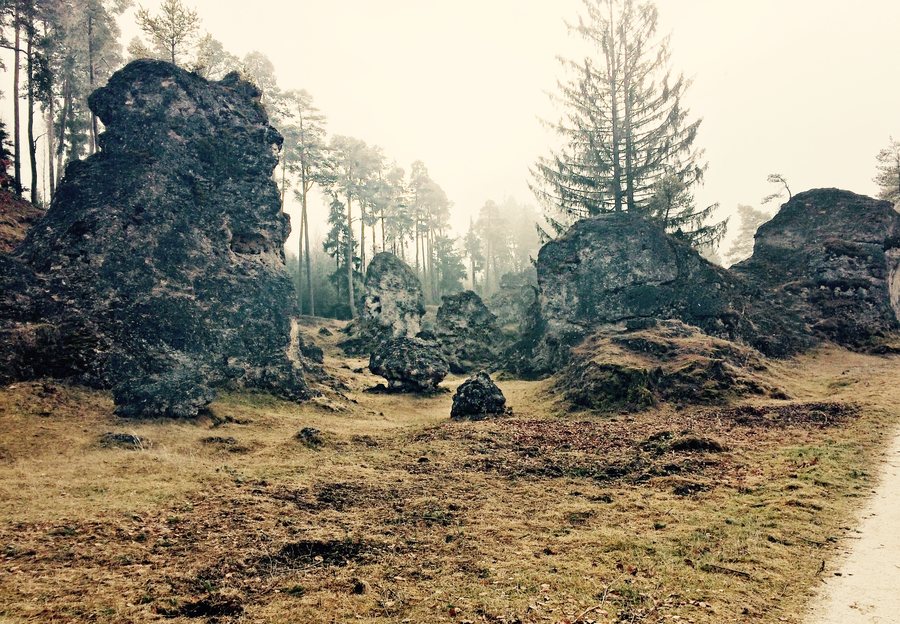 Wental, Felsenmeer bei Bartholomä im Ostalbkreis
Photo: Sina1031 via Wikimedia Commons, CC BY-SA 4.0
Roman heritage and trails around Rainau
The Upper German-Raetian Limes has been a UNESCO World Heritage Site since 2005. In the municipality of Rainau, it runs through the districts of Buch, Schwabsberg and Dalkingen for a distance of around six kilometres. Particularly beautiful sections and important individual monuments are preserved in a unique concentration in Limes Park Rainau. The Limes Gate at Dalkingen is considered a unique structure along the entire Limes route between the Rhine and the Danube.
A reconstructed watchtower in Limes Park offers panoramic views across the Ostalb region. If you’d like to follow the historic sites on foot, the signposted Limes circular hiking trail is about eleven kilometres long and takes approximately two and a half hours. The route leads from the Limes wall and the Limes tower between Buch and Schwabsberg through the Mahdholz forest, following the Limes to the southern edge of Schwabsberg. The distance and walking time make it easier to estimate how long to set aside for this tour.
Monasteries, castles and mining history
Lorch Monastery was founded in 1102 by Frederick I, the first Hohenstaufen ruler, and his wife Agnes of Waiblingen as their burial place. The complex includes a medieval church, cloister and outbuildings. The Marsilius Tower offers views of the monastery complex, herb garden, sensory garden and surrounding area. The permanent exhibition explores 900 years of monastic history; its exhibits include the richly decorated Lorch choir books. This makes it possible to focus your visit on both the architecture and the site’s historical development.
Kapfenburg Castle also brings together different eras: it was first mentioned in a document in 1311, and its architecture reflects Gothic, Renaissance, Baroque and Rococo styles. The castle was never destroyed and was repeatedly adapted over time to suit contemporary tastes.
The Tiefer Stollen visitor mine offers a different kind of history. During a visit, the mine train travels past mineral deposits and small stalactites into sandstone chambers covering an area of 2,500 square metres, 100 metres underground. A multimedia show there introduces the history of iron ore mining in the Aalen area. A circular route through the mine’s labyrinth also leads to former underground mining areas with shafts, loading points and ore-mining chambers.
Compare hikes and cycling routes
Hiking Flower Tour 4, “Through the Sea of Rocks,” is 17 kilometres long. It starts at the village hall in Bartholomä and leads through the Sea of Rocks and the Wental valley to the Hirschtal valley near Steinheim. Tour 2, “Along the Weiherwiesen,” is longer at 25 kilometres: from Bartholomä, it runs via the Weiherwiesen to Volkmarsberg, past the source of the Kocher near Oberkochen, through the Tiefental valley and via Tauchenweiler back to the starting point. Comparing the distances makes the difference in length between the two tours clear; check trail conditions locally.
In the Wental valley, a nature trail combines insights into the unspoilt nature of the ancient river valley with a distinctive landscape. A hike there towards Steinheim is considered particularly suitable for families. Along the way, you can discover gnarled trees and bizarre rock formations in which, with a little imagination, you might make out fairy-tale characters and animals.
For longer cycling trips, the Ostalb cycling loop offers a dedicated route-planning option. It extends for around 305 kilometres and is divided into six stages and nine connecting routes, which can be combined to suit your plans. The loop passes through the Ostalbkreis and crosses district boundaries several times: it also runs through the districts of Heidenheim and Rems-Murr and into the Bavarian district of Donau-Ries. This makes the cycling route, which can be planned over several days or ridden in sections, quite different from the individual hiking trails.
Museums and archaeological sites
The Ostalbkreis has 54 museums and collections as well as 20 sites with open-air archaeological installations. Archaeological sites include the Ipf near Bopfingen, a witness mountain of the White Jurassic with impressive fortifications and significance as a cultural monument. The Celtic open-air site on the Ipf includes a reconstructed burial mound and a pavilion in the shape of a Celtic rectangular building. It explores Celtic history and the area around the Ipf.
Museums and collections offer museum education programmes throughout the year, museum festivals, events around International Museum Day in May, and museum nights. Specific programme details may change, so check the relevant dates before your visit.
Discover more destinations: Rosenberg, Ellwangen, Aalen, Böbingen An Der Rems, Heubach, Neuler, Gschwend, Lörrach.
Return to the main travel overview: Baden-Württemberg.

