
Blaubeuren: Blautopf, Monastery and Hiking Trails
Accommodation in Blaubeuren
In Blaubeuren, the Blautopf, monastery and hiking trails offer concrete starting points for planning a trip. If you are considering Blaubeuren as a place to stay, you can weigh up whether to focus on the karst spring, the monastery complex or a circular hike. You can also take seasonal options such as the Blautopfbähnle into account. When planning, it is worth keeping the particular features of each destination and its current visiting conditions in mind separately.
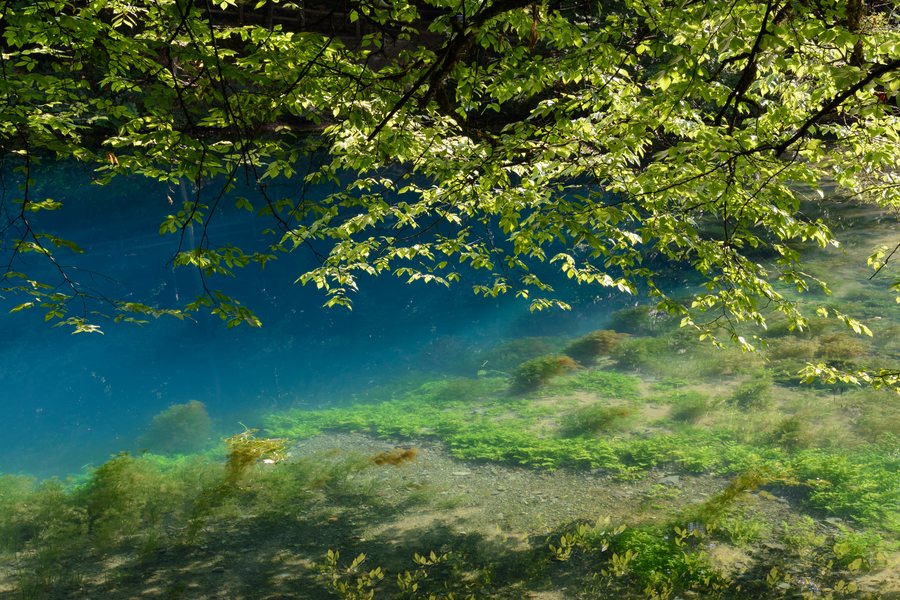
Blautopf and the Landscape
The Blautopf is a karst spring in the valley basin of Blaubeuren, with shades of blue and green. Its funnel-shaped spring basin is 20.6 metres deep and continues into a water-filled cave in the limestone of the Lower Felsenkalk Formation. This makes both the water’s visible colours and its geological continuation underground central to this site. So anyone interested in the landscape will find more here than just a view of the spring: its depth and connection to the cave are also part of what makes it special.
After temporary restrictions due to construction work, the Blautopf reopened to everyone on January 15, 2025, while work continued. Check the current access situation before travelling. A notice dated September 25, 2026, states that the Historic Hammer Mill in Blaubeuren will be closed until the end of 2028 for extensive renovation work. If you are considering a visit, check the current situation before including it in your plans.
Blaubeuren Monastery: Tour and Architectural History
A tour of Blaubeuren Monastery includes the monastery courtyard, the cloister with its cloister and garden, the choir with its high altar, and the monks’ medieval bathhouse. The bathhouse is the only surviving example of its kind in Germany. The choir is the centrepiece of the monastery complex. These features offer different perspectives on a visit: the tour passes through several areas, while the bathhouse and choir each provide distinctive architectural highlights.
For regional context, Blaubeuren Monastery was founded as a Benedictine monastery in 1085. The present complex consists mainly of Gothic buildings dating from 1466 to 1510. The foundation and the construction period mark two different periods in the monastery’s history; the Gothic buildings mentioned therefore belong to a much later period than its foundation. Anyone interested in architectural history can consider this chronology alongside the rooms featured on the tour.
Hiking Around Blaubeuren
The Blaubeurer Felsenstieg is a certified quality hiking trail and circular route around Blaubeuren. It is listed as a moderately difficult circular route in the Eiszeitpfade trail network. The route is listed as 10.40 kilometres long and taking 3:30 hours, with 440 metres of ascent and 440 metres of descent. This gives you a clear idea of the time required in advance. The route combines a designated circular hike with a specified amount of ascent and descent. Route information may change if the mapped trail is adjusted; check the current route before setting out.
In addition, the Blaubeuren local branch of the Swabian Alb Association has selected circular and point-to-point hikes in the Blaubeuren area. These complement the premium hiking trails recommended by the town, the Eiszeitjägerpfad and Blaubeurer Felsenstieg. The individual tours may vary. When choosing, it is therefore worth comparing whether you would prefer to use the Felsenstieg’s specific distance and duration as a guide or consider one of the other selected circular or point-to-point hikes.
From April to October, the Blautopfbähnle runs a panoramic tour through Blaubeuren’s medieval lanes and along picturesque paths to viewpoints. It offers another way to include the lanes and viewpoints in your travel plans, other than hiking. As the service is seasonal, check the current operating schedule before your trip.
Alb-Donau District: More Regional Highlights
The wider destination of the Alb-Donau District includes other distinct cultural and landscape highlights. Hohle Fels near Schelklingen is a UNESCO World Heritage cave and the discovery site of the “Venus of Hohle Fels” and the “Vulture Bone Flute”; both are around 42,500 years old. The Obermarchtal Monastery complex stands directly above the Danube and took its present form between 1686 and 1795. The Alb-Donau District is also part of the Swabian Alb Biosphere Reserve. These regional details complement an overview of Blaubeuren but are separate highlights of the Alb-Donau District.
The hiking options in the Alb-Donau District should also be considered as a regional selection: the 20 “Eiszeitpfade” circular trails are 6 to 14 kilometres long and suitable for day hikes. They are complemented by family-friendly “Eiszeitspuren” trails ranging from 1 to 6 kilometres, as well as the Besinnungsweg, which is suited to multi-day hikes. These different lengths and types of tours can help you decide if you would like to explore further hiking options in the Alb-Donau District beyond Blaubeuren.
Discover more destinations: Blaustein, Erbach, Lonsee, Westerheim, Laichingen, Börslingen, Merklingen.
Go to the regional travel overview: Alb-Donau District.
Compare hotels and holiday rentals in Blaubeuren by price and availability for your travel dates.
Advertisement · We may receive a commission if you book.
