
Chevron: Hiking Trails, Springs and History
Accommodation in Chevron
Chevron offers tangible points of interest for hiking and cultural history.
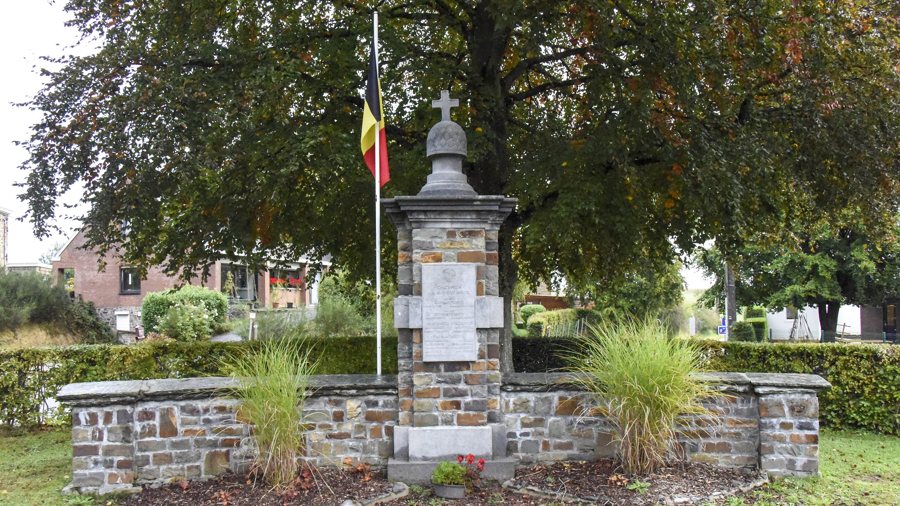 File:Chevron oorlogsmonument 9-10-2025 10-22-27.jpg
Photo: Paul Hermans via Wikimedia Commons, CC-BY-SA-4.0
Hiking along the Lienne
The Promenade des sommets de la Lienne is a moderately difficult 15 km hiking trail. The route is listed as taking about 4 hours and 30 minutes. The distance gives a clear idea of the route’s length, the approximate time helps with planning your day, and the difficulty rating indicates a moderate level of challenge. The trail leads to hamlets above the Lienne River, giving it a clearly stated destination. When planning, you can take the time required and the type of route into account together. The duration is an approximate estimate, not a fixed walking time for everyone.
Sources de Bru and former bottling operations
The history of the springs and their industrial use are central to the Sources de Bru. These mineral springs have been known since antiquity. A later chapter is dated precisely to 1903: that year, the municipality of Chevron leased the springs to a private company. The company established the first industrial facility in Bru for capturing and bottling the spring water. These two activities refer to distinct stages of the process: first the water is collected at the spring, then it is bottled. The Promenade des sources runs through the Bru Valley; the former bottling facilities can be seen along the way. For those interested in technological or economic history, 1903 is a specific point of reference, while the springs’ renown since antiquity marks the longer historical perspective.
Architectural and local history
The church of Notre-Dame de Chevron was built in 1875. Another architectural landmark lies near the Promenade de la Chapelle: the Saint-Gilles chapel dates from the 11th century. The time gap is considerable: Saint-Gilles belongs to the 11th century, while the church dates from the 19th century. Architecture enthusiasts can therefore compare two clearly identified buildings from different periods; the chapel’s proximity to a named trail adds a route reference to its construction date.
Local history encompasses two very different points of reference. The name “Kevuruns” appears in connection with Chevron as early as the 12th century, on the edge of the Saint-Remacle retable. A retable is an altarpiece. A dark chapter in the 17th century concerns women accused of witchcraft: they were executed at the place called “à Pindoû,” above the Ferme de Neuville. This spans a period from the name on the retable to a specific site of executions.
Highlights for your stay
When planning your trip, you can compare your interests by the kind of experience you are looking for. The Lienne route is described by its length, approximate duration and difficulty level; the historical themes are made tangible through dates, the history of bottling the spring water and named places. If you are looking for a hotel, first decide whether hiking or the history of the springs and architecture should shape your stay.
Discover more destinations: Lorcé, La Gleize, Ruy and Rahier.
For the wider travel overview: Stoumont.

