
Recht: Slate History and Architecture
Accommodation in Law
Recht can be explored through several specific topics: slate mining, geology and architectural history. The visitor mine, the Blue Stone Museum and St. Aldegundis Parish Church shed light on different aspects of the town. This distinction is useful when planning your trip: the mine and museum focus on the use of stone, while the church and historic buildings illustrate the area’s architectural history.
Slate Mining and Geological Trails
At the Recht Slate Mine visitor attraction, an 800-metre route runs through large extraction chambers. Since opening in 2007, the slate mine has served as a visitor attraction. Guided tours are available in German, French, Dutch and English. The four languages offer practical guidance for visitors with different language preferences.
Three geological hiking routes have been developed in Recht. Each focuses on a different topic: blue stone, gold or the Paleozoic Era. A tourism article dated 19 May 2025 names the slate mine as the starting point for all three routes; this starting point may change locally. Check it before setting out. The routes focus on different topics and offer visitors interested in geological questions a distinctive way to explore the area.
The Blue Stone Museum and Local History
The Blue Stone Museum in Recht displays various products made from Recht blue stone, as well as tools. Historical photographs show how slate was mined, and the tools provide further insight. The museum thus highlights both products made from Recht blue stone and the historical work involved in slate mining. The museum is open daily from 10 a.m. to 5 p.m. It is closed on Mondays, except public holidays.
The Church and Historic Buildings
St. Aldegundis Parish Church was built in the 15th to 16th centuries. The walls of its Gothic tower have been preserved, and its old choir now serves as a side chapel. The intricately crafted 20th-century windows depict the Mother of God, Saint Aldegundis and the coats of arms of the von Reiffenberg and von Rolshausen families. The construction period, surviving Gothic elements, present-day use of the old choir and more recent windows make the church’s different historical layers visible.
The former communal bakehouse is also part of the area’s history: it was probably built around 1840 by the Zangerle, Starck, Graf and Meyer families of Tyrolean stonemasons. The Schafsbrücke bridge in Recht has been a listed monument since 27 October 1995. Both buildings complement the church architecture with further evidence of local history; as a former communal building, the bakehouse remains a historical point of reference.
Landscape and Trails
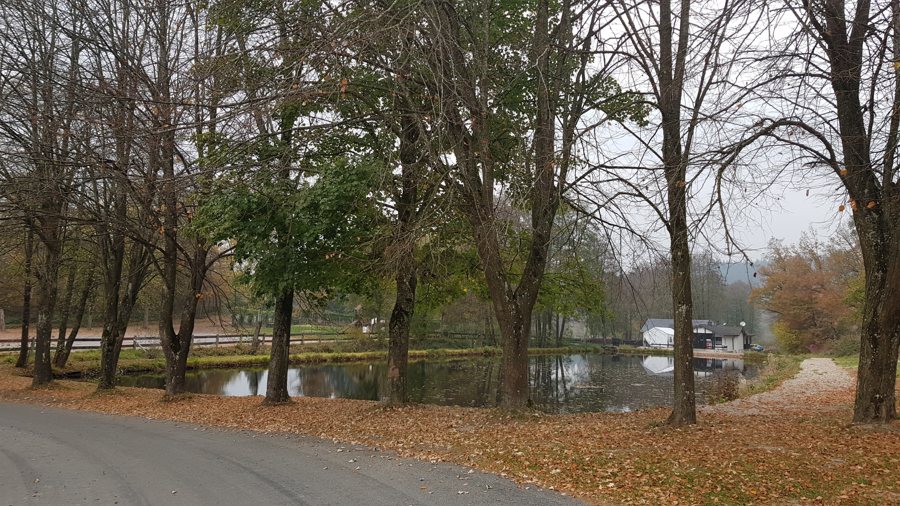
The landscape around Recht is characterized by agricultural grassland and extensive forests. Well-marked routes invite visitors to hike and cycle. Alongside mining and architectural history, Recht therefore also offers a scenic setting for outdoor activities. Depending on whether you are more interested in geological topics, historic buildings or getting active in the landscape, you can choose different focuses for your stay.
Discover more destinations: Schönberg.
Go to the main travel overview: Sankt Vith.

