
Rohrbach: Culture, Trails and Regional Experiences
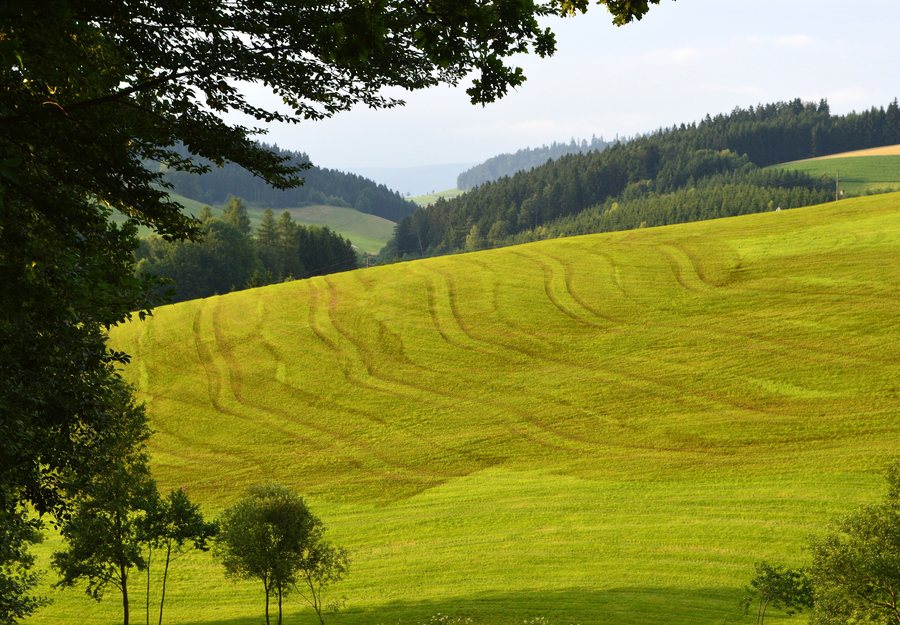
Rohrbach offers numerous opportunities to combine your stay with culture, craftsmanship, history, walks and regional experiences. If you choose accommodation for a ski holiday, you can complement your days with excursions away from winter sports. The combination of historic sites, museums, animal experiences, culinary stops and trails of varying lengths is particularly diverse.
Culture and History in the Mühlviertel
An important point of interest is the Unterkagererhof open-air museum. The rural cultural heritage farm was first mentioned in a document in 1287. Its typical form as a Mühlviertel four-sided farmstead still roughly corresponds to the architectural design of 300 years ago. There you can visit the through-house with its rammed-earth floor, the working baking oven, the cabbage cellar, the Black Kitchen and the retirement parlour. This makes historic architecture and everyday culture tangible through specific spaces.
Since 2005, the Adalbert Stifter Museum and Local Heritage House in Schwarzenberg am Böhmerwald has housed a permanent exhibition about Schwarzenberg am Böhmerwald, the three-country region, and Adalbert Stifter's life and literary and visual-art works. VILLA sinnenreich in Rohrbach-Berg offers a different approach. The museum of perception explores the world between illusion and reality.
Textile traditions are at the centre of Haslach. The Weaving Museum shows the processing steps from preparing flax to the finished linen and traces the development of handlooms through to the Jacquard machine. The Textile Centre Haslach combines textile history and culture with production and training. At Schlägl Abbey, the presence of members of the Premonstratensian Order has been documented since 1218. The abbey church is a three-nave Gothic church; its altars, pulpit and choir stalls from the 17th and 18th centuries feature elaborate woodcarving and inlay work.
Museums with Practical and Unusual Insights
Several institutions make their subjects accessible not only through exhibits, but also through demonstrations and participation. The Printing Museum illustrates the development of printing over the past 100 years. Visitors can actively take part there. During a guided tour, you can experience a printed product from its creation through to final production.
The Mechanical Sound Factory displays 150 exhibits of mechanical musical instruments from the Baroque period to the present day. During guided tours, the instruments are played and their internal mechanisms demonstrated. Those interested in regional production and enjoyment will also find an informative programme at the Mühlviertel Oil Mill: every Thursday at 11:00 a.m., a guided tour with oil tasting takes place without advance registration. The tours also explain the history of the oil mill and historic oil-production methods.
Animal Park, Walks and Family Activities
Altenfelden Animal Park is home to more than 1,000 animals from over 200 species across an area of 80 hectares. This allows you to enjoy a varied day, even when not all travellers share the same interests. The animal park also includes the “cultum venandi” Hunting Culture Museum, which conveys the history and tradition of hunting. The circular trail to Rabenstein from Altenfelden Animal Park takes around five hours, making it a considerably longer undertaking than a short walk.
The Rohrbach-Berg Panorama Trail offers impressive views over Rohrbach-Berg, the Böhmerwald holiday region and the Mühlviertel. From the town square in Rohrbach-Berg, a chapel trail leads to Maria Trost Church. Information boards along the trail explain the origins and history of the chapels. The Maria Trost pilgrimage church was built in 1645/1655 on the site of a ruined castle.
Longer Trails and Regional Orientation
The Granitpilgern hiking trail is available for planning hikes lasting several days. It runs in three to four daily stages over approximately 95 kilometres through the south-eastern part of Rohrbach District. The different trail lengths help you distinguish between a short excursion, an extended day hike and a multi-day undertaking.
The Rohrbach fishing district also has a clearly defined regional extent. It lies entirely within Rohrbach District and includes the catchment areas of the Ranna, Kleine Mühl, Große Mühl and Steinerne Mühl, including their tributaries. For historical travel orientation, the route of the Mühlkreisbahn railway from Linz to Aigen can be traced back to 17 October 1888.
Hops, Oil and an Autumn Date
The Hop Experience Farm combines a short walk to the hop fields with a visit to the Hop Museum, a guided tour and a film about the hop harvest. The Witches’ Market in Auberg has become an established autumn event and attracts numerous visitors year after year. Together with the oil mill, this creates a regional programme that brings together agricultural work, processing and enjoyment.
For further orientation in the area, you can also include Godersdorf, Neustift Im Mühlkreis, Lembach Im Mühlkreis, Julbach, Haslach An Der Mühl, Berg Bei Rohrbach, Neufelden, Auberg, Ahorn Im Mühlkreis, Altenfelden, Sankt Leonhard, Afiesl, Ulrichsberg, Kollerschlag, Guglwald, Sankt Stefan Am Walde and Schwarzenberg Am Böhmerwald.
Rohrbach is therefore suited to travellers who want to organise their days flexibly according to their interests and available time: historic farmsteads and churches for those interested in culture, museums with demonstrations for curious visitors, the animal park for shared experiences, trails for short or long outings, and the oil mill and Hop Experience Farm for regional insights. Accommodation in Rohrbach can thus be combined with a stay whose programme extends beyond a single activity.
For the overarching travel overview: Upper Austria.
Check prices, availability and amenities for your travel dates directly on Booking.com.
View Accommodation and OffersAdvertisement · Affiliate link to Booking.com
