
Discover Studenzen
Accommodation in Studenzen
Cycling and Cultural History in Studenzen
If you are looking for accommodation in Studenzen, cycling and hiking routes, along with cultural and historical sites, provide a practical starting point for planning your trip. The cultural and historical themed trail “Reflexionen” and the circular hike through Eichkögl and Fladnitzberg both start at Studenzen-Fladnitz railway station; the south tour of the Raab Valley Cycle Route R11 passes through Studenzen/Fladnitz. Cycling, hiking and local history each offer a different focus. When planning your trip, you can first decide whether to focus on a cycling route, a walking trail or cultural and historical sites.
Cycle Routes with Different Points of Interest
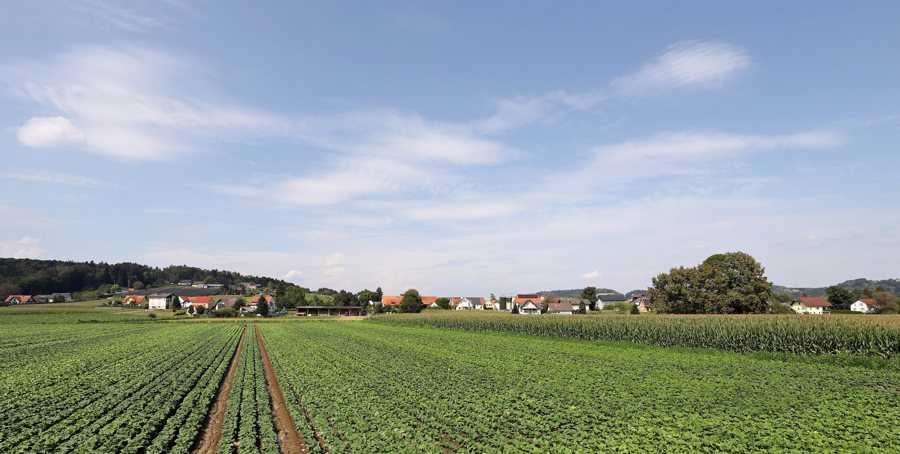
The south tour of the Raab Valley Cycle Route R11 runs from Gleisdorf via St. Margarethen, Studenzen/Fladnitz, Feldbach, Lödersdorf and Fehring to St. Martin an der Raab and Jennersdorf. The Kirchbergvital cycle route offers a different point of reference: it is family-friendly and joins a walking and cycling path towards Studenzen after 2.5 km. The south tour is defined by the sequence of places listed, while the Kirchbergvital cycle route is identified by the point after 2.5 km where it connects to the path towards Studenzen. This makes it possible to distinguish between the two routes based on their respective descriptions.
Themed Trail and Circular Hike
The “Reflexionen” themed trail starts at Studenzen-Fladnitz railway station. You can complete it on foot or by bicycle, in either direction, over two stages. Its two-stage structure and the two ways of getting around are specific features of the route. The circular hike through Eichkögl and Fladnitzberg also starts at the railway station. In the area around Studenzen, it passes through meadows and woodland to the Klein Mariazell parish and pilgrimage church. The two routes therefore have different focuses: “Reflexionen” is designed as a cultural and historical themed trail, while the circular hike incorporates the landscape and the church into its route.
Early Bronze Age and Local History
At Fuchskogel, behind Studenzen-Fladnitz railway station, lies the oldest fortified hilltop settlement in Styria, dating from the Early Bronze Age, around 2500 BC. The settlement includes a rampart. The local history boards cover a different historical period: one of the six boards is in Studenzen, by the war memorial. The Historical Society erected the boards in 2015 and 2016 to mark the 750th anniversary. They feature the Josephinian land survey of 1784/1785, historical municipal coats of arms and short excerpts from the history of the districts. The Studenzen village chapel is dedicated to Mary. A few steps from a wayside shrine in Studenzen, there is also a statue of Mary in the style of the Immaculate Conception. It depicts her feet on a serpent, the moon and the globe, and stands under a glass dome in an unusual structure made of glass and steel.
Traditional Costume Craftsmanship and Garden Design
Trachtenmode Hiebaum in Studenzen has stood for quality, regional character and genuine craftsmanship since 1955. The company handcrafts the Vulkanland costume, the Rosegger costume and the classic Styrian costume from high-quality local materials. The experience centre can be visited on an ongoing basis; check the booking details before your trip.
Zettl’s country garden in Studenzen is a 6,000 m² private garden laid out around a 250-year-old country house. The house was renovated and converted in 1995. The garden includes a swimming pond of around 300 m² with a stream, as well as a spring-fed pond; both ponds have abundant plant growth. Both the country house and the landscaped water features are central to this place.
Discover more destinations: Auersbach, Riegersburg, Kirchberg an der Raab.
Return to the main travel overview: Feldbach.

