
Bruck on the Großglocknerstraße: Start of the Großglockner High Alpine Road
Accommodation in Bruck on the Großglocknerstraße
The Großglockner High Alpine Road also begins in the town centre. This means you can take the station and the road’s starting point into account when choosing where to stay.
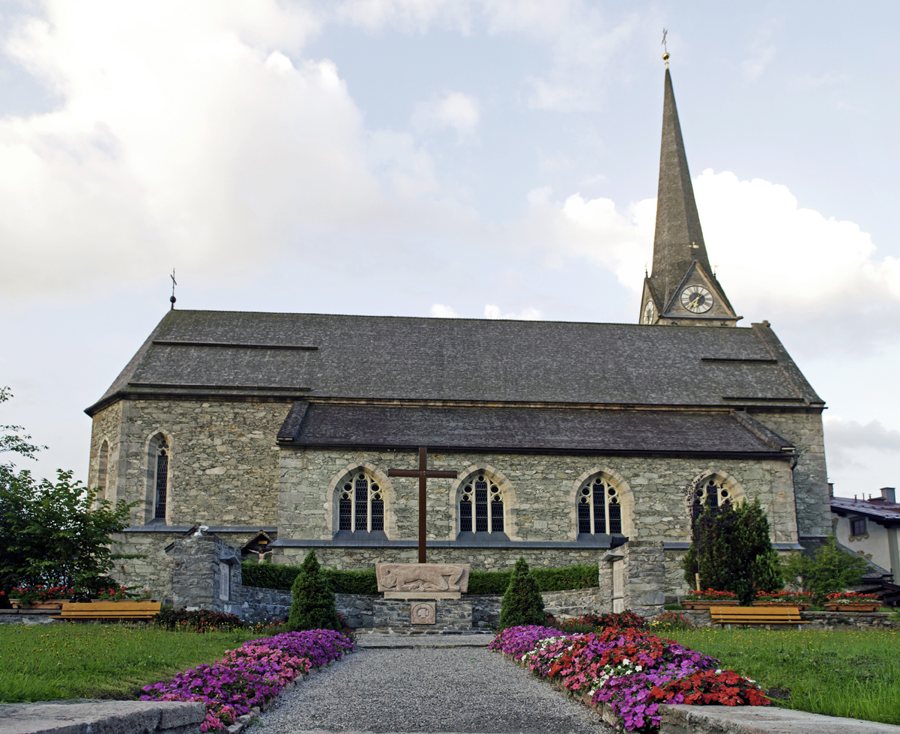 File:Bruck an der Großglocknerstraße, Austria - panoramio.jpg
Photo: Gregorini Demetrio via Wikimedia Commons, CC-BY-SA-3.0
Großglockner High Alpine Road and exhibitions
The Großglockner High Alpine Road climbs to an altitude of over 2,500 metres in the Hohe Tauern National Park. The road provides access to eight free exhibitions about alpine ecology, the history of road construction and a Roman pass sanctuary. This brings together a range of topics: nature, the history of the road and a historic site at the pass. If you are considering Bruck as a starting point for excursions, you can also include these exhibitions as separate places to visit alongside the route itself.
Hiking, mountain biking and the river
The hike up Brucker Berg starts in the town centre and takes about two hours. This approximate duration can help you set aside time for the hike in your daily schedule. Bruck has numerous mountain bike routes leading to hidden alpine pastures and impressive mountain panoramas. Thus, a single hike with an approximate duration is complemented by several mountain bike routes with described destinations; both activities offer different reference points for your planning. The Fuscher Ache flows through Bruck and then joins the Salzach. The river adds a point of orientation in the town, connecting Bruck with the Salzach beyond it.
Churches, architectural history and a nativity scene
Today’s Marienkirche Bruck was built in 1868/69 to plans by the architect Friedrich von Schmidt and is a neo-Gothic building. Its construction date and style offer two different historical points of reference: you can consider when it was built and its architectural classification separately. Pilgrims reach Bruck via the Marienweg; alongside the building’s history, this gives the town a distinct religious connection. In the monastery church of St. Anton, a large nativity scene depicting various episodes from the story of Jesus’ birth is on display from the beginning of Advent until Candlemas. Most of the figures date from the 18th century. The monastery church is open daily from 8 a.m. to 4 p.m. The two churches have different emphases: Marienkirche is notable for its construction date and neo-Gothic architecture, while St. Anton is known for its seasonal nativity scene and its figures.
Water activities and the Natur Salz Grotte
Schlossbad Bruck has a large covered children’s pool with a small water slide, a play stream and a play ship. For a visit with children, these are specific options for a day at the pool: alongside the pool, there are several water-play features. The Pinzgauer Natur Salz Grotte in Bruck is furnished with around 12 tonnes of original Himalayan natural salt stones. It offers a different focus from Schlossbad: here, the natural salt stones are the defining feature, while the children’s pool and water-play equipment take centre stage there.
Discover more destinations: Fusch on the Grossglocknerstrasse, Dienten am Hochkönig, Sulzau, Aisdorf, Hinterthal, Niedernsill, Berg, Unken
Back to the regional travel overview: Zell am See District (Pinzgau).

