
Discover Güssing: Culture, Nature and Events
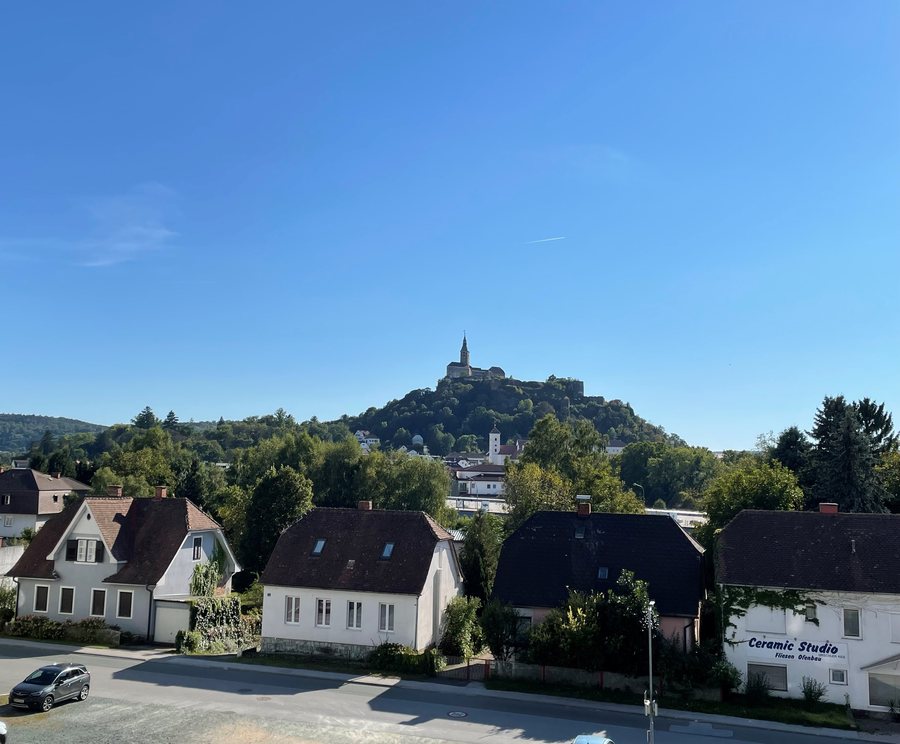
Güssing combines cultural history, nature observation, eco-energy tourism and a vibrant programme of events. This creates a destination whose highlights can easily be arranged according to your own interests: historic sites and museums, distinctive landscapes or stage performances. The practical information also includes the opening periods for the castle and museum as well as the available public transport connection. A place to stay in Güssing can therefore be chosen primarily according to which of these topics are to shape your stay.
Cultural history in Güssing
The Franciscan monastery in Güssing was founded in 1648/49 by Adam Count Batthyány I. Another historical connection leads to Carolus Clusius, who created the work “Stirpium Nomenclator Pannonicus” in Güssing in 1583. Together, these details place Güssing within a cultural history that encompasses both religious foundations and botanical research. Visitors who want to explore historical connections beyond a single building will find a range of different themes within the town.
The Josef Reichl and Emigrant Museum offers a particularly concentrated combination of regional history and personal memories. It is located in the building of the old court mill and comprises two museums. The first exhibition section documents the emigration of thousands of people from Burgenland, especially to the USA, at the beginning of the 20th century. The second exhibition section is dedicated to the Güssing dialect poet Josef Reichl.
Carolus Clusius is also specifically commemorated in the townscape. Seven information panels distributed throughout the town of Güssing provide information about the botanist’s life, work and significance. Those interested in historical figures can thus connect their museum visit with the information found around the town, without limiting the botanical history to a single exhibit.
Eco-energy tourism and technical topics
Alongside its cultural history, Güssing focuses on eco-energy tourism. The European Centre for Renewable Energy offers presentations on the Güssing model as well as tours of demonstration facilities in the ecoEnergieland region. The Güssing biomass district heating plant is part of the same offering. For your planning, this provides a clear thematic addition to the museum and castle: renewable energy is not treated merely as a general concept, but is presented through a model, demonstration facilities and a specific district heating plant.
This area is particularly suitable for visitors who want to include technological developments and regional examples in their stay. Accordingly, accommodation for your stay can be considered according to your personal focus among culture, nature and eco-energy tourism.
Wetland, waterfowl and mountains
The Güssing Ponds Ramsar protected area is an important breeding ground for waterfowl. The Güssing Ponds wetland is also home to more than 30 dragonfly species as well as numerous frogs, toads, European fire-bellied toads and newts. This gives nature in Güssing a precise biological dimension. For visitors interested in nature, the focus is not only on open landscapes, but also on a protected area with documented importance for birds, insects and amphibians.
Hammelberg is a mountain in the vicinity of Güssing. Breg and Hohensteinmais Berg are mountains in the area surrounding Güssing. Schloß Hohenbrugg is a castle in the wider regional surroundings of Güssing.
Cultural events and opening hours
The Güssing Cultural Centre and the Gerersdorf Ensemble Open-Air Museum serve as venues for the Güssing Cultural Summer. The Güssing Cultural Summer was founded in 2001 by Frank Hoffmann. In addition, Musical Güssing has been staging musical productions at the end of every summer since the 1980s.
A specific period is documented for Güssing Castle: Güssing Castle is open from 14 March to 31 October 2026. From May to October, the Josef Reichl and Emigrant Museum can be visited on Saturdays, Sundays and public holidays from 2:00 to 6:00 p.m., or by prior arrangement. If you want to combine cultural attractions, you should take these different periods into account when planning your stay. The castle and museum do not follow the same schedule, while events have their own programme periods.
Public transport and regional orientation
The BAST on-call shared taxi is coordinated with the public bus service and connects designated stops with the nearest public transport hub. For visitors, this describes a specific connection between designated stops and the public transport network. No further information on departure times, prices or individual destinations is available here. The transport connection is therefore part of the practical preparation, but does not replace checking your personal route in detail.
For further orientation in the area around Güssing, you can find Rauchwart in Burgenland, Burgauberg-Neudauberg, Gerersdorf bei Güssing, Sankt Michael in Burgenland, Kukmirn, Güssing and Stegersbach here.
For the overarching travel overview: Burgenland.
Check prices, availability and amenities for your travel dates directly on Booking.com.
View accommodation and offersAdvertisement · Affiliate link to Booking.comMore destinations
More places within the same destination:

