
Snowboarding on a Winter Vacation: Equipment, Rules and Planning
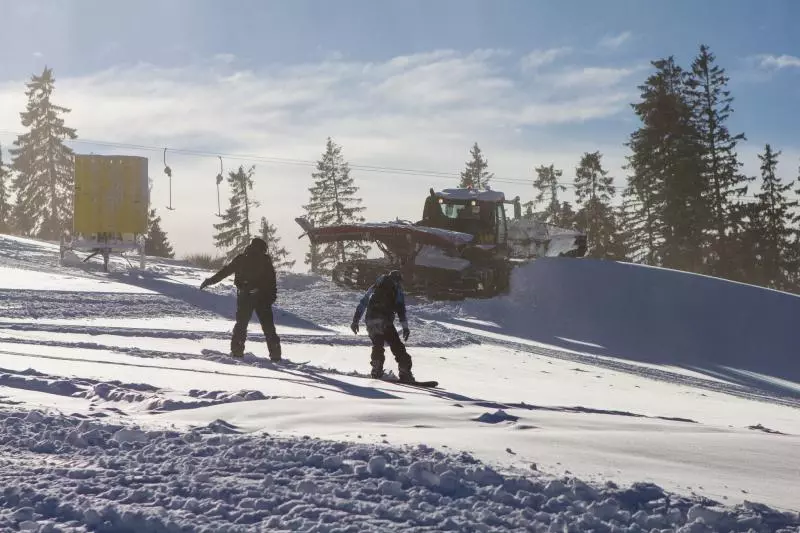 Snowboarder auf einer verschneiten Piste im Sauerland.
Photo: Dago Wiedamann
Snowboarding at a glance
- When snowboarding, you ride sideways on a board, with bindings securing both feet to it.
- On a vacation, the focus is on riding pistes and taking lessons; competitions use their own formats.
- Well-known disciplines include snowboard cross, slopestyle, halfpipe and big air.
- Balance, controlled braking and turning are the foundation for longer runs.
- Choose a board, bindings, boots and protective gear to suit your ability and the terrain you plan to ride.
From your first turns to confident descents
Snowboarding differs from skiing because both feet are fixed to the same board. This affects balance, turning and getting on the lift. A lesson teaches you the basic stance, how to brake and turn with control, and how to use the lift safely. Beginners should start on a gentle, open slope with plenty of room; steeper pistes can come later, once they can control their speed and change direction reliably.
On a piste shared with other people, take extra care at intersections, over crests and on narrow sections. Look ahead before setting off or crossing the slope, and stop only in places where you are clearly visible. Snowparks have their own lines, spacing and run-out zones. Try jumps and rails only when you can confidently assess the feature and the landing.
Disciplines and snowparks
Snowboard cross is a race on a course with several riders; halfpipe, slopestyle and big air focus on jumps and tricks. These competition formats require purpose-built facilities. If you’re planning a day on the mountain, first decide whether a quiet practice area, a regular piste or an open snowpark is right for your ability.
Choose a board and protective gear that fit
The equipment consists of a board, bindings and boots. Boots should fit securely without pinching; bindings should be adjusted to suit your stance and experience. A helmet protects your head, while gloves and weather-appropriate clothing keep you warm without restricting your movement. For more guidance, see winter sports equipment and clothing. If you’re combining snowboarding with skiing, you can plan a ski day and your ski vacation separately, according to the terrain and equipment you need.
