
Kite Skiing on a Winter Holiday: Equipment, Rules and Planning
Kite skiing can add an athletic dimension to a winter holiday, but it calls for a realistic assessment of your ability, conditions and available options. If you are trying the activity for the first time, it is better to plan a short session with instruction than an ambitious program without preparation.
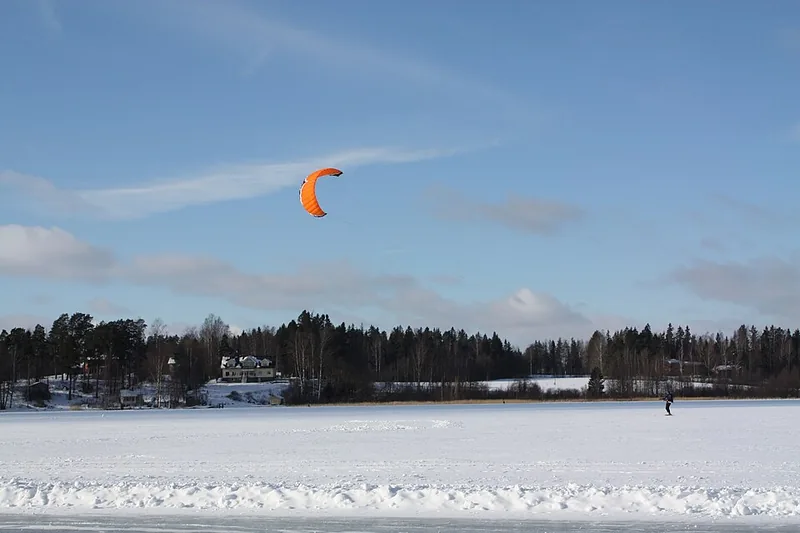 Kiteskifahrer nutzt einen Zugdrachen auf einer verschneiten Fläche.
Photo: Anneli Salo
Understanding kite skiing
Kite skiing, often called snowkiting, combines skis or a snowboard with a traction kite. The wind moves the kite while the rider glides across a suitable snow or ice surface. It requires considerably more space than a ski run: lines, gusts and direction of travel must remain under control at all times. Beginners should learn the technique in a structured course rather than trying it on a busy slope.
Wind direction and strength, visibility, snow conditions and terrain are all crucial. Trees, power lines, fences, roads, water’s edge and other people can pose dangerous obstacles. An area may only be used if it has been approved by the owner, municipality, operator or event organizer. Even a large, open field is not automatically suitable.
Choosing and preparing
Before booking or traveling, it is worth checking the specific facility: Is there a suitable area, a course, rental equipment or an instructor-led introduction? The operator determines opening hours, admission, minimum age, reservations, local rules and current operating status. General information from associations can provide useful context, but does not replace local guidance.
For families and groups, the program should accommodate different skill levels. A shared meeting point outside the activity area helps avoid unnecessary searching. If you combine several winter activities, plan time to rest and bring dry clothes to change into. Water, a small snack and a charged phone are useful during longer outings.
Equipment suited to your ability
Equipment must suit the sport, the area and your experience. Before starting, check rental equipment for proper size and fit, secure fastenings and visible damage. Warm, flexible clothing in several layers offers better protection than one very heavy layer. Gloves, dry socks and a windproof outer layer are essentials for outdoor activities. Protective gear such as a helmet, back, knee or wrist protection may be advisable or required, depending on the discipline and your ability.
Weather, exertion and safety
Snow, ice, wind, visibility and temperature can change over the course of a day. Before setting out, check the facility’s latest notices and, where relevant, the weather and avalanche information. End the session if visibility is poor, you hear unusual noises, equipment is damaged or your concentration is waning. Beginners should choose clear, approved areas and increase the difficulty and duration only gradually. Children need clear rules, short sessions and adult supervision.
Be considerate on shared areas: follow the direction of travel, keep your distance, and observe marked routes and closures. If you fall or notice an injury, move safely out of the way and get help. Away from supervised facilities, only people with appropriate experience and equipment, and a current assessment of hazards, should venture out.
A sensible schedule for the day
It is best to start the session with a quick check of the weather, opening status, equipment and meeting point. Then take a gentle warm-up before increasing the duration or speed. Schedule breaks between attempts; do not try to overcome cold or fatigue through sheer determination. At the end, check that everyone has returned and that equipment can be packed away dry and complete. This simple routine makes planning clearer and leaves room for weather-related changes.
Basic equipment includes a suitable kite, lines, control bar, skis or snowboard, and, depending on the course, a helmet and other protective gear. Kite size is adjusted to the wind and the rider’s weight; this decision should be made by a trained person. Before starting, check the lines, connection points, release mechanism and condition of the equipment. If the wind picks up, end the activity promptly.
Expert information and local checks
The course information from the International Kiteboarding Organization highlights the importance of structured training. For snow and mountain conditions, local approvals and up-to-date weather and avalanche information are also essential.
Frequently asked questions about kite skiing
Is kite skiing suitable for beginners?
Yes, but only with appropriate instruction and in a clear, approved area. Trying it independently without experience using a kite is not advisable.
How much space do you need?
Enough for the lines, launch, ride and release to take place without contact with people or obstacles. The operator determines which specific areas are suitable.
What should you do if the wind is too strong?
Postpone the start or end the session. Gusts can affect control, and greater skill cannot compensate for them.
