
Ice Hockey on a Winter Holiday
Hockey can be part of a winter holiday as a professional game, club training, public skating session or supervised introductory activity. These options differ considerably. Anyone who wants to get on the ice should pay attention to skill level, protective equipment and the venue’s rules. For spectators, the start time, seat and a safe journey back are what matter.
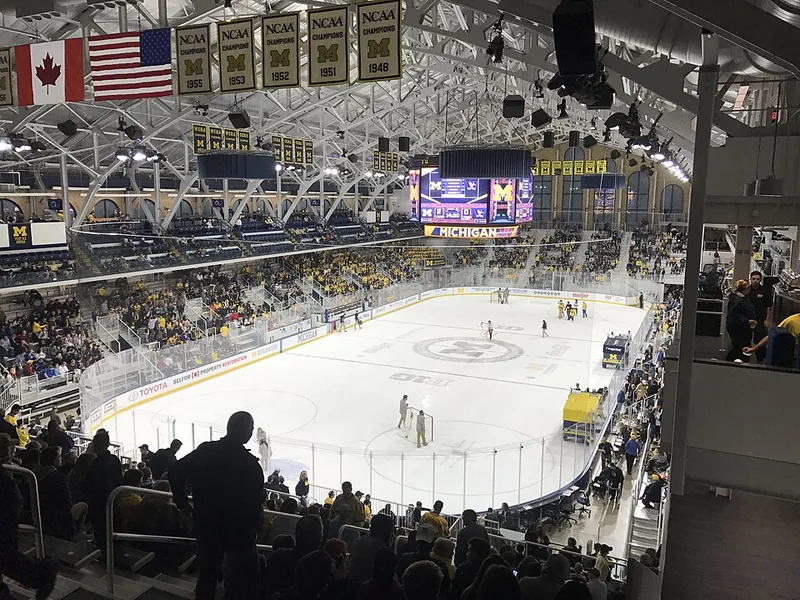 Eishockeyfeld in der Yost Ice Arena während einer Spielpause.
Photo: Kyvuh
Know the difference between a game, public skating and a class
An ice hockey game follows formal competition rules and is intended for spectators. Public skating is about skating freely; sticks and pucks are often not allowed. An introductory class may teach technique without involving a full game. Before booking, make sure you know what kind of session is being offered.
The rules of the International Ice Hockey Federation describe competitive hockey. Visitors must also follow the venue’s rules, ice times and staff instructions. Supervised activities and properly sized protective gear are especially important for children.
Protection and equipment
In hockey, helmets, gloves, skates and padding protect players from contact with the ice, puck and other players. Which items are required depends on the activity. Requirements for public skating differ from those for training. Personal equipment should be checked for size, fit and condition.
A helmet must fit securely without restricting vision. Skates need suitable blades and a firm fit. Beginners should skate slowly, keep their distance and leave the ice only at designated points. Adults should check children’s fastenings and laces.
Stay safe on the ice
The ice is slippery, and quick changes of direction can feel unfamiliar. Keeping your distance, being considerate near the boards and following the direction of travel help prevent collisions. If you fall, protect your head and hands, then wait for a safe moment before leaving the rink.
During training, the instructor decides on exercises, groups and breaks. Fatigue impairs reaction time and balance. Pain, dizziness or an injury are reasons to stop the session and inform the staff.
Planning for families
A short visit to an ice rink is often easier to fit into a holiday than an extra day of skiing. Some children may prefer to watch, while others want to try skating. A shared meeting point and separate time slots can accommodate different preferences.
Accommodation close to the rink, railway station or town centre is convenient. School holidays and tournaments increase demand. Check dates, rental equipment and helmet requirements well in advance; wet clothes from the ski area need time to be changed.
What to check before your visit
Opening hours, reservations, admission, rental equipment, helmet requirements and age limits are all part of planning. For a game, also check the start time, seating and return journey. Training requires the skill level, group size and equipment to be a good match.
A realistic schedule leaves time for changing and getting around. This makes hockey a safe addition to a winter holiday, whether you skate yourself or watch the fast-paced game from the stands.
Prepare well and stay flexible
Before booking, travellers should check whether the activity suits their experience, fitness and group. Age, meeting point, duration, required equipment, breaks and the return journey all belong in the plan. Opening hours, prices and availability may change with the season and should be confirmed with the provider.
The weather also affects the day. Cold, wind, visibility and wet clothing can affect concentration and exertion. A warm layer to change into, drinks and a charged phone are simple but useful preparations. Anyone travelling with children should plan shorter sessions, easily accessible breaks and a reliable adult contact person.
The activity should be considered as part of the overall winter holiday. The information in Planning a ski holiday can help with routes, time buffers and combining activities with a day of skiing. Snow conditions, school holidays and seasonal opening dates at the resort are also important when choosing when to travel. A flexible plan is better than a packed schedule with no room for delays.
When choosing accommodation, short distances, a dry place to store equipment and good connections to the town centre can make a difference. If you combine several sports, allow time for rest and make sure shoes, gloves and clothing can dry overnight. This leaves room for spontaneous changes without compromising safety or well-being.
Respect for staff, other visitors and local rules is part of every winter sport. An orientation is not a formality: it explains movement areas, signals, equipment and the limits of the activity. Ask questions before starting. If you experience pain, dizziness, feel overwhelmed or encounter unsafe conditions, stop the session and inform the staff responsible.
Frequently asked questions
Can I try ice hockey on holiday?
It depends on the location. Public skating, introductory classes and club training are different activities. Ask about available times, minimum age and required equipment.
What equipment do I need?
For a class, the organiser will specify the required equipment and provide information about rentals. For public skating, the local venue’s rules apply.
Is ice hockey safe for beginners?
With proper instruction, suitable equipment, a slow pace and plenty of space, beginners can get started safely. Stop immediately if you experience pain or feel overwhelmed.
