
Ice Climbing on a Winter Holiday
Ice climbing takes you to frozen waterfalls and ice formations and is one of the more demanding alpine sports. Ice that looks solid is not necessarily safe to climb. Temperature, water flow, sun and precipitation can change conditions. Beginners should therefore choose an explicitly guided experience; the qualified guide decides on the route and timing.
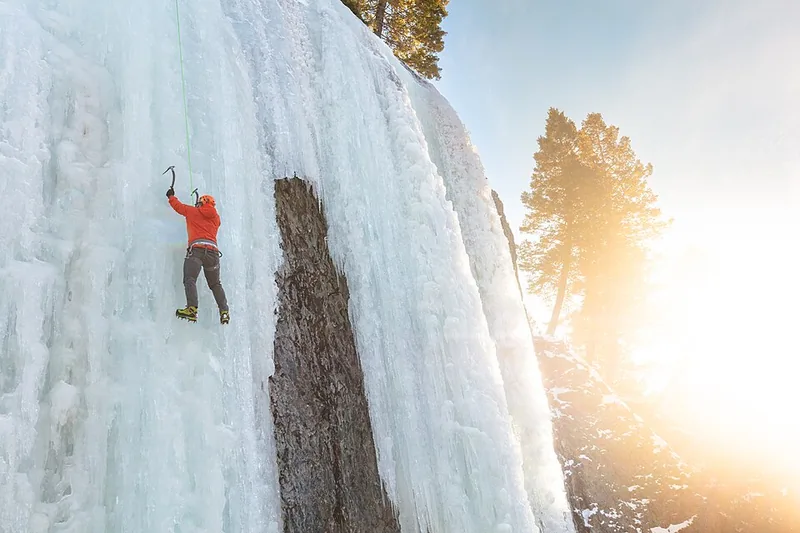 Eiskletterer steigt mit Steigeisen und Eispickeln an einer vereisten Felswand.
Photo: Forest Service Northern Region
What makes ice climbing special
Ice climbing involves ascending suitable ice formations using crampons, ice axes and rope protection. The approach and descent are also part of the tour. A route can look very different within a short time than it did the previous day, so a current assessment is essential.
The UIAA describes ice climbing as a mountaineering discipline and outlines its techniques and equipment. For any specific tour, however, clearance, weather, avalanche conditions and the responsible guide’s decision are what count.
Equipment and ability
Depending on the tour, equipment may include a harness, helmet, crampons, ice axes, rope, belay device and warm, flexible clothing. The selection must suit the route. Before booking, check what is provided and which personal items are required.
Technique cannot be learned just by reading. Crampons must fit securely, the ice axe must be used with control, and belaying must be practised. Beginners should start with a short session and a route specifically approved for their level of experience.
Hazards at the icefall
Ice can break, shatter or come loose. Other hazards include rockfall, avalanches, falls, frostbite and sudden changes in weather. The approach to the climbing area must also be assessed. A tour goes ahead only if the guide can take responsibility for it that day.
A tour may be shortened or cancelled if the ice is unstable, temperatures are rising, visibility is poor or winds are strong. A helmet and rope are no substitute for careful decision-making. Cancellation is a normal part of safety in alpine activities.
Who is ice climbing suitable for?
Climbing or alpine experience is helpful, but it does not replace an introduction. Complete beginners should choose short, guided sessions with a manageable approach. Children and teenagers need age-appropriate supervision, suitable equipment and the provider’s consent.
Be realistic about your fitness. Cold, altitude and long approaches increase the strain. Drinks, energy-rich breaks and dry spare gloves help prevent getting chilled; plan time to recover afterwards.
Combining a tour with a winter holiday
Ice climbing cannot be scheduled like a fixed indoor activity between two ski days, because weather and ice quality are decisive. A flexible day in your holiday schedule allows for changes. For information on when to travel, see Travel times and season.
Before booking, confirm the meeting point, approach, duration, technical requirements, rental equipment, minimum age and cancellation policy. After the tour, equipment needs time to dry. Respect for the terrain and weather takes precedence over wanting to go on a particular date.
Prepare well and stay flexible
Before the scheduled date, travellers should check that the experience suits their own skills, fitness and group. Age, meeting point, duration, required equipment, breaks and the return route all need to be included in the plan. Information about opening hours, prices and availability may change with the season and must be confirmed with the provider.
Weather also affects the day. Cold, wind, visibility and wet clothing can alter concentration and exertion. A warm layer to change into, drinks and a charged phone are simple but useful preparations. Anyone travelling with children should plan shorter sessions, easily accessible breaks and a reliable adult contact person.
The activity should be considered as part of the entire winter holiday. Tips in Planning a ski holiday can help with travel times, time buffers and combining the activity with a day of skiing. Snow conditions, school holidays and the resort’s seasonal opening dates are also important when choosing when to travel. A flexible plan is better than a packed schedule with no room to spare.
When choosing accommodation, short distances, a dry place to store equipment and good access to the town centre can make a difference. If you combine several sports, allow for rest days and make sure boots, gloves and clothing can dry overnight. This leaves room for spontaneous changes without compromising safety or well-being.
Respect for staff, other guests and local rules is part of every winter sports activity. A briefing is not a formality: it explains movement areas, signals, equipment and the limits of the activity. Ask questions before starting. If you experience pain, dizziness or excessive strain, or conditions seem unsafe, stop the session and inform the staff in charge.
Frequently asked questions
Can you start without experience?
Yes, but only with an explicitly guided beginner activity. The guide selects the route, equipment and exercises to suit the group and the conditions that day.
What clothing is important?
Several warm, flexible layers, dry gloves and sturdy mountain boots. Personal equipment should be agreed with the organiser in advance.
When will a tour be cancelled?
If the ice is unstable, there is avalanche danger, the weather changes drastically or other conditions make the tour inadvisable, the guide may postpone or stop it.
