
Snowmaking as an adaptation: technology, limitations, and trip planning
Technical snowmaking can help stabilize a ski season, but it does not make a resort independent of the weather, terrain, or water availability. For visitors, the blanket question of whether a resort makes snow is therefore less important. What matters more is which pistes are covered, when the system may be used, and what current conditions will be like before the ski day.
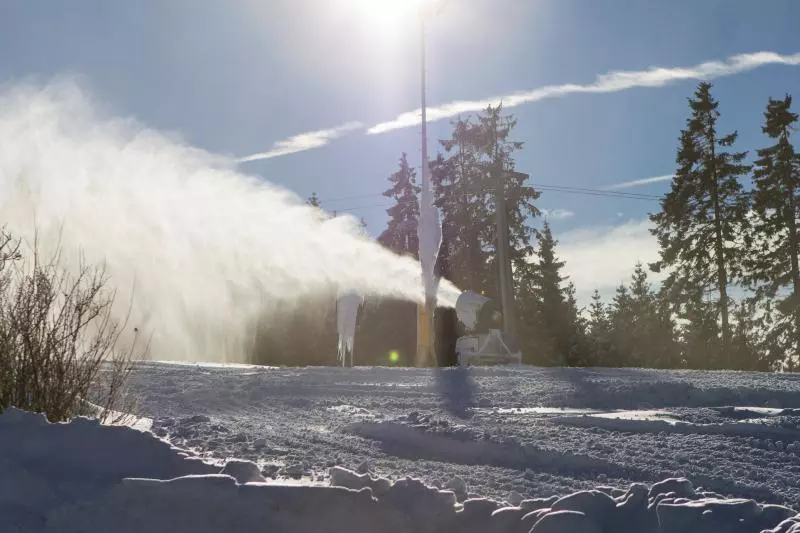 Schneekanone erzeugt technischen Schnee auf einer verschneiten Skipiste.
Photo: Dago Wiedamann
Schneekanone erzeugt technischen Schnee auf einer verschneiten Skipiste.
Photo: Dago Wiedamann
What technical snowmaking can do
A snowmaking system produces snow from water and cold air. Nozzles disperse fine droplets that freeze in suitable temperatures and land on the piste as technical snow crystals. The snow is then spread and compacted by grooming machines. This can protect a thin layer of natural snow and prepare a groomed surface for operation. The process cannot replace an adequate base of snow and soil, and it can reach its limits when temperatures or humidity are too high.
The German Cable Car Association outlines the technical and organizational principles of snowmaking for ski operations. These include permits, site-appropriate use, measuring systems, and careful snow management. For specific travel planning, however, the information provided by the individual ski resort is what counts. An example from an industry association does not automatically demonstrate the equipment or operating practices of a particular facility.
Adapting to weather and terrain
Operators cannot produce snow whenever they wish. Key factors include wet-bulb temperature, humidity, wind, and the time available for production. Cold nights often provide better conditions than mild days. Modern control systems monitor the weather and snow depth so that water and energy can be used more precisely. A piste with suitable terrain shaping also needs less snow to smooth out uneven areas.
For visitors, this means that a main run with snowmaking may be open while side slopes, valley runs, or connecting routes remain closed. Even after a cold night of snow production, wind, rain, warmth, or heavy use can change conditions. Before setting out, check the ski resort’s piste map, lift status, webcams, and latest snow report. A general assessment of snow reliability can help with choosing when to go, but it is no substitute for checking daily conditions.
Water, environmental protection, and limitations
Water for technical snowmaking is often collected in reservoirs or supplied through authorized withdrawals. When and how much water may be taken depends on local regulations, water bodies, and the time of year. When the snow melts, the water returns to the natural water cycle. Even so, the system requires planning that takes ecological impacts, pipelines, pumps, and energy into account. Claims about a particular reservoir or a specific amount of water used require a source from the operator or relevant authorities.
Vegetation also matters. A sufficiently thick snow cover can protect the piste’s soil from mechanical stress and frost. This does not mean, however, that all snowmaking is automatically harmless to the environment. The location, construction, water balance, electricity source, and operating period all need to be considered separately. Travelers looking to make sustainable choices can compare their transport, length of stay, and the services offered across the entire resort.
What visitors should check before booking
If you plan to ski early or late in the season, ask what share of the pistes is covered by snowmaking, how high the resort is, and what alternatives are available. For families, short routes back, practice slopes, and open magic carpets are often more important than a high total number of piste kilometres. Beginners may find a small, well-groomed area more enjoyable than a sprawling resort with many closed connections. Information about when to travel and the season and planning a ski holiday can help you organize these considerations in advance.
On the day of your trip, up-to-date information matters. Temperature forecasts alone do not tell you which pistes are actually skiable. Operators sometimes publish separate information about overnight snowmaking, closures, or limited access to valley runs. Check these updates the evening before and again on the morning of your ski day. In changeable weather, it makes sense to plan a winter walk, toboggan run, or rest day as an alternative.
FAQ
Is technical snowmaking the same as natural snow?
No. Technical snow is made from water and cold air and has different crystal and compaction properties. It is groomed for use on the piste and combined with natural snow.
Can snowmaking guarantee every ski season?
No. Temperature, humidity, wind, water, energy, permits, and the natural snow cover all impose limits. In addition, not every piste is covered equally.
What information is most important for a trip?
The most important information is the current piste and lift status, the snow report, and updates from the specific operator. General information about snowmaking technology is no substitute for checking conditions on the day.
