
Engadin St. Moritz Ski Area
Engadin St. Moritz combines high-alpine scenery, sunny winter days and several distinct ski areas around the Upper Engadine lakes. For trip planning, it is useful to treat the destination as a region rather than one single slope network. Corviglia above St. Moritz is the best-known area, while Corvatsch-Furtschellas, Diavolezza–Lagalb and smaller local ski areas near Zuoz, Pontresina and S-chanf add different experiences. This variety makes the region suitable for ambitious skiers, families and travellers who want to mix skiing with other winter activities.
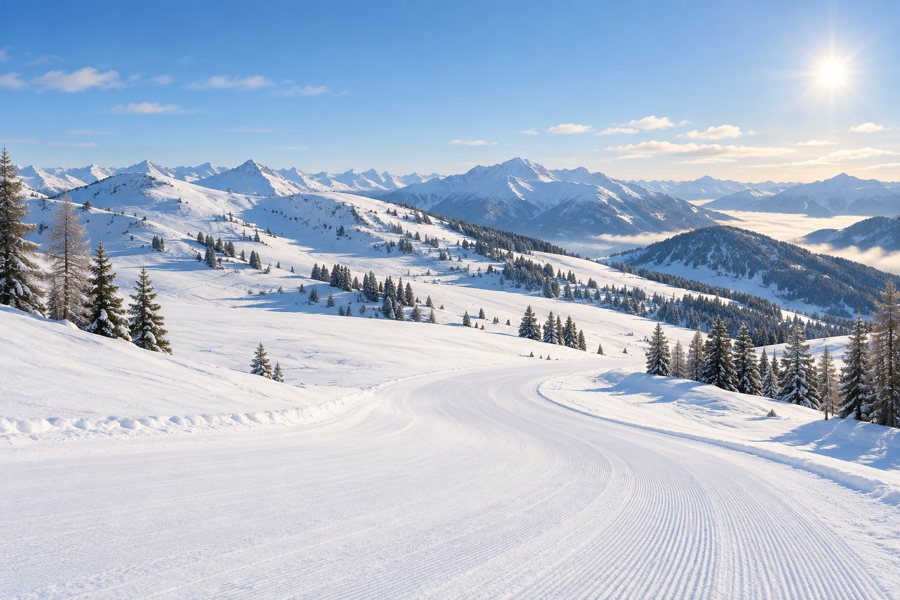 Non-documentary AI-generated winter mountain illustration.
Photo: AI-generated illustration by OpenAI for Max-TD
Non-documentary AI-generated winter mountain illustration.
Photo: AI-generated illustration by OpenAI for Max-TD
For a broader orientation, compare it with the guide to skiing in Switzerland. The ski holiday planning guide is useful for transport, timing and equipment questions. Before setting out, check the official Engadin snowsports report for current lifts, slopes and weather-related changes.
Ski areas around St. Moritz
Corviglia has a direct connection with St. Moritz and Celerina and offers a mix of broad pistes, faster descents and routes suited to different ability levels. Corvatsch-Furtschellas, reached from the Silvaplana and Sils area, is a strong choice for a separate day with long runs and expansive mountain views. Diavolezza–Lagalb has a high-alpine character and is particularly memorable when clear weather reveals the surrounding peaks. Smaller areas can be more comfortable for beginners and families who value short distances, practice slopes and a quieter rhythm.
The wider Graubünden winter sports region offers useful comparisons. Nearby alternatives include Arosa Lenzerheide, Davos Klosters and Flumserberg. The Pizol ski area can also work as a contrasting day trip, depending on road and rail connections.
Who will enjoy Engadin St. Moritz?
The region is a good match for visitors who want several kinds of winter day in one holiday. Experienced skiers can use the altitude, varied terrain and long descents, while families should compare beginner zones, ski schools and the distance from accommodation to the lift. First-time skiers benefit from choosing a small practice area for the first days rather than starting with the largest possible mountain. Non-skiers and mixed groups can plan winter walks, tobogganing, ice skating, cross-country skiing, museums and village visits.
Travel, accommodation and practical planning
The Upper Engadine sits on a high valley plateau, so winter road conditions matter. Drivers should check the forecast and any snow-chain requirements. By train, many journeys run via Chur and continue with the Rhaetian Railway. When choosing accommodation, decide whether lift access, a peaceful village, restaurants or evening variety is most important. St. Moritz offers a lively international setting; Celerina, Pontresina, Sils and Silvaplana each provide a different base for exploring the valley.
Lift operations, piste access and ticket conditions can change with wind, snow and the season. Keep the daily plan flexible and check the mountain report before leaving the accommodation. It is also helpful to confirm the last return connection if you plan to ski in a different village. For a landscape with a different character, compare the Jura winter sports region.
Frequently asked questions about Engadin St. Moritz
Is Engadin St. Moritz one single ski resort?
No. It is a regional destination with several separate ski areas and villages. Corviglia, Corvatsch-Furtschellas and Diavolezza–Lagalb should be treated as distinct options when planning each day.
Which area is best for beginners?
That depends on the village, the available practice slopes and current operations. Look for a ski school, gentle terrain and short transfers, then check the local status before travelling.
Can I visit without skiing?
Yes. Winter walks, cross-country skiing, tobogganing, skating, excursions and the villages themselves give mixed groups plenty to do away from the downhill pistes.
When should I travel?
The best time depends on snow, weather, school holidays and your preferred atmosphere. High areas may keep winter conditions for longer, but current reports should always be checked.
What should I check before a ski day?
Review open lifts and pistes, wind and weather, road or rail connections, your ticket and the route back to the accommodation. This makes the day more realistic and avoids unnecessary transfers.
Illustration: non-documentary AI-generated image. Attribution: AI-generated illustration by OpenAI for Max-TD.
