
Schladming 4-Berge-Skischaukel: Ski holiday in Styria
Schladming 4-Berge-Skischaukel at a glance: If you’re planning a ski holiday in Styria, don’t book based on the name of the ski area alone. What matters is your daily access to the mountains, the right accommodation, your ability level and which facilities you might need in changing weather. Schladming 4-Berge-Skischaukel comprises Schladming and the region’s four interconnected ski mountains. This makes it especially appealing to skiers of different ability levels, as well as families and groups.
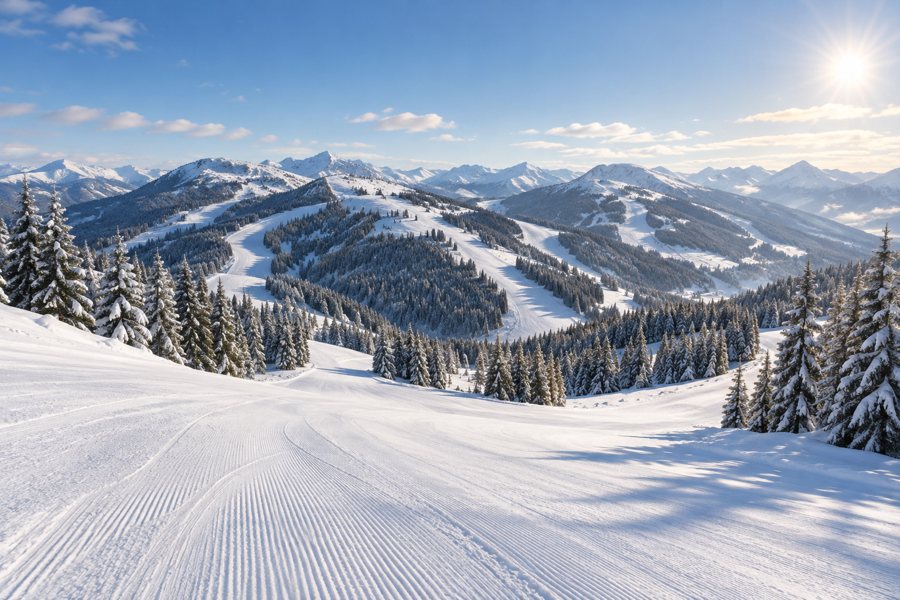 KI-generierte, nicht-dokumentarische Illustration einer winterlichen Skilandschaft in der Steiermark; keine dokumentarische Ansicht.
Photo: AI-generated illustration
KI-generierte, nicht-dokumentarische Illustration einer winterlichen Skilandschaft in der Steiermark; keine dokumentarische Ansicht.
Photo: AI-generated illustration
What makes this destination stand out
The variety between the mountains, the importance of choosing the right valley access point, and the flexibility to plan ski days around your ability and the weather. Beginners need different routes and places to take breaks than more athletic skiers. Families also look for short distances, equipment rental, ski lessons and accommodation where wet clothes can dry easily. If you’re travelling with friends, find out whether everyone will start at the same access point or whether different plans for the day make more sense.
A good first step is to compare the ski area map with the location of your accommodation. A short walk to the lift can matter more in the morning than an especially large room. On the other hand, a quieter location may be worthwhile if relaxation, self-catering or a holiday with children is the priority.
Slopes, lifts and ski school
When choosing where to ski, check which lifts and slopes are currently open. Availability can change with snow, wind, maintenance or the progress of the season. So before each day on the slopes, check which valley lift, connections and beginner areas are actually available. This is especially important for high-altitude areas or those dependent on cable cars.
A local ski school and rental shop can make your trip much easier. For lessons, check the age group, ability level, language, meeting point and start time. When renting equipment, provide your height, shoe size and ability level, and specify when you’d like to collect it. Advanced skiers can look into off-piste options and open connections, but should respect closures and local guidance.
Choosing accommodation and planning your day
A central location can shorten the walk to restaurants and several lift access points. In districts outside the centre, peace and space are often more important than being able to walk straight to a lift. For families, breakfast, ski and boot storage, and an easy way back after lessons are often more valuable than access to the largest possible ski area. Couples and groups may also want to compare restaurants, wellness facilities, shops and evening transport. If you’re travelling without a car, check that your accommodation, ski bus, train station and supermarket are all accessible without long walks.
Don’t plan every day the same way. An early start on the slopes, a shorter practice day and a weather-dependent outing are easier to combine than a fixed schedule. Check whether a mountain hut, village or your accommodation is easy to reach for breaks. If you’re travelling with children, also plan for tiredness, cold and lost equipment.
Getting there and current conditions
Your preferred lift access point is important when choosing accommodation. If you want to use a different lift each morning, compare journey times, parking and ski bus options—not just the map. In winter, snow-chain requirements, closed mountain passes, roadworks and heavy traffic on access roads can all add to your journey time. Check road conditions shortly before setting off and allow extra time for the final stretch. If you’re travelling by train or bus, include transfers from the station, luggage and the return trip after skiing in your plans.
For snow conditions, weather, open lifts, ticket terms and services, consult the official information from the operator or tourist destination. Check prices, opening hours and availability again just before your trip, as these may change with the season.
Compare nearby destinations
If you’d like to compare several ski areas, consider destinations at different elevations or with a different village setting. Dachstein and Saalbach Hinterglemm Leogang Fieberbrunn show just how much access, village character and day-to-day logistics can vary. Another point of comparison is Ischgl. What matters isn’t the longest list of options, but which base best suits your travel dates, ability and accommodation.
Winter holiday packing list
As well as ski clothing, pack warm spare gloves, sun protection, goggles suited to foggy conditions and a thin extra layer for breaks. Slippers, chargers and a bag for wet clothes are useful for your accommodation. If you’re bringing your own equipment, check the edges, bindings and base before you leave. If you’re renting, book early—especially during school holidays—and bring the necessary measurements.
Frequently asked questions
When should I check conditions?
Check when booking for a general idea, then again shortly before departure and on the morning of your ski day. Snow, wind and lift availability can change quickly.
What type of accommodation works well for families?
Look for short journeys to the ski school or ski bus, storage for equipment, somewhere to dry clothes and an easy way back. The best location depends on your chosen lift access point.
Do I need a car?
It depends on your accommodation, valley village and plans for each day. A central place to stay with a reliable ski bus can make a car-free holiday possible; more remote locations require extra planning.
Can I rent equipment locally?
Many winter sports destinations offer equipment rental. Check availability, sizes, collection times and return arrangements directly with the rental provider, and book ahead when demand is high.
