
Saalbach Hinterglemm Leogang Fieberbrunn: Ski holiday planning
Saalbach Hinterglemm Leogang Fieberbrunn is a useful choice when a ski holiday should combine several valley bases, varied terrain and practical options for families or mixed groups. The connected area spans different villages and access points, so the best experience depends on where you stay, how you travel and which slopes suit your group. Compare the location of your accommodation with the nearest lift, ski bus and evening services before you book.
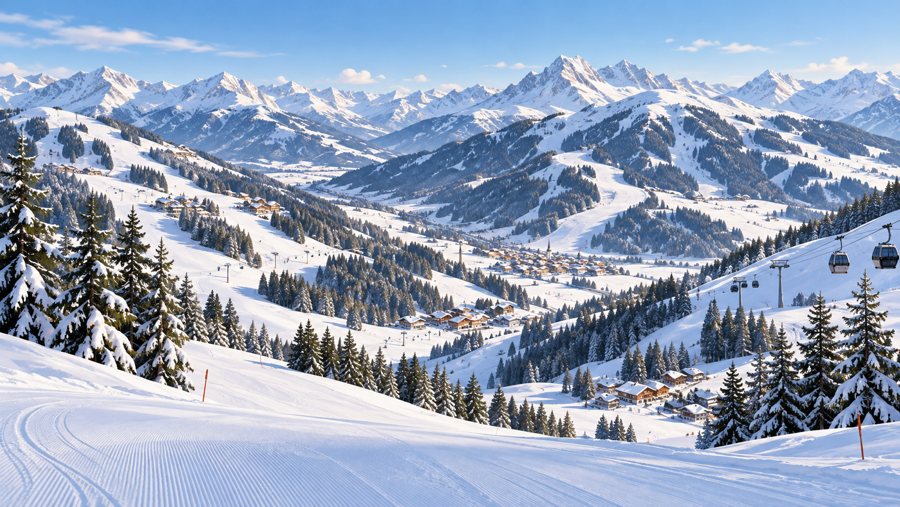 AI-generated, non-documentary illustration of a connected snowy alpine ski area. Attribution: AI-generated by OpenAI for Max-TD.
Photo: OpenAI image generation
AI-generated, non-documentary illustration of a connected snowy alpine ski area. Attribution: AI-generated by OpenAI for Max-TD.
Photo: OpenAI image generation
What to compare before choosing a base
The four names describe a broad holiday region rather than one single village experience. Saalbach and Hinterglemm offer lively resort settings, while Leogang and Fieberbrunn can suit travellers who prefer a different valley approach or a quieter daily rhythm. A central location may save time in the morning, but a village outside the busiest centre can offer more space or a calmer evening. The practical question is whether the chosen base gives everyone a realistic route to lessons, lifts, food and the return journey.
Use the wider Salzburg skiing guide to compare this region with other destinations in the province. For a broader national overview, the guide to skiing in Austria helps place the area alongside Tyrol and other federal states.
Terrain, lessons and daily rhythm
Families and beginners should check the distance from the accommodation to the meeting point of the ski school, the availability of gentle practice slopes and the return route after a tiring lesson. A large connected network is valuable only when the group can use it comfortably. Children may need shorter sessions, warm-up breaks and a simple plan for getting back to the village.
More experienced skiers can plan longer days across the valley connections, but the current lift and piste situation must be checked before setting out. Wind, snow, maintenance and seasonal operations can change which links are available. The area can work well for groups with different abilities when everyone agrees on meeting points and does not treat the longest possible tour as the only successful day.
Equipment planning is part of the route decision. The practical ski rental guide is useful when travelling by train or flying, while a private-equipment trip needs space for boots, clothing and drying. Check collection times, sizes, insurance conditions and return arrangements directly with the selected provider.
Accommodation and arrival
By car, compare the final road section, parking and the possibility of snow or ice on the approach to the accommodation. By train or bus, include the transfer from the station, luggage and the journey back after the last ski bus. A place near a reliable ski bus can be more convenient than a property that looks close on a map but requires a steep walk in ski boots.
Families often benefit from storage for skis and wet clothing, a short route to food and a flexible meal plan. Groups should also decide whether they want nightlife, wellness, self-catering or quiet evenings. These details influence the right village at least as much as the number of available pistes.
Weather, snow and alternatives
Check the weather forecast, snow report, avalanche information and operator notices shortly before each ski day. A connected region does not mean that every lift or valley link is open at the same time. If visibility deteriorates, a shorter local route or a non-skiing activity may be the better decision.
For comparison, the Ötztal guide offers a different combination of valley bases, mountain terrain and day-trip planning. Ischgl is another useful contrast for travellers comparing a more concentrated high-alpine resort profile. The Zillertal guide helps when several valleys and access points are being considered.
Planning the budget
For a weekend, a central location and simple transfers can be worth more than a larger accommodation. For a longer stay, add lift tickets, lessons, rental, food, parking, transfers and a possible rest day to the comparison. A per-person budget makes two offers easier to compare and avoids focusing only on the nightly rate.
Before departure, prepare warm spare gloves, sun protection, goggles for changing visibility and a small bag for wet items. Check bindings, boots and helmet if you bring your own equipment. The general ski holiday planning guide can help organise travel, equipment and timing, while the regional Kitzbühel Alps guide offers another nearby comparison.
Frequently asked questions
Is the region suitable for families?
It can be, provided the accommodation, ski school, practice area and return route fit the children's age and ability. Short daily routes and planned breaks matter more than covering the whole network.
Which village should I choose?
Choose according to the lift access, evening needs, transport and desired atmosphere. Saalbach, Hinterglemm, Leogang and Fieberbrunn do not offer exactly the same daily routine.
Do I need a car?
Not necessarily. A reliable ski bus and a well-placed accommodation can make a car-free stay practical, while remote locations or several daily bases require more transport planning.
What should I check shortly before travel?
Check open lifts and pistes, weather, snow and avalanche information, road conditions, ski-bus times, lesson meeting points and the rental provider's collection rules.
