
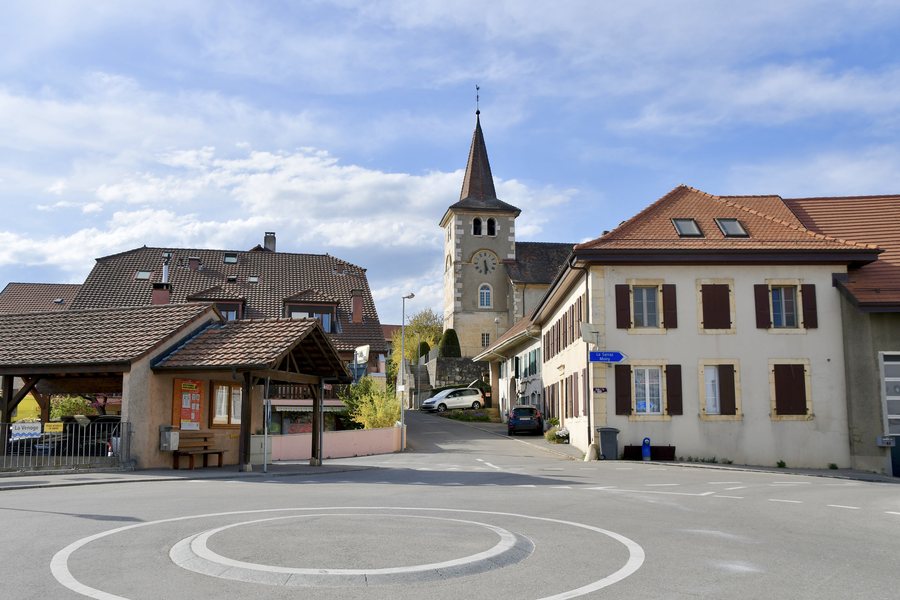
You can search specifically for accommodation for your stay in Cuarnens.
Culture
A mill is recorded for the year 1141; the inhabitants of La Coudre, Cuarnens and the Vallée were required to have their grain milled there. The present-day temple in Cuarnens was built between 1733 and 1737. From 1126 onwards, the Premonstratensian monks established the Grange estate in Cuarnens. On 14 June 1612, the Noble Abbaye des Mousquetaires was founded in Cuarnens.
The preserved gateway of the Château de la Grange stands among the meadows as a remnant of the former site. The château near the church is surrounded by a walled park with a French garden.
Nature
The Venoge shaped Cuarnens through up to four waterwheels that powered sawmills, forges or mills. Stately houses stand on both sides of the river, giving the settlement the character of a picturesque rural village.
Local character
Agricultural production supported the local economy in Cuarnens for a long time. Cheese production began in a building dating from the early 19th century and was expanded shortly after 1900.
Geographical setting
Cuarnens lies at the foot of the Jura on the road from Cossonay to the Vallée de Joux. Along the shores of Lakes Joux and Brenet, beaches and forests combine with opportunities for family walks. The Vallée de Joux offers hundreds of kilometres of signposted hiking trails as well as numerous hikes through diverse landscapes.

.jpg)