
Knätte: Nature and History
Accommodation in Knätte
Knätte can be explored through its nature, trails and local history. Highlights include distinctive hilltops and a steppe-like dry meadow, the 37-kilometre-long Änglaleden trail, and two different religious buildings. When planning a stay, you can focus separately on nature and culture: geology and landscape offer a different emphasis from the medieval church or the history of the chapel.
Nature and Landscape
Knätte Nature Reserve comprises two distinctive hilltops formed by glacial meltwater deposits. Some of the material comes from the limestone rocks of Falbygden. Meltwater transports and deposits material; this process explains how the hilltops were formed. The limestone content also indicates the origin of some of the rock. The formation process and the material’s origin thus offer two different geological perspectives on the landforms.
Knätte kullar is a four-hectare nature reserve with a steppe-like dry meadow. Four hectares is equivalent to 40,000 square metres. Alongside this area measurement, the type of meadow describes the area’s distinctive natural character. Together, these details show how Knätte’s landscape can be characterised in quite different ways: by distinctive geological forms and by a named habitat.
Finding Your Way Around the Nature Reserve
You can reach Knätte Nature Reserve via a road that branches off just south of Knätte kyrka. The reserve has an information board, a car park and a picnic area. The board provides information on site; the car park and picnic area are practical stopping points for a visit.
Änglaleden Cycling and Hiking Trail
Änglaleden is a 37-kilometre cycling and hiking trail between Årås, Hössna, Knätte and Liared. It passes through varied landscapes along the lakes Jogen, Vållern and Lönnern. The total distance, the two ways of travelling the trail and the lakes provide practical details for planning your trip. If you want to explore the trail by bike or on foot, check the current route before setting off: trail details may change.
Knätte kyrka and Cemetery
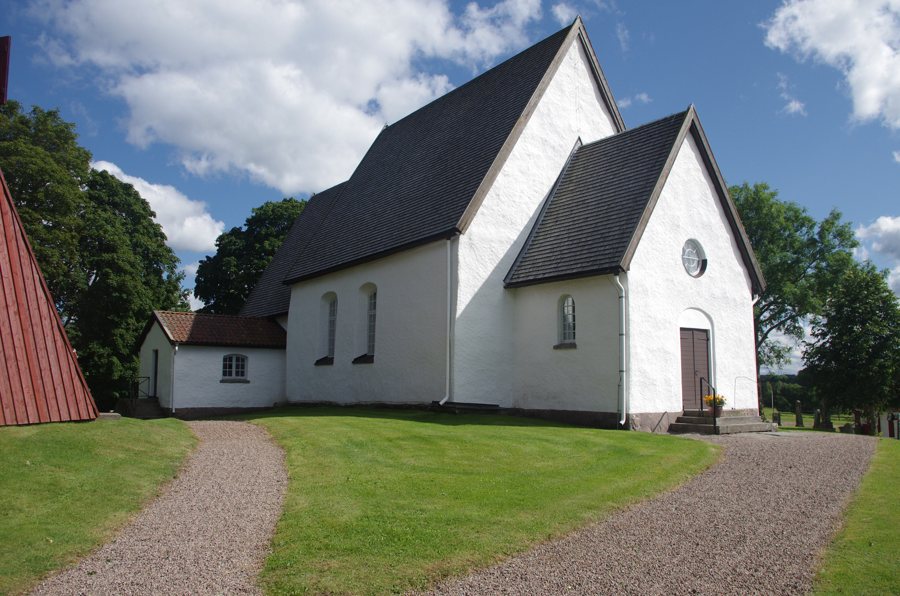
Knätte kyrka is a medieval stone church. It is generally dated to the period from the late 12th century to the beginning of the 14th century. Its location is also distinctive: the church stands on a hilltop above a compact village in the built-up valley of the River Ätran. Its construction history and location offer different ways of understanding the church building.
The cemetery at Knätte kyrka has two entrances. A stone staircase leads up from the country road to the north-west entrance. There are stone gateposts and a wrought-iron double gate from the early 20th century. The staircase and gate make this entrance a distinctive architectural feature alongside the medieval church itself.
The History of Knätte kapell
Knätte kapell represents another chapter in the local history of religion. Aron Frisell built the chapel and made it available to all who preached the Gospel of Christ. The Baptist congregation in Knätte held its meetings there. Its present condition is also part of its story: the chapel is still standing, but has been empty and unused for many years and has since fallen into serious disrepair. Its builder, former use and current condition thus trace different aspects of its history.
For the wider travel overview: Blidsberg.

