
Cercedilla: Trails, Nature and Culture
Accommodation in Cercedilla
Cercedilla: The C-9 railway line connects the town with Puerto de Navacerrada and Cotos. The origins of the Iglesia de San Sebastián date back to the 13th century.
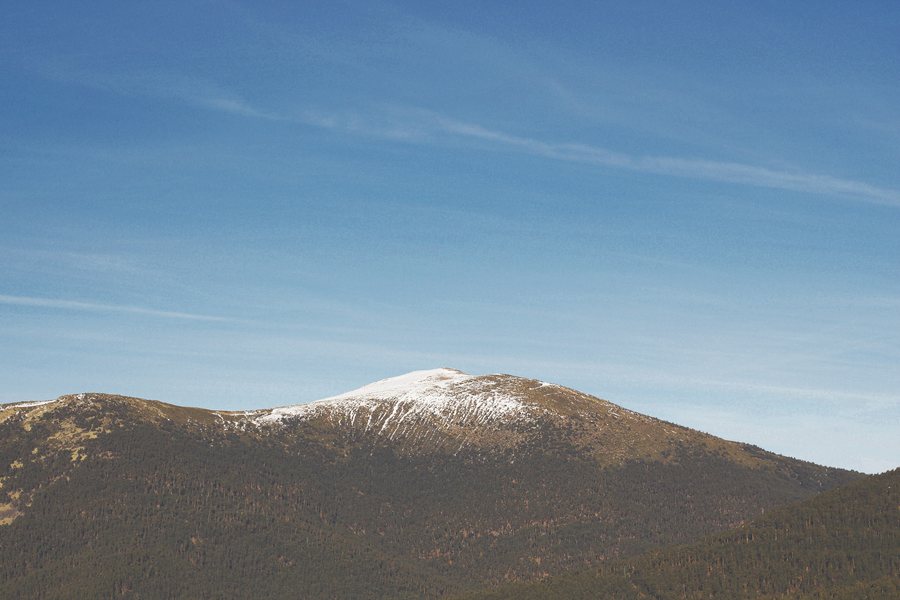 File:Puerto de Navacerrada, Cercedilla, Spain (Unsplash).jpg
Photo: Jorge Gordo jorgegordo via Wikimedia Commons, CC0
File:Puerto de Navacerrada, Cercedilla, Spain (Unsplash).jpg
Photo: Jorge Gordo jorgegordo via Wikimedia Commons, CC0
The local highlights range from winter sports history and historic trails to architecture and industrial archaeology.
Culture and Winter Sports History
The Museo del Esquí displays historical and contemporary objects, photographs, works of art and audiovisual media about skiing, alpine sports, nature, and the history and future of the Sierra de Madrid.
The museum also includes trophies and documents from Francisco Fernández Ochoa’s sporting career.
Trails and Forest Landscapes
The Camino Schmid is part of the national park’s official trail network. It leads from Puerto de Navacerrada via the shaded side of the Siete Picos to Puerto de La Fuenfría, runs through centuries-old forests of Scots pine, and offers views of the Valle de La Fuenfría.
The Senda Puricelli runs mostly through Scots pine forest on the western side of the Valle de La Fuenfría.
The main attractions of Los Miradores de La Fuenfría include the viewpoints named after writers Luis Rosales and Vicente Aleixandre, with panoramic views of the Siete Picos and Puerto de La Fuenfría.
The described routes differ considerably in their choice of trail: the Camino Schmid connects two mountain passes, the Senda Puricelli is predominantly forested, and the Calzada Romana complements these trail types with its historical origins and visible waymarkers.
Historic Trails
The Calzada Romana hiking route leads from the Valle de La Fuenfría Visitor Centre to Puerto de La Fuenfría. It was built in the 1st century as part of the Vía XXIV.
It begins at two steel markers bearing the inscription “Vía XXIV”; green dots and information boards indicate the rest of the route.
Valle de la Fuenfría Visitor Centre
The Valle de la Fuenfría Visitor Centre has a permanent exhibition with information boards and an audiovisual presentation about the valley.
The centre also includes an exhibition room, a library and a training room.
Its facilities therefore combine several forms of interpretation: the exhibition, information boards and audiovisual content cover the valley, while the library and training room form additional areas of the centre.
Camorritos Colony
The Camorritos Colony was built from 1923 onwards northwest of the town centre.
Its buildings are privately owned residences and can only be viewed from the outside.
They are characterised by walls made of granite and varnished pine, steep slate roofs and large chimneys.
Industrial Archaeology
The Fábrica de la Luz is a preserved example of industrial archaeology in the Sierra de Guadarrama.
It is a small hydroelectric power station built in 1925 that used hydropower to generate electricity.
The Fábrica de la Luz is currently open to the public.
For the main travel overview: Madrid.

.jpg)