
Lubański: Buildings, Museum and Landscape
Accommodation in Lubański
Lubański offers a range of starting points for planning a trip: historic buildings, minerals, water engineering and landscape. If you are looking for accommodation for a stay in the region, you can first consider which of these themes will shape your visit. The attractions include both distinctive buildings and excursion routes that focus on different aspects of regional history.
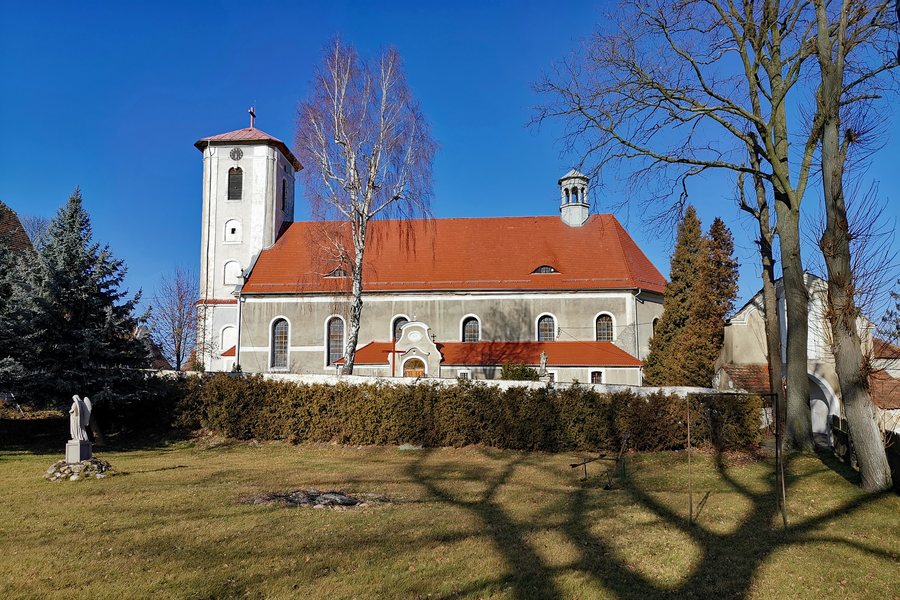 File:PL Henryków Lubanski church 1.jpg
Photo: PaulT (Gunther Tschuch) via Wikimedia Commons, CC BY-SA 4.0
Wieża Bracka and Minerals in Lubań
One distinctive building in Lubań is Wieża Bracka. Built in 1318, it has eight storeys and stands 45 metres high. The mineralogy department of the Regional Museum in Lubań is housed in the tower. Its collections include minerals from the Kwisa Valley, as well as the Jizera and Karkonosze Mountains. This makes it possible to combine a visit to the building with an interest in the minerals of these areas.
The tower’s height also shapes its role in the cityscape: its summit offers a panorama of the city. Wieża Bracka thus provides several perspectives on Lubań—as a historic building, a home for a museum collection and a viewpoint. When deciding what to see, you can consider whether you are most interested in architecture, mineralogy or views over the city.
Castle and Palaces: Different Architectural Histories
Czocha Castle combines an older building history with later alterations. It was built in the 13th century by a Bohemian ruler. At the beginning of the 20th century, a renovation led by Bodo Ebhardt gave it a partly fairy-tale appearance. A guided tour of the courtyards can also include a visit to the castle tower, which offers views of the surrounding area. If you are interested in the courtyards and the tower, plan for this guided tour as the visit described here.
The palace in Nawojów Łużycki was built in 1570–1571 and is one of the most valuable Renaissance monuments in the whole of Upper Lusatia. The palace in Biedrzychowice represents a different architectural style: it is a Baroque palace and one of the most impressive buildings of its kind in western Lower Silesia. The two palaces therefore offer different points of focus for anyone wishing to distinguish between Renaissance and Baroque architecture.
Spa House, Church and Water Engineering
In Świeradów-Zdrój, the spa house has an 80-metre-long promenade hall made of larch wood. At the main entrance to the hall is a drinking-water spring containing radon- and iron-rich mineral water. In Świecie, meanwhile, the Church of the Sacred Heart of Jesus dates from the 14th century. Its wooden coffered ceiling is decorated with portraits of saints. Both buildings offer visitors interested in culture specific architectural details to focus on.
Another point of interest is the Leśniańska Dam. It is 45 metres high and 130 metres long at the crest; as a hydrotechnical monument, it is considered one of the most interesting in Lower Silesia. Poland’s oldest pumped-storage power station stands at the foot of the dam. Anyone interested in engineering structures will find two distinct aspects here: the dam’s dimensions and the power station at its foot.
Excursion Routes, the Kwisa Valley and Outdoor Activities
Lubański County presents five themed excursion routes. Their themes are fortifications, aristocratic residences, remnants of the former criminal justice system, hydrotechnical monuments and religious monuments. These themes can help you choose a focus of your own, rather than viewing the region through just one attraction. They also make it easier to distinguish between different interests, particularly in architecture and regional history.
Excursions in the Kwisa Valley pass along the river, wooded hills, rock faces and a reservoir. This adds a landscape perspective to the buildings. In Lubań, a 2.8-kilometre shared pedestrian and cycle path also runs along the DK30. This stated distance offers another point of reference for visitors who would like to include some exercise in their day’s plans.
For further orientation in the area, see the pages for Bad Flinsberg, Wolimierz and Pobiedna.
For the broader travel overview: Lower Silesia.
More destinations
More places in the same destination:

