
Nicolosi on Mount Etna: volcanic craters, trails and churches
Accommodation in Nicolosi
Mount Etna high-altitude station and how to get there
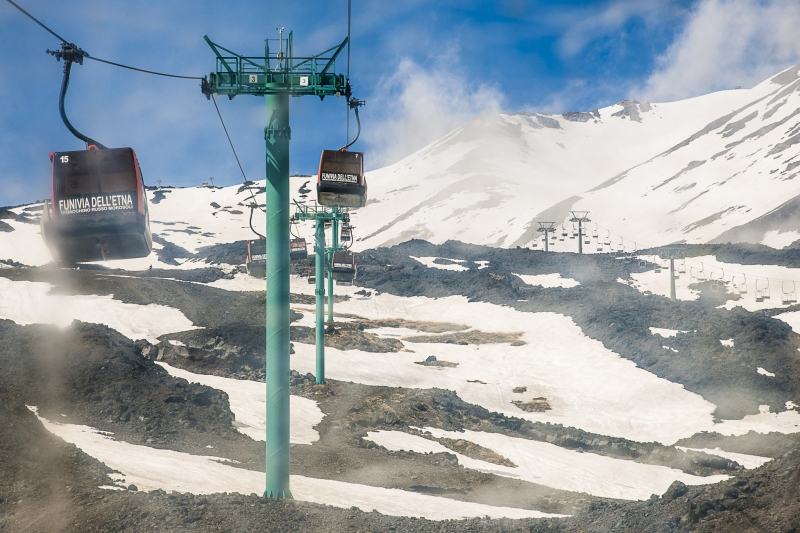
The Nicolosi Nord–Etna Sud station (Rifugio Sapienza) is located in the Nicolosi area at an altitude of 1,910 metres. It offers tourist services for ascents to the summit areas of Mount Etna. A bus service departs from Catania at Piazza Papa Giovanni XXIII, reaches Nicolosi and then continues to the Etna Sud tourist and sports station (Nicolosi Nord).
Volcanic landscape and craters
The volcanic landscape can be seen in several distinct locations. The Monti Silvestri are two inactive craters formed as a result of the 1892 eruption. Cava Asero lies north of Nicolosi; this disused lava quarry reveals the layers of old and new lava flows.
Trails and nature paths
Access to the trails at Monti Rossi is on Via Goethe, near Monti Rossi Adventure Park in the northern part of Nicolosi. The Schiena dell’Asino trail can be walked in every season, provided there is no snow. The Sentiero del Germoplasma is approximately 1,153 metres long, has a gentle gradient of 7 percent and features a special surface that makes it easier for people with motor impairments to use.
At Cava Asero, a nature trail was created along a restored municipal path. The trail leads to the front of the 2001 lava flow. The lava quarry and the nature trail therefore represent different aspects of the same volcanic site: both the layering of old and new lava flows and the front of a specific lava flow are visible.
Volcanology in two museums
The Museo Vulcanologico Etneo contains photographs and large-format images of eruptions as well as a scale model of the entire Mount Etna area. The Museo Vulcanologico Etneo also displays volcanic scoria, haematite crystals, sulphur crystals and silicates. The Museo Vulcanologico dell’Etna displays volcanic lava rock and provides information about the formation of the volcano and the main types of its volcanic activity. In the museums, volcanic visual documentation, minerals, a model of the area and lava rock each represent distinct areas of focus.
Historic sites, churches and monastery
Tre Altarelli is an 18th-century monument with three arches. It was built at the site where the lava flow from the 1766 eruption came to a stop and represents Nicolosi’s three patron saints. The Chiesa Madre was built to a design by Vaccarini in the first half of the 18th century. The Church of Madonna del Carmelo in Nicolosi dates from the 18th century. The Monastero di San Nicolò l’Arena in Nicolosi was built from lava stone. The ancient monastery of San Nicolò l’Arena in Nicolosi was once the seat of an abbey.
Pane nero di Immanu
Pane nero di Immanu is part of the local profile. Irmana, Irmanu and Germanico are other names for this typical bread associated with Nicolosi; it consists of 80 percent rye flour and 20 percent durum wheat semolina.
Other destinations: Zafferana Etnea, Linguaglossa, Ragalna
For the higher-level travel overview: Catania.
