
Magyarpolány – Calvary Hill, Church and Passion Play
Accommodation in Magyarpolány
Within the broader Lake Balaton – North destination, SkiArena Vibe Park in Eplény has 16 slopes and a total piste system measuring 7,984 metres. Magyarpolány has a different cultural and architectural profile: Calvary Hill, Szent László Church and historic Petőfi Street are prominent landmarks in the village. When choosing accommodation, you can consider the village’s specific character and the regional skiing option as separate factors.
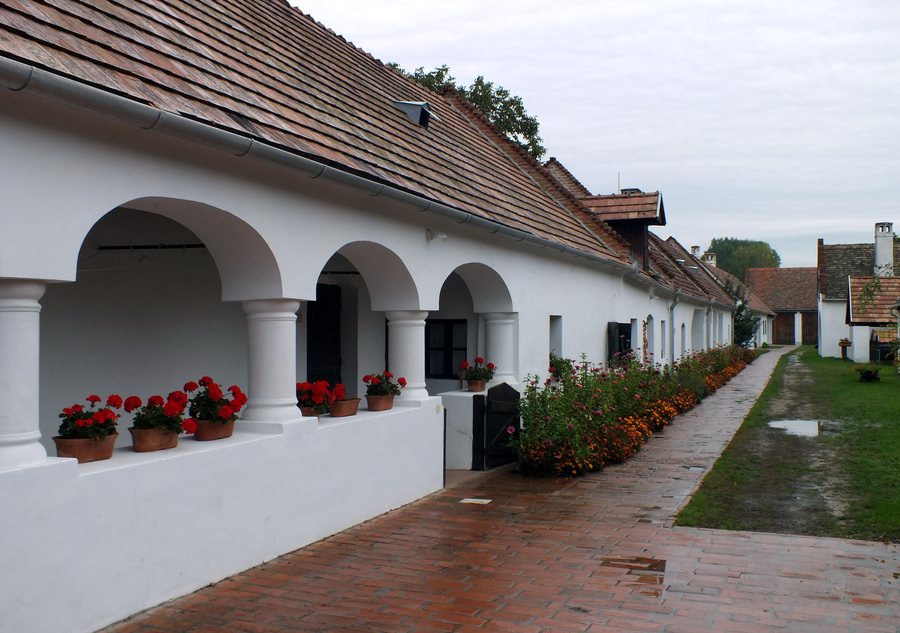 File:Tájház, 2013-ban. - Veszprém megye, Magyarpolány.jpg
Photo: Erikpapa via Wikimedia Commons, CC BY-SA 3.0
Calvary Hill and Via Calvaria
On the hill beside the church, the Calvary sculpture group features near life-size figures at five stations. It was created in 1780 by the Swabian brothers Listner. At the top of Calvary Hill stands a chapel dedicated to Our Lady of Sorrows. Calvary Hill is part of the cultural, natural and architectural heritage of Via Calvaria.
Via Calvaria is a developing hiking trail that connects the Calvaries of 14 towns and villages; one of its sites is in Magyarpolány. The sculpture group and chapel are specific features of the village, while the trail connects several places. These two levels can be considered separately when finding your way around, without equating local history with the wider trail route.
Szent László Church: building history and altars
Szent László Church in Magyarpolány was built between 1761 and 1773. It was commissioned by Abbot Konstantin Haschke of Heinrichau, together with master builder János Hoffpaur of Zirc. The church is a specially protected historic monument and a Baroque church. It has a main altar and two side altars in the Copf style. The construction period and the furnishings offer different points of reference: the dates indicate when it was built, while the Copf style characterises the two side altars.
Petőfi Street and the Tájház
Historic Petőfi Street is known for its peasant houses with verandas. The Magyarpolány Tájház is located there in a traditional stone house. The Tájház building and the veranda houses characteristic of the street are two distinct points of reference for understanding the local architecture. The Tájház collection includes furnishings and household objects from traditional peasant life, as well as typical items of folk costume. Check current visiting arrangements before your visit.
The same building also houses an artists’ house and an art school in its other rooms. In traditional houses generally, the kitchen is described as the central room: smoke from the stove escaped through an open smoke vent, and the pantry and parlour led off from the kitchen. This layout illustrates the central role of the kitchen in the house arrangement described, without attributing it exclusively to the Tájház building.
Passion Play and seasonal art
Since 1993, the Magyarpolány Passion Play has been staged outdoors by village residents and members of the local community. The tradition thus combines its open-air format with the participation of the local community.
During the summer months, visitors can explore various art forms with the guidance of skilled masters. The programme is seasonal; check availability in advance.
Discover more destinations: Ajka, Úrkút, Halimba.
Go to the overview of the wider destination: Ajkai.

