
Parád: Avenue, Waterfall and Local History
Accommodation in Parád
In Parádfürdő, a carriage museum and a geological educational trail complement these local attractions. Depending on whether you are more interested in architectural history, landscapes or the history of crafts, these places offer different points of interest to help you decide.
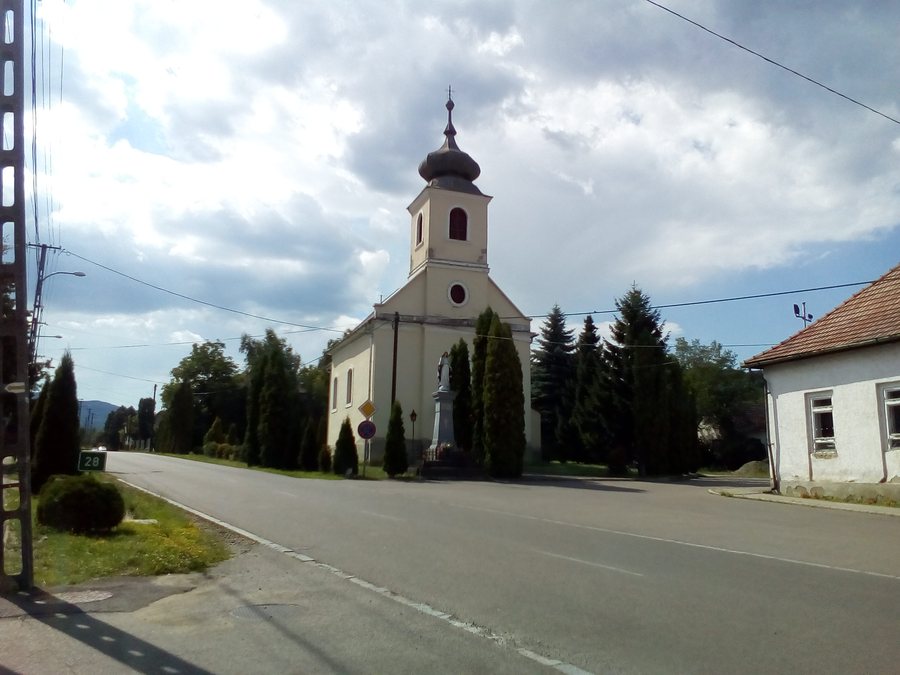
Church and architectural history in Parád
The Catholic church in Parád is a Baroque stone building dating from 1768. Its style, building material and date of construction give you specific details to consider when placing the building in context. For a visit with an interest in architecture, it offers a clearly defined example: not an abstract overview of an era, but a single building with a named style and date.
The protected Ilona Valley Avenue also connects landscape and local history. It has been protected since 1975 and is of botanical, scenic and local historical value. Mainly horse chestnut trees line the 1.5-kilometre avenue, which leads to the Ilona Valley Waterfall in Ilona Valley. The tree species, length and protected status describe different aspects of the same place, making the avenue equally interesting to nature and history enthusiasts.
Distinguishing between the avenue and the trail
A second route to the waterfall mentioned above is the 6.5-kilometre Parádfürdő–Ilona Valley Geological Educational Trail. It starts at the eastern edge of Parádfürdő, near Károlyi Castle, and follows the Ilona Stream to the Ilona Valley Waterfall. When comparing the two directly, their stated lengths are a useful distinction: the avenue is 1.5 kilometres long, while the educational trail is 6.5 kilometres long. Both descriptions lead to the same named destination, but describe different routes and starting points. At 1.5 kilometres, the avenue is shorter than the 6.5-kilometre educational trail.
The trail’s name points to its geological focus. The protected avenue is lined mainly with horse chestnut trees; the geological educational trail follows the Ilona Stream to the waterfall. If you are choosing where to visit based on nature and landscape, these differences are more informative than a simple list of attractions.
Carriage museum in Parádfürdő
The Cifra Stable and Carriage Museum in Parádfürdő displays historic horse-drawn carriages. The exhibition presents both the history of Hungarian carriage-making and the individual stages involved in building a carriage. This provides a different cultural perspective alongside the church: the focus here is not architecture, but vehicles and a craft.
Heves as a broader travel region
The broader travel destination of Heves offers further points of interest on a larger geographical scale. These include the Hevesi Füves Puszták Landscape Protection Area in the southern part of Heves County. The protected area covers 16,114 hectares, was designated in 1993, and reached its present extent following expansions in 2005 and 2008.
The Ilona Valley educational trail is also associated, within the broader travel destination of Heves, with the geological features of the Eastern Mátra Mountains and evidence of former ore mining. In this wider context, Kékestető is another attraction, where fans of active tourism can enjoy winter sports. For orientation within the broader travel destination of Heves, the trail’s geological and mining history themes sit alongside winter sports at Kékestető.
If you would like to include more place names in your search, you can also compare Paradohuta, Mátraderecske, Parádsasvár and Bodony.
For the broader travel overview: Pétervásárai.

