
Liesen between the Liesetal Valley, High Trails and Village History
Accommodation in Liesen
Liesen combines the protected Liesetal Valley, scenic highlands and distinctive reminders of village history. During your stay, you can combine nature trails, panoramic viewpoints, churches and regional features. The range extends from easily walkable paths through the FFH area to a small geological outcrop and a summer recreation facility in the valley.
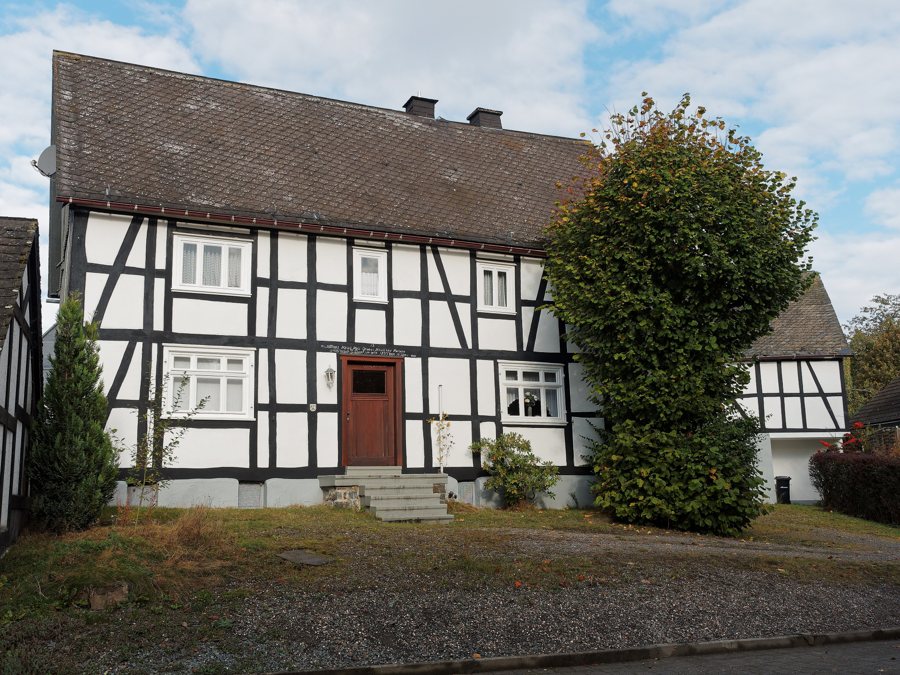
Liesetal Valley: Above Liesen, the valley extends about 4.5 km into the wooded Rothaar Mountains, Nature: The Liesetal Valley is designated as a nature reserve, High trails: The Meisebock Trail is an approximately 12 km circular route along the Höhenflug trail, Viewpoint: The Sauerland Stabil Chair offers a 360-degree panoramic view from the Kohlberg, Culture: St. Thomas Church combines modern architecture with historic furnishings, Village life: The bakehouse stands in the center of the village next to the parish hall, Event: A regularly offered circular route is accompanied by certified nature and landscape guide Ursula Schüngel.
Natural landscape between valley and highlands
The Liesetal Valley is the natural focal point around Liesen. Above the village, a roughly 4.5 km-long stretch of species-rich meadows and pastures rises into the wooded Rothaar Mountains. Forest and open land are closely interwoven there. In addition, the Liesetal Valley is designated as a nature reserve. This combination makes the valley area a clearly recognizable part of your stay: You experience open meadows, pastures and forest not as separate landscapes, but in close connection with one another.
The natural landscape also includes areas that are particularly well protected and geologically interesting. The 13 km-long Liesetal Nature Trail passes through the “Liesetal-Hilmesberg” FFH area on easily walkable paths. A small geological outcrop in the Liesetal Valley features an information board provided by the Geological Survey. Below the Hilmesberg summit ridge lies one of the last mountain heaths in the Medebach Bay; it is surrounded by coppice forests. The summit of the Hilmesberg offers views of the Rothaar Mountains and the Medebach Bay.
Trails for different day plans
Liesen offers several trails with distinctly different profiles. The 13 km Liesetal Nature Trail connects the valley landscape with the Liesetal-Hilmesberg FFH area. The approximately 12 km Meisebock Trail is designed as a circular route along the Höhenflug trail. Those who prefer a longer loop can hike the “Gelobte Kreuze” trail over 11.1 km or divide it into two sections of 5.8 and 5.3 km.
The “Gelobte Kreuze” themed trail leads around Liesen past crosses, wayside shrines and small wayside chapels. At the stations, information pillars with QR codes provide details about the respective locations. For a guided perspective, the “Freier Stein Hill Ruins and Horse Stable” circular route is regularly offered in Liesen with Ursula Schüngel through Touristik Winterberg with Hallenberg. As a certified nature and landscape guide, she leads a tour that combines natural and local points of interest.
Viewpoints and visible landmarks
One of the most prominent destinations around Liesen is the Sauerland Stabil Chair near Hallenberg-Liesen. The eight-meter-high wooden artwork stands on the Kohlberg and has an observation platform. From there, the 360-degree panoramic view extends across Liesen, Hallenberg and the Medebach Bay.
The small geological outcrop in the Liesetal Valley also has its own matter-of-fact appeal. The Geological Survey’s information board makes it a destination for visitors who want to explore the landscape not only through trails and viewpoints, but also through its geological features.
Village history, churches and bakehouse
St. Thomas Church in Liesen is a noteworthy site where modern church architecture is combined with historic furnishings. Specifically, it is a modern hall church with a Baroque high altar and an organ dating from 1811. A smaller church built in Liesen in 1746 is now a listed monument. Both buildings provide the village with distinct historical and architectural points of reference.
The bakehouse stands in the center of the village next to the parish hall. It was built on the occasion of the 700th anniversary celebration on September 1, 2013. The bakehouse team offers additional baking days in spring and autumn; on these days, pre-ordered loaves can be collected.
Summer valley area
The recreation facility with a footbath in the Liesetal Valley is maintained by the local village community and offers guests a chance to cool off in summer. In thematic terms, it differs from the high trails, viewpoints and churches: While the trails and mountains focus on activity and exploring the landscape, the facility is one of the quieter options in the valley area.
Accommodation in Liesen may be of interest if you would like to combine nature trails, viewpoints, religious architecture and village amenities during one stay. For information about other places in the surrounding area, also see Hesborn, Braunshausen.
FAQ
How long is the “Gelobte Kreuze” trail?
The trail can be hiked over 11.1 km or divided into two sections of 5.8 and 5.3 km.
How is the Meisebock Trail marked?
The approximately 12 km circular route along the Höhenflug trail is consistently marked with a white H on a blue background.
Which connection leads to the Liesetal Nature Trail?
Bus route S50 runs from Winterberg to Hallenberg as far as the Freibad stop. There, passengers change to route R44 toward Medebach.
What seasonal offerings are available at the bakehouse?
Additional baking days take place in spring and autumn. Pre-ordered loaves can be collected on these days.
What is notable about the churches in Liesen?
St. Thomas Church is a modern hall church with a Baroque high altar and an organ from 1811. A smaller church dating from 1746 is a listed monument.
To the overarching travel overview: Hallenberg.

