
Odenwald: Castles, Sea of Rocks and Roman Traces
Accommodation in Odenwald
In Odenwald, reasons to visit range from geological features and Roman traces to castles, museums, trails and regional cuisine. If you are looking for a hotel or other accommodation, first consider which of these interests you want to shape your stay. This gives your search a clear connection to the experiences you would like to plan.
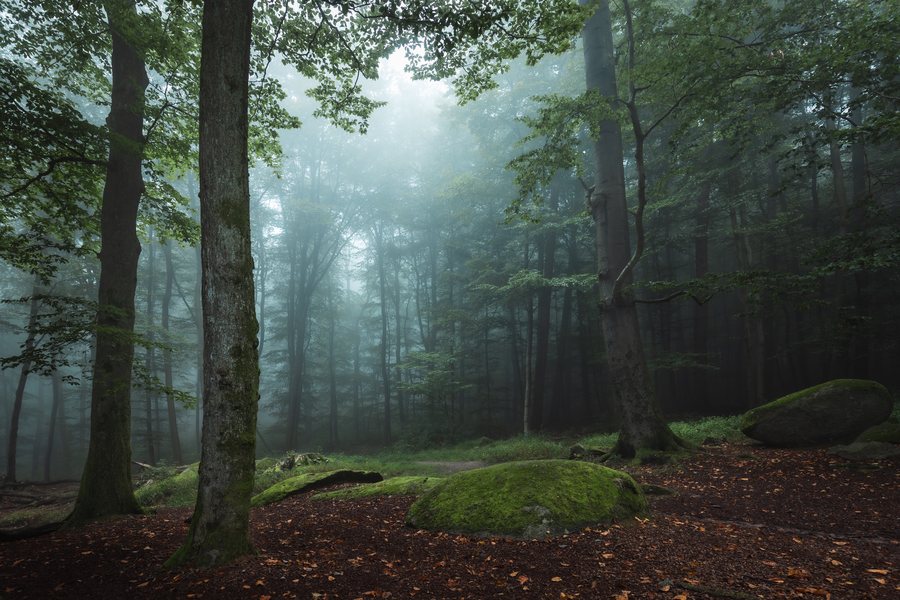 File:Odenwald - In the forest of the elves.jpg
Photo: Stefan Heß via Wikimedia Commons, CC BY-SA 4.0
Rock, Sea of Rocks and Roman Traces
The crystalline Odenwald includes deep-seated rocks such as gabbro, diorite, granodiorite and granite, as well as metamorphic rocks. These rocks tell of changes that took place far in the past: the metamorphic rocks provide evidence of a continent-continent collision that occurred 400 to 320 million years ago. Its geological history therefore reaches far beyond the more recent traces of human use.
In the Sea of Rocks in Lautertal, the geological processes that shaped its formation began more than 340 million years ago. The site also has an archaeological side: numerous relics of Roman stone-working from the 3rd and 4th centuries give the Sea of Rocks historical significance. Geology and Roman history represent two different periods here, which visitors can discover together.
The Sea of Rocks Information Centre provides information about the formation of the Sea of Rocks, Roman stone-working, Siegfried’s Spring and the Bergstraße-Odenwald UNESCO Global Geopark. Through the centre, you can book guided tours and talks on these topics, as well as on legends, wildlife and the habitat of Felsberg. Check in advance whether a suitable date is available. The information centre also has a bistro serving regional dishes.
Castles, Museums and Roman Sites
Breuberg Castle has a history spanning more than 850 years and is one of the largest and best-preserved castles in southern Germany. The Breuberg Museum is located inside the castle. Another way to explore the site is the adventure trail: it leads uphill from the historic market square in Neustadt to the castle and features viewing platforms and a large slide.
The Roman Villa Haselburg near Hummetroth offers a different historical focus. The excavated and reconstructed villa rustica dates from the 2nd century AD. The Odenwald Limes is another Roman relic in the region. At the Gottersdorf Open-Air Museum, you can experience Odenwald’s past firsthand. These attractions differ in whether your interest lies in a castle, a reconstructed Roman site, a museum or archaeological traces.
Trails, River and Regional Cuisine
For tours that include overnight stays in nature, four nature-oriented trekking camps are available in Odenwald. Day stages connect the camps; single-day, weekend and multi-day tours are offered. Check the booking and seasonal conditions before planning. Another way to explore the area is to travel to Neckarsteinach in the southern Odenwald: the town is surrounded by four medieval castles and has a five-kilometre, car-free riverside promenade with signposted hiking and cycling trails.
During the summer months, boats operated by the White Fleet run regularly between Heidelberg and Neckarsteinach. If you would like to include this connection in your plans, check the current timetable. There are regional options for dining, too: Odenwald inns serve dishes including green spelt and game, though the selection varies from one establishment to another. Farm shops and vending machines selling regional produce offer supplies for outdoor cooking; products and opening hours may vary.
Organising Your Interests When Looking for Accommodation
For your planning, it makes a difference whether you want to focus on a visit to a castle or museum, take a multi-day tour along connected day stages, or use a seasonal boat service. Guided tours and talks at the Sea of Rocks Information Centre can be booked, the trekking camps are linked to tour stages, and the boats operate only during the summer months. By distinguishing between these types of excursions, you can take dates and seasonal availability into account when searching for suitable accommodation.
Discover more destinations: Beerfelden, Rothenberg, Hesseneck, Sensbachtal, Mossautal, Werra-Meißner District, Bergstraße and Vogelsberg.
Return to the main travel overview: Hesse.

