
Wildenau between the Pearl Route and historic residential barns
Accommodation in Wildenau
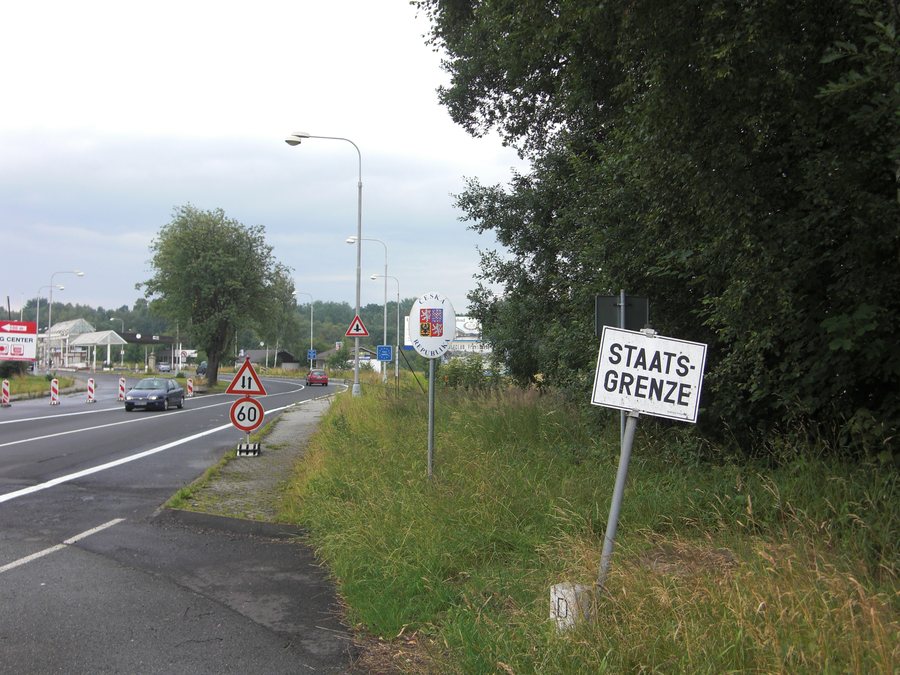
Wildenau combines trails near the border with a particularly vivid local history. The Ostweg runs through the village and is part of a hiking route connecting the tripoint of Bavaria–Bohemia–Saxony with the Eger and Röslau valleys, Hohenberg an der Eger, Schirnding, and the monastery town of Waldsassen. In addition, there is the Pearl Route, with sections that are open to traffic and signposted, as well as a number of historic residential barns. The village’s themes thus range from hiking and cycling to regional border history and rural architectural heritage.
The Ostweg through Wildenau
The Ostweg runs through Wildenau along a hiking route near the border. Its route connects the tripoint of Bavaria–Bohemia–Saxony with the Eger and Röslau valleys, Hohenberg an der Eger, Schirnding, and the monastery town of Waldsassen.
Cycling along the Pearl Route
Public farm and forest roads on the Pearl Route from Plößberg to Wildenau were paved for year-round use. For a cycling tour, the paved section between Plößberg and Wildenau, which can be used year-round, can be planned regardless of the season.
The Pearl Route runs from Oberkotzau via Rehau, Schönwald, and Selb-Plößberg to Asch. Along this route, it can be used continuously and is signposted. The paving applies to public farm and forest roads between Plößberg and Wildenau; continuous usability and signposting apply to the route from Oberkotzau to Asch.
Bilingual border history along the Pearl Route
One of the nine information boards on the Pearl Route is located in Wildenau. These boards present the history of the shared German-Czech border region in bilingual form. The historical content is available in German and Czech. In Wildenau, the Pearl Route combines a route that can be used continuously with the bilingual presentation of the shared German-Czech border region’s history.
Historic residential barns in the village
Wildenau 1a is a former residential barn, a single-storey gabled-roof building dating from the late 17th or early 18th century, of which only the barn section has survived.
Wildenau 13 is also a residential barn. The single-storey gabled-roof building has a half-timbered gable and dates from the first half of the 19th century. The construction dates differ: Wildenau 1a dates from the late 17th or early 18th century, while Wildenau 13 dates from the first half of the 19th century.
Wildenau 19 is a two-storey residential barn with a gabled roof. The upper storey is built as boarded half-timbering and dates from the first half of the 18th century. Unlike the single-storey buildings at Wildenau 1a and Wildenau 13, this building has a different number of storeys. The three addresses feature single-storey and two-storey building forms as well as different half-timbering details.
Wildenau 1a, Wildenau 13, and Wildenau 19 therefore differ in building form, number of storeys, and period. At 1a, only the barn section of the former residential barn has survived; 13 has a half-timbered gable; and 19 has boarded half-timbering on the upper storey.
The Selb-Asch border crossing as a historical reference
The Selb-Asch border crossing was reopened to road and pedestrian traffic on July 1, 1990.
For the overarching travel overview: Selb.

