
Burggen: Trails, Churches and Traditions
Accommodation in Burggen
Explore Burggen via well-marked circular trails, long-standing traditions and visible traces of local history. The trails appeal to travelers who want to set aside time to explore on foot or by bike; churches, historic streets and recurring events also offer insights into the history of the village.
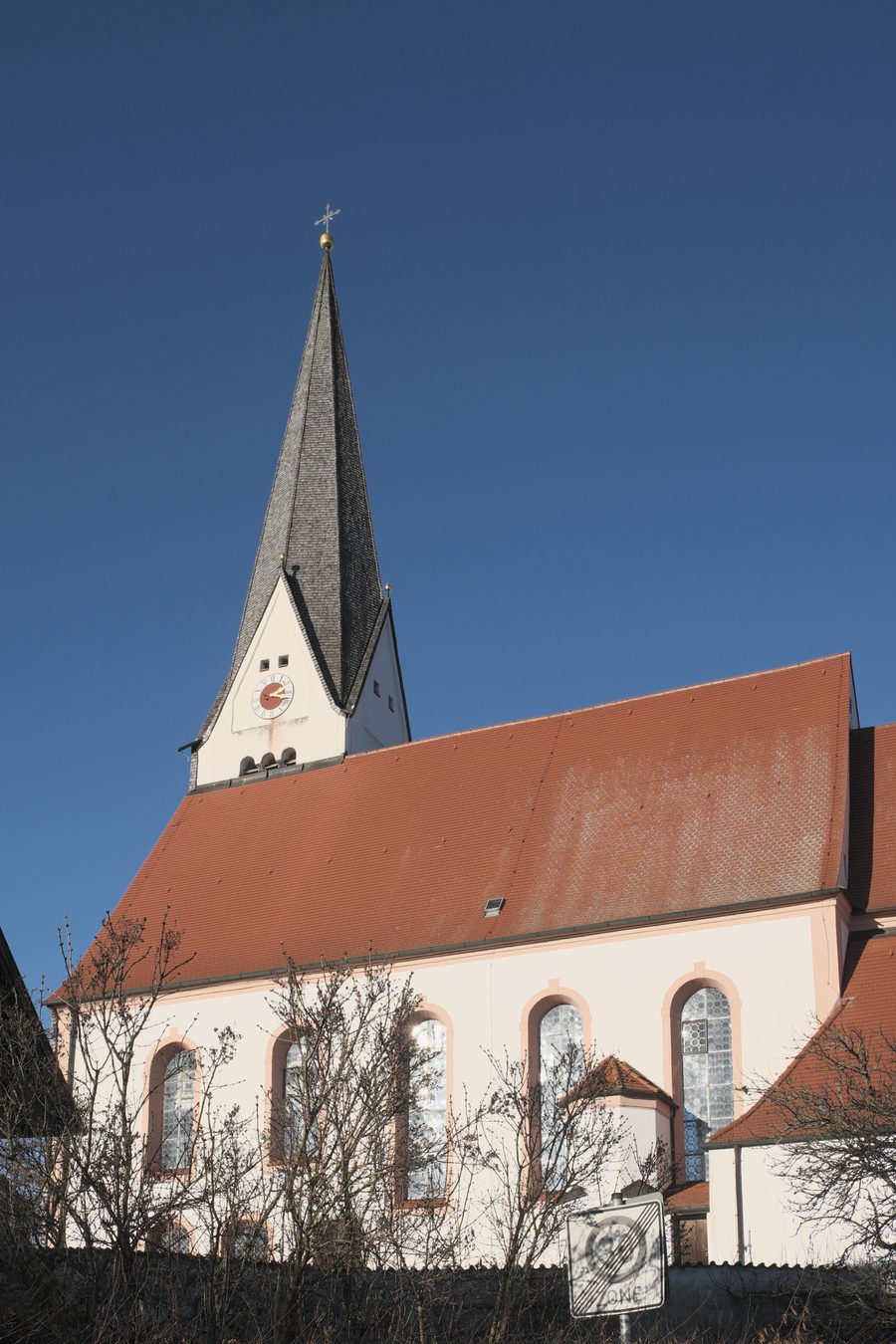 Die Pfarrkirche St. Stephan gehört zu den örtlichen Kulturpunkten in Burggen.
Photo: GFreihalter via Wikimedia Commons, CC BY-SA 3.0
Circular Trails, Cycling and Historic Routes
Burggen lies on the historic Roman road Via Claudia Augusta. It once served long-distance trade from Augsburg to Verona and Venice. Historically, the road linked the village to an extensive trade route; for planning a trip today, it is primarily a historical point of interest in its own right.
The surrounding landscape also provides a sense of place: the Litzauer Schleife nature reserve and the original course of the Lech are near Burggen. The LechErlebnisWeg also runs through the surrounding area. It follows the Lech through the landscape. Burggen’s circular trails and this nearby route are separate starting points for planning outdoor activities.
Churches and Local History
A striking example of Burggen’s local history is the listed group of buildings on St.-Anna-Straße. It was laid out according to a plan after the devastating major fire of 1795. The farmhouses built at the time all face east with their gables. This shared orientation is a distinctive feature of the building plan of that period.
The parish church of St. Stephen also preserves artistic heritage: some figures on the high altar and the two side altars were created by Anton Sturm of Füssen. The parish church of St. Oswald stands in Tannenberg, a district of Burggen. It was completely rebuilt in 1827 after the older church had been demolished due to its dilapidated condition. Its ceiling paintings by Nikolaus Augner of Schongau were created in 1825: the choir depicts the Last Supper, while the nave shows St. Oswald as an intercessor. The dates therefore distinguish the creation of the paintings from the later rebuilding of the church.
Annual Traditions
The Eligius Ride takes place every year on the first Sunday of Advent. After the horses are blessed at the parish church, the procession travels through the village and past the St. Eligius Chapel. The exact arrangements may vary, so check the latest event information when planning your visit.
The Rosstag brings the region’s preserved rural cultural heritage to life again every three years. The two events therefore have different schedules: the Eligius Ride takes place annually on the first Sunday of Advent, while the Rosstag is held every three years. If you want to plan a stay around a festival, check the relevant date in advance.
Where to Stay in Burggen
Gasthaus Fichtl in Burggen offers accommodation and has a motorhome pitch. Before traveling, check whether accommodation and the pitch are available. This identifies a local option for planning your stay; the other topics described here can help you factor your interests in trails, local history and traditions into your choice of stay.
Weilheim-Schongau as a Wider Regional Context
Weilheim-Schongau provides a wider regional point of reference: the district is part of the Pfaffenwinkel travel region. The Lech marks the western boundary of Weilheim-Schongau, the Ammer flows through its central area, and the Loisach runs along its eastern boundary. Cultural attractions in the wider destination include the Wieskirche near Steingaden. Dominikus Zimmermann built it from 1745 to 1754; it has been a UNESCO World Heritage Site since 1983. In Penzberg, the Mining Museum preserves the memory of the local bituminous coal mining industry, which operated from 1796 to 1966. The museum offers multilingual guided tours for international visitors, families and school classes.
For the wider travel overview: Bernbeuren.

