
Wartenfels: Discover Hiking and Architectural History
Accommodation in Wartenfels
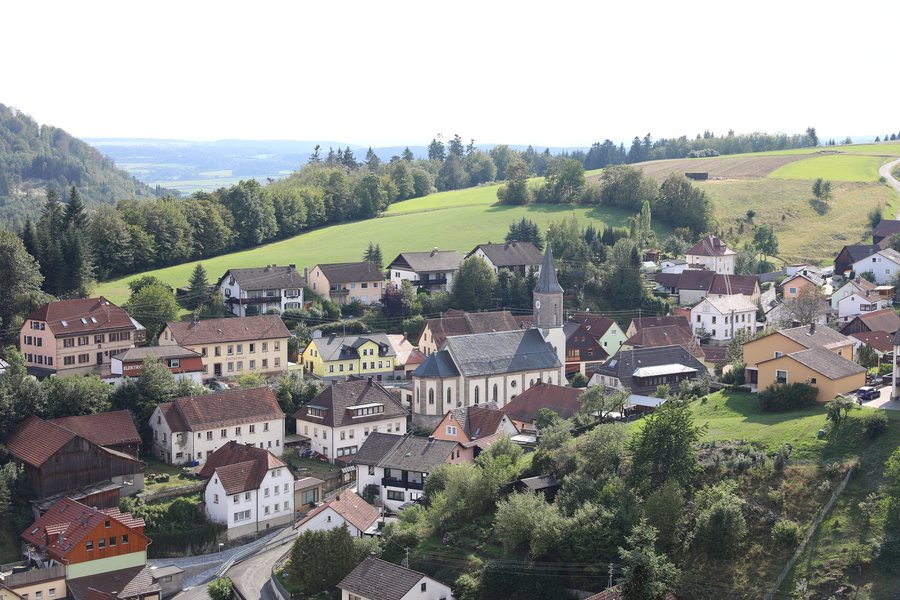
If you are planning accommodation in Wartenfels, two clearly recognisable themes take centre stage: hiking and the town’s historic buildings. Wartenfels offers a maintained network of trails as well as several specific examples of its architectural and settlement history. Depending on your focus, you can therefore shape your stay around outdoor activities, local history or a combination of both.
Hiking on five different trails
The Wartenfels branch of the Frankenwald Association maintains 62 kilometres across five different hiking trails. The trails are marked according to the strict guidelines of the German Hiking Association. For your planning, both the total extent of the trail network and its division into several trails provide tangible points of reference. The number of trails also makes clear that the hiking options are not limited to a single route.
The quality hiking trail FrankenwaldSteigla “Rund um die Gaaßleitn” is also specifically associated with Wartenfels. Its maintenance by the Wartenfels local branch has been documented since around 2015 and takes place within the framework of the project “Quality Region Wanderbares Deutschland: The Franconian Forest”.
Wartenfels Castle and its history
Wartenfels Castle was built in 1327 by Knight Reiwin von Waldenfels and his sons Heinrich and Friedrich. In February 1444, Nuremberg troops captured the inadequately fortified Wartenfels Castle, demolished it and looted it. These two dates mark key stages in the documented history of the castle: its construction in the 14th century and its destruction in the 15th century.
St Bartholomew’s Church on the Market Square
The Catholic parish church of St Bartholomew is centrally located on Wartenfels Market Square. It was consecrated in 1867 and largely rebuilt using sandstone from the demolished ruins of Wartenfels Castle. This creates an explicitly documented architectural connection between the parish church and the history of the castle ruins. The market square also provides a clear local reference point for the church.
Architectural and archaeological monuments in Wartenfels
The architectural and archaeological monuments in Wartenfels include a Catholic cemetery chapel dating from the mid-18th century. It has a rendered structure, a slated gabled roof and a roof turret. Also included is a Neo-Gothic rendered building with sandstone detailing at the property at Wartenfels 7, dating from 1859 to 1864.
The so-called Schlossbauerhaus is recorded as a two-storey half-hipped-roof building with sandstone detailing and the year 1850. The architectural and archaeological monuments also include the medieval Wartenfels castle site, the foundations of medieval predecessor buildings of St Bartholomew’s parish church, as well as inhumation burials from the Middle Ages and the modern era. The term “castle site” generally refers to a former castle location and does not automatically mean that a complete castle complex has been preserved.
A stay between trails and local history
These themes give you two different focal points when choosing accommodation in Wartenfels. The maintained trail network and the FrankenwaldSteigla trail “Rund um die Gaaßleitn” primarily appeal to visitors who want to structure their days around hiking. Wartenfels Castle, St Bartholomew’s parish church and the various architectural and archaeological monuments, on the other hand, focus attention on historical connections, different forms of architecture and the development of the town. This allows you to plan your stay around specific interests without equating the hiking options with local history.
For the overarching travel overview: Presseck.

