
Schwäbisch Hall: Old Town, Culture and Cycling Routes
Accommodation in Schwäbisch Hall
Schwäbisch Hall combines a historic old town with museums, regional landscapes and options for cultural and cycling trips. When choosing where to stay, it is worth distinguishing between the city and the district: the old town shapes a visit to Schwäbisch Hall, while the landscape in the district varies between plains, forest areas and deeply incised valleys. This can help you decide whether to focus mainly on buildings and museums or also plan excursions into the surrounding area.
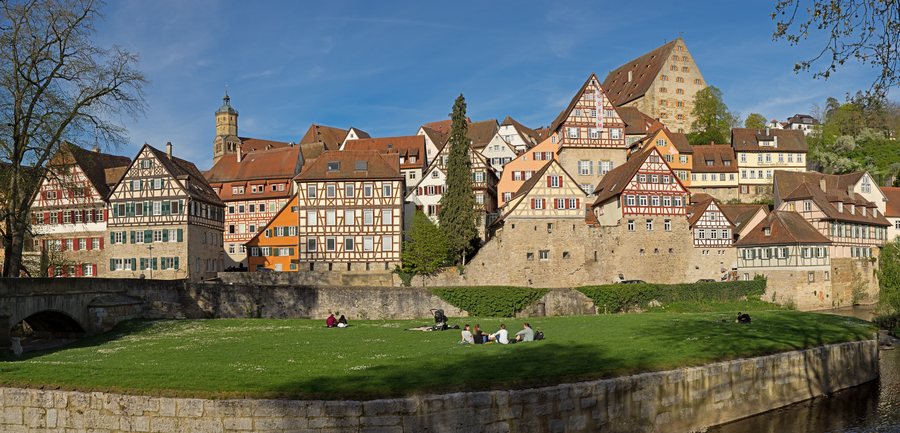
Old Town and Historic Buildings
The historic old town preserves medieval lanes that have remained almost unchanged. Its townscape also includes a partially preserved town wall, numerous towers, covered wooden bridges, many stairways and stepped lanes, as well as a historic marketplace. These features give a walk through the city a distinctly historic character; the stairs and stepped lanes are a specific part of the streetscape to bear in mind when finding your way around.
The Hällisch-Fränkisches Museum is housed in seven historic buildings. The collegiate church of St. Nicholas in Großcomburg Monastery contains a Romanesque wheel chandelier. A walking path leads through Ackeranlagen city park from the city center to the monastery in 30 minutes.
Various museums offer further insights into regional and urban history. The Hohenlohe Open-Air Museum in Schwäbisch Hall-Wackershofen comprises more than 75 historic buildings. The Kunsthalle Würth opened in 2001. In Kirchberg an der Jagst, the Sandelsches Museum presents the history of the former residential town and its surrounding area across several floors. The Johanniterkirche offers guided tours for groups, school classes and kindergartens by appointment.
The History of Salt, Culture and Recreation
At the salt-boiling demonstrations scheduled several times during the summer in the city's 2026 program, visitors can experience the traditional salt-boiling process on site and learn more about the history of salt in Schwäbisch Hall. Check the dates for your stay. Another option for relaxation is the Schwäbisch Hall saltwater spa, which has three saltwater pools and wellness facilities.
Einkorn is Schwäbisch Hall's namesake local mountain and rises 507 meters above the surrounding area. The district's landscape is shaped by plains and deeply incised valleys; protected valley slopes are found along the Kocher, Jagst and their tributaries. The fertile Hohenlohe Plain lies to the north, and the Franconian-Swabian Keuper hills to the south. The district's major recreational and forest areas include Mainhardter Wald, the Waldenburg Mountains, the Limpurg Mountains and the Ellwangen Mountains.
Cycling Routes and Regional Orientation
The Kocher-Jagst Cycle Route runs directly through Schwäbisch Hall. In addition, three day trips by bicycle start and finish right in the city center. Other cycling routes in the district run along the Kocher, Jagst and Bühler rivers.
The centuries-old Way of St. James also passes through Schwäbisch Hall on its way to Santiago de Compostela. Together with the old town, museums and cycling routes, it offers different starting points for a stay. If culture is your main focus, you can base your choices on the historic buildings and museums. If you would like to include cycling, you will find both routes that start and finish in the city center and cycling routes along the rivers in the district. The region's varied landscape also helps you keep a city visit and regional exploration distinct in your mind.
Discover More Destinations
Discover more destinations: Kreßberg, Sulzbach, Gaildorf, Bühlerzell, Rastatt, Rhein-Neckar district, Ravensburg, Ortenau district.
Back to the main travel overview: Baden-Württemberg.

