
Hohenweiler: Nature, Trails and History
Accommodation in Hohenweiler
Hohenweiler offers several starting points for planning a stay: cycling, walking and hiking trails for recreation, a named circular hike, the Rohrach Nature Reserve and historic buildings. This allows you to take your interests in outdoor activities, nature and history into account when choosing your destination.
Trails and hikes in Hohenweiler
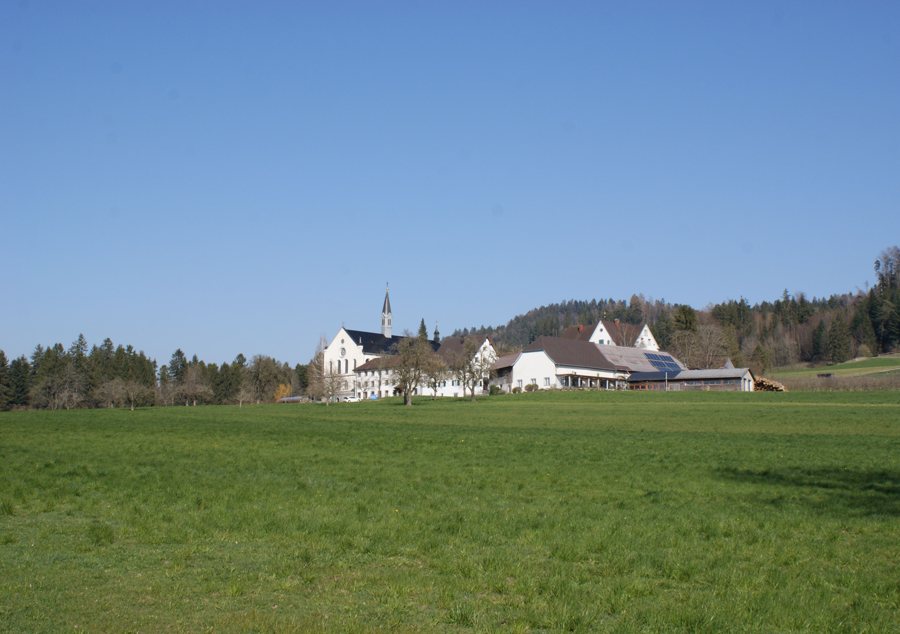
Cycling, walking and hiking trails for recreation are right on your doorstep. This puts different kinds of outdoor activities within reach: a bike ride, a walk or a hike. If you are looking for a specific tour, the Nobelkamm hike is a circular route starting at Gwiggen Monastery. It leads through the forest and crosses bridges and elevated walkways. These features give the tour its own character, without requiring you to confuse it with the other route mentioned here.
The Leiblachtal Route leads from Bregenz along the lakeside promenades, the Pipeline and the Leiblach river to Hohenweiler. It ends at St. George’s Church. The two tours can therefore be distinguished by their different points of reference: the Nobelkamm hike starts at the monastery and is circular; the Leiblachtal Route runs from Bregenz to its destination in Hohenweiler.
To reach the Nobelkamm hike by public transport, take the train to Lochau-Hörbranz station, then bus 121 or 126 to the Gwiggen stop. Check current timetables before setting out. This lets you factor the journey into your day’s plans without adding details about the tour’s duration or difficulty.
The Rohrach Nature Reserve
The Rohrach Nature Reserve is located in Hohenweiler and Möggers and covers 48.19 hectares. It has been in existence since 1992. In addition to the trails, this designated protected area is another way to connect with nature in Hohenweiler. Note the municipal boundary: the reserve is located not only in Hohenweiler but also in Möggers. If you want to consider both nature and outdoor activities when choosing a place to stay, you can explore the reserve as a topic in its own right alongside the trails mentioned above.
Monastery, chapel and church
The history of Mariastern-Gwiggen Monastery goes back to three Cistercian convents founded in the 13th century in the Swiss canton of Thurgau: Kalchrain, Feldbach and Tänikon. The former castle building in Gwiggen, together with the Loreto Chapel, dates back to the 17th century. These details highlight different aspects of the past: one concerns the monastery’s origins, the other the age of the building and chapel.
The old St. George’s Chapel is also part of the area’s architectural history. It was expanded into a parish church between 1481 and 1513. St. George’s Church is also the endpoint of the Leiblachtal Route. Here, a trail landmark and a historic site come together, while Gwiggen Monastery is the starting point of the Nobelkamm hike.
Plan your stay around your interests
To help you decide, first consider what you want your stay to focus on: a circular hike starting at Gwiggen Monastery, a route from Bregenz to Hohenweiler, trails for recreation or historic sites. These options provide a practical basis for planning a stay in Hohenweiler and looking for suitable accommodation. If you plan to travel to the Nobelkamm hike by public transport, also check the current train and bus timetables.
Discover more destinations: Bildstein, Au, Schwarzenberg, Sulzberg, Höchst, Wolfurt, Bezau, Schröcken
Return to the main travel overview: Bregenz District.

