
Kaunerberg: Waterways, Nature and Chapels
Accommodation in Kaunerberg
Kaunerberg can be explored through four distinct themes: historic irrigation, species-rich dry grasslands, hikes and chapels. The specific destinations differ when planning an outing: the Kaunerberg Waterway leads through an irrigation tunnel, the walk from the car park to Schnadige Weiher takes about ten minutes along a gravel path, and other routes lead to alpine pastures or a pilgrimage church.
Waterways and irrigation
The Kaunerberg Waterway runs from the mouth of the Inn near Faggen/Prutz, via Kauns and Kaunerberg, and through the hamlets of Unterfalpetan and Oberfalpetan to the Gallruth tunnel. The hike can be started in Kaunerberg. A special feature of the route is an irrigation tunnel about one kilometre long. Those interested in the landscape and how it is used will find a trail where irrigation itself is a central theme.
The Kaunerberg hillside canal is also part of the history of the irrigation landscape. The 13-kilometre-long canal carries water from an altitude of around 2,000 metres to the dry slopes in Kaunerberg, Kauns and Faggen. It was built in the late 1940s with funds from the Marshall Plan. Kaunerberg has also been home to one of North Tyrol’s largest fruit orchards since 1947. These details give a stay an agricultural and historical dimension without conflating the waterway and the hillside canal into a single route.
Dry grasslands, ponds and biodiversity
The Kauns-Kaunerberg-Faggen nature reserve includes dry grasslands, rock ledges, shrub and woodland patches, and overgrown stone clearance walls. Together with the Fließ sunny slopes, it forms the largest dry grassland complex in Tyrol. Surveys conducted in the 1970s recorded more than 500 plant species, 1,100 butterfly species and around 150 beetle species there. These figures refer to those historical surveys. Kaunerberg is also an important part of the protected area for the Braunelle, the Tyrolean wild bee.
Schnadige Weiher is an irrigation pond at the foot of Hohe Aifnerspitze, surrounded by a small wooded area. You can leave your car in the pond’s car park; from there, an approximately ten-minute gravel path suitable for pushchairs leads to the pond. This provides a specific access point for planning your visit, while the route itself is described in manageable terms, without implying a walking time for other trails.
Fishing is possible in Schnadige Weiher, above Falpaus, a district of Kaunerberg, from April to September. Proof of having completed fishing instruction is required. Check the conditions locally again before your arrival.
Hikes and pilgrimage routes
The Aifner Alm–Falkauns Alm Panorama Trail is a high-altitude hike along the sunny balcony of the front Kaunertal valley. It connects two welcoming alpine pastures and is characterised by its low elevation gain. If you are looking for a tour with a clearly named high-altitude trail and two alpine destinations, this route differs from the one that passes through the irrigation tunnel.
The pilgrimage routes also follow their own paths: the trails from Kaunerberg and Kauns meet shortly before Engelsbach. A hiking trail leads from Kaunerberg via Unterfalpetan, Oberfalpetan and Wiesenhof to Kaltenbrunn pilgrimage church. The Aifner Alm accessible hike starts at the car park on Kaunerberger Straße or at the turn-off to Aifneralm and ends at Aifner Alm; both points are in Kaunerberg. The suitability information refers to Swiss-Trac users. As trail conditions can change, check them before setting out.
Chapels and architectural history
The chapels differ in location, architectural style and date. Unterfalpetan Chapel is located in the district of Kaunerberg of the same name. In Prantach stands Prantach Chapel, a large, single-nave building dating from the 17th century, with a three-sided apse. Inside is a carved statue of the Virgin Mary; the year 1640 is inscribed on the pedestal. The construction date and the inscription are therefore two distinct historical details.
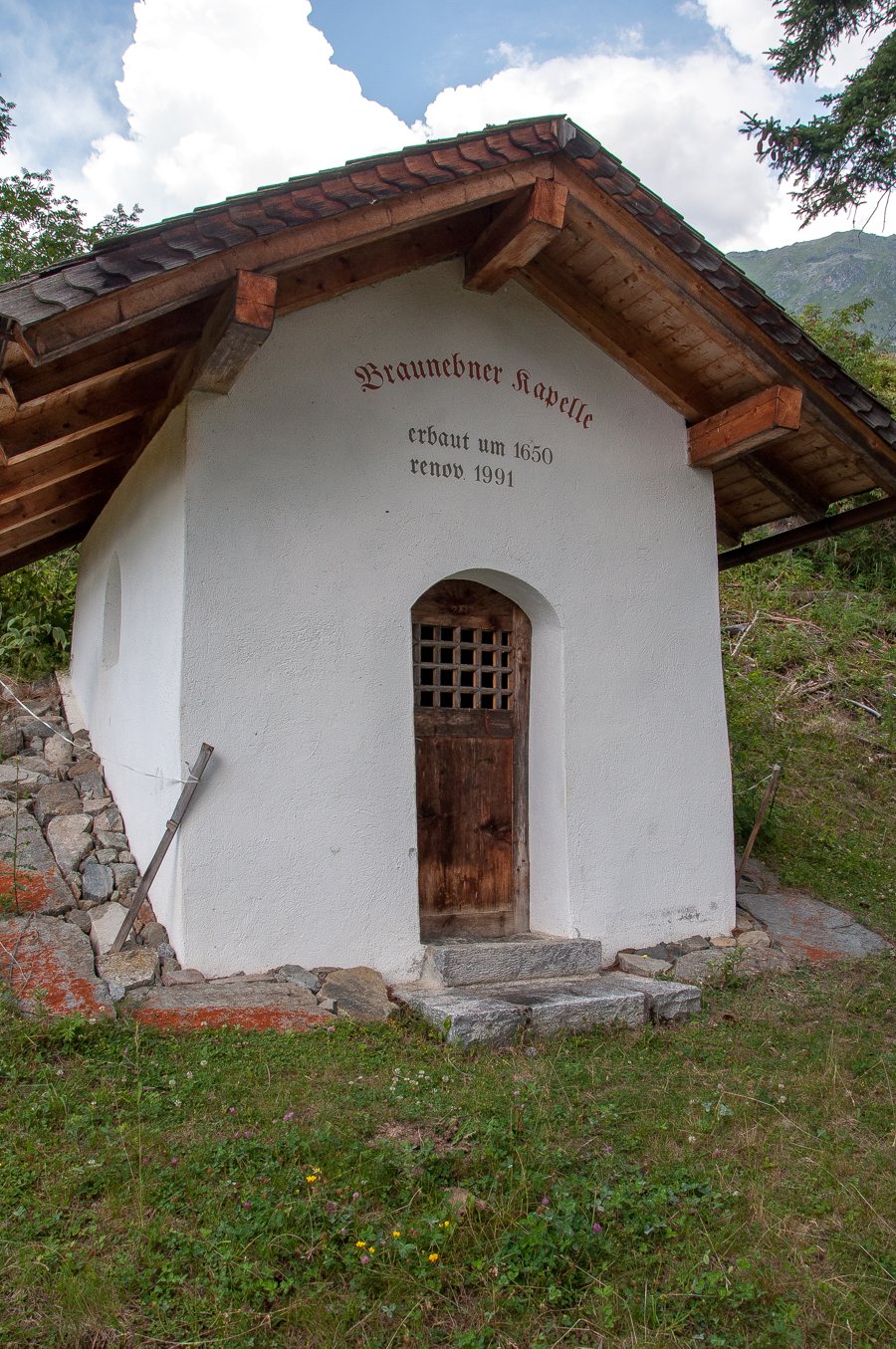
St Martin’s Chapel stands in the district of Obwals, was built in 1866 and is dedicated to St Martin. Maierhof Chapel is a small octagonal central-plan building in the hamlet of Mairhof, dating from 1677. Brauneben Chapel, meanwhile, is a small barrel-vaulted chapel in a forest in the district of Brauneben and dates from the 17th century. In addition, a Way of the Cross to Nufels Chapel was established in 1781. These different architectural styles and dates offer several specific points of interest for a culturally focused stay.
Discover more destinations: Spiss, Nauders, Feichten in Kaunertal, Landeck, St Anton am Arlberg, Ried im Oberinntal, Serfaus, Kappl.
For the regional travel overview: Landeck District.

