
Ladis: Local History, Laudeck Castle and Trails
Accommodation in Ladis
The mountains of the Serfaus-Fiss-Ladis ski region offer 214 kilometers of perfectly groomed ski slopes. This seasonal figure should be checked again before your trip. The kilometer count gives an indication of the scale of the region’s ski slopes; Ladis can also be explored through its local history and trails. This brings concrete aspects of architecture and local tradition into focus alongside winter sports.
Local History and Buildings
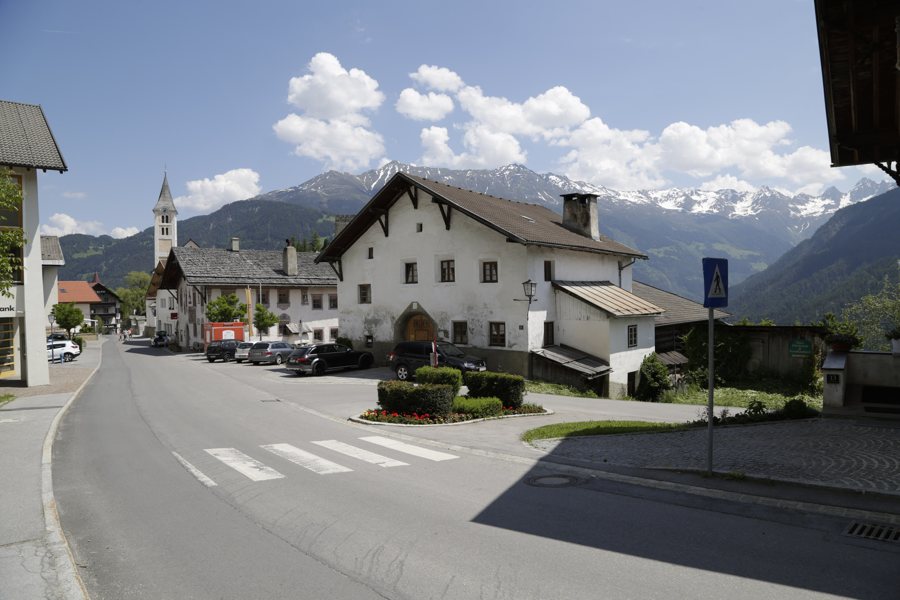
The village walk with an audio guide explores the history of the village and highlights centuries-old farmhouses decorated with frescoes. This makes the walk particularly interesting for travelers who are interested in the connection between local history and rural architecture. App and tour details may change; check them before your visit.
Laudeck Castle can also be explored through its specific architectural features. The keep is a 21-meter-high residential tower. The complex also includes a palas, a north tower and a gate tower; the gate tower forms part of the outer curtain wall. Naming these features gives the description of the castle complex more detail than simply mentioning the building.
The castle’s history can be traced through specific dates: in 1263, it was described as the seat of the district court. After the court was moved to Ried im Oberinntal in 1471, the castle served as a prison and weapons depot.
The present-day Neoclassical building of the parish church of St. Martin offers another architectural landmark in time: architect Johann Moosbrugger built it between 1829 and 1831. The dates have different meanings: 1263 and 1471 relate to the court seat and its relocation; 1829 to 1831 date the present-day church building.
Trails, a Spring and Local Tradition
The Water Trail has a clearly named endpoint: at the end, visitors reach the Sauerbrunn spring. There, they can taste Tiroler Sauerbrunn water at the fountain or buy it in bottles. This makes the trail distinct from the cultural and historical village walk: the spring and its water take center stage along this route.
The Ladis Explorer Trail, by contrast, runs mostly through the forest and features artistic figures and a giant treehouse. Compared with the Water Trail, it focuses on the forest setting and its crafted features. The trails therefore have different highlights: a named spring destination on one, forest, figures and a treehouse on the other.
Another local feature is the Rechelerhaus, which is believed to be the oldest painted house in the Oberes Gericht area. The Ladis baking association uses the wood-fired oven there to bake bread every other Wednesday. If you would like to include this in your plans, confirm the schedule in advance. Alongside the house’s historical significance, this brings a local baking tradition and its recurring weekday into focus as distinct aspects.
Discover more destinations: Pfunds, Zams, Tösens, Faggen, Fendels, Pettneu Am Arlberg, Landeck
See the broader travel overview: Landeck District.

