
Leutasch: Discover culture, landscapes and trails
Accommodation in Leutasch
Leutasch brings together insights into village history with trails through forest and alpine meadow landscapes, e-bike routes and a lake.
 File:Gemeinde Leutasch, Austria - panoramio.jpg
Photo: JelleVosPhotography via Wikimedia Commons, CC-BY-SA-3.0
Ganghofer Museum Cultural Centre and Ludwig Ganghofer
The Ganghofer Museum Cultural Centre showcases Leutasch’s long village history, life and work in earlier times, the area’s long-standing hunting tradition and the life of writer Ludwig Ganghofer. It offers a perspective that ranges from the development of the village to a figure whose life and work are connected with the Gaistal. The cultural centre also regularly hosts concerts, readings, cabaret performances and lectures. Visitors interested in culture can therefore place their museum visit in the context of a venue that also accommodates a variety of events.
Ganghofer lived mainly in the Gaistal for 20 years, at his hunting lodge “Hubertus”. He hunted there and wrote a good part of his works, including “Das Schweigen im Walde”. The details of his stay, hunting and writing belong together, but remain distinct aspects of his story: the hunting lodge is associated with his life, while his works shed light on the literary side of the area’s history.
St. Magdalena and its building history
The parish church of St. Magdalena is located in the middle of the valley in Oberleutasch. It was dedicated to St. Magdalena in 1190; the present building was constructed in 1820 and 1821 and consecrated in 1831. The dates therefore refer to different historical events: the church’s dedication, the construction of the present building and its later consecration. The church’s features include a stately Classical high altar, ceiling paintings by Leopold Puellacher and a bell dated 1482. The date on the bell is considerably earlier than the construction of the present building, providing a separate point of reference in the church’s furnishings.
Trails, the lake and traces of the Ice Age
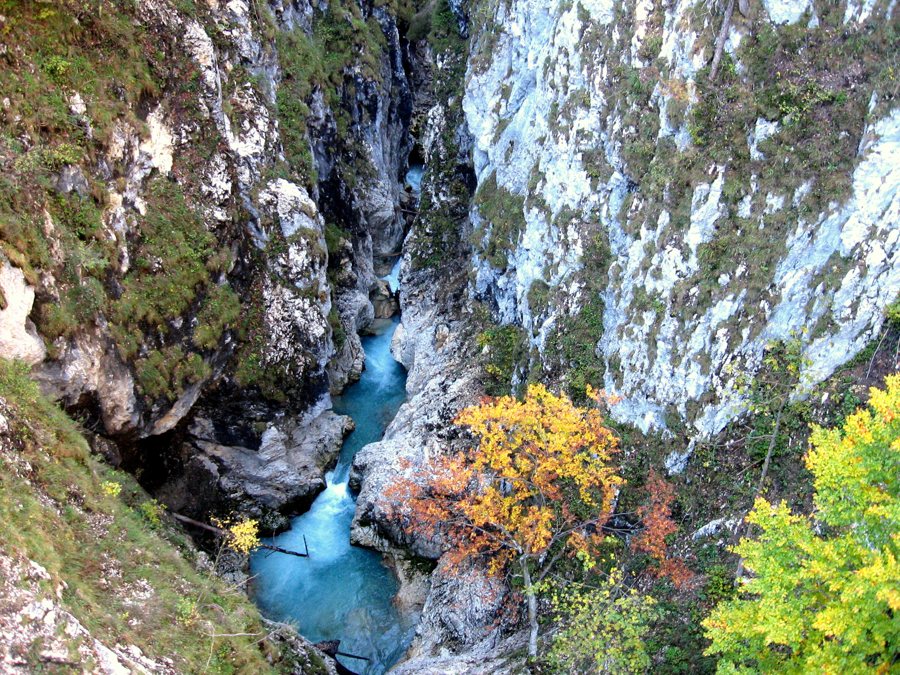
Hiking trails in Leutasch lead through deep green forests and lush alpine meadows. Extensive e-bike routes run along the turquoise Leutascher Ache. One specific distance is the 3.2-kilometre Great Gorge Loop through the gorge of the Leutascher Ache. This length gives you a sense of the loop, while the hiking trails and e-bike routes offer other ways to experience the landscape.
Genuine hummocky meadows have been preserved to this day in the Leutasch Almenparadies Gaistal. They are considered a typical post-glacial landscape form. Scouring marks left by the massive Ice Age glacier are visible in the Leutasch Ghost Gorge. Both features point to the Ice Age, but in different ways: as a distinctive landform in the Gaistal and as traces of the glacier in the gorge.
Weidachsee covers 4.5 hectares and was mentioned as “Seele in der Leutasch” in Emperor Maximilian’s fishing book of 1500. Wide paths around the lake invite you to take a stroll and are also suitable for families with pushchairs. This brings together a specific historical reference, the lake’s size and a described opportunity for a walk.
Planning your stay
The Leutasch Tourist Information Office is in the Kirchplatzl district, right next to a bus stop. Visitors can get personal recommendations there for hikes, bike tours, cross-country ski trails, excursions and events. If you want to combine different interests during your stay, you can ask for advice on these topics. The recommendations cover both outdoor activities and excursions and events.
The Leutasch farm shop loop passes shops with set opening hours and self-service vending machines available around the clock. Check the opening hours of each shop before your visit. This lets you plan the difference between visiting a shop during its set opening hours and using a self-service vending machine.
Discover more destinations: Trins, Rinn, Mieders, Seefeld In Tirol, Wildermieming, Vals, Unterweg, Aldrans.
Back to the main travel overview: Innsbruck-Land.

