
Imst in winter: Hoch-Imst ski area, gorge and culture
Accommodation in Imst District
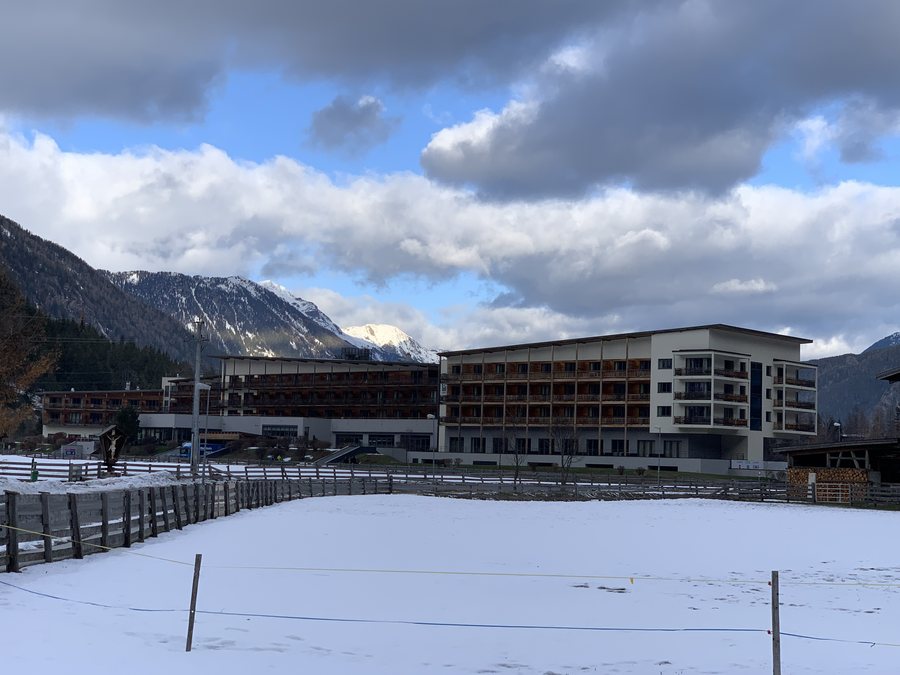 File:AUT — Tirol — Längenfeld — Bezirk Imst — Längenfeld — Oberlängenfeld 140 (Aqua Dome Hotel außen).JPG
Photo: User:Mateus2019 via Source, CC BY 2.0 de
File:AUT — Tirol — Längenfeld — Bezirk Imst — Längenfeld — Oberlängenfeld 140 (Aqua Dome Hotel außen).JPG
Photo: User:Mateus2019 via Source, CC BY 2.0 de
Imst combines winter sports with an unusually dense mix of nature, history and destinations for excursions. The Hoch-Imst ski area lies between 1,000 and 2,100 metres above sea level and offers 9 kilometres of pistes, a fun park and two natural toboggan runs. At the same time, the Rosengarten Gorge begins right in the centre of Imst and leads directly into alpine terrain. For you, this means that Imst can be experienced not only from the slopes, but also via gorge trails, historic sites, family-oriented experiences and striking landscapes.
- Between 1,000 and 2,100 metres above sea level, Hoch-Imst offers 9 kilometres of pistes, a fun park and two natural toboggan runs.
- The Rosengarten Gorge is 1.5 kilometres long and overcomes around 250 metres of elevation.
- Its entrance is located right in the centre of Imst and leads directly into alpine terrain.
- The Imst cable cars take visitors to an altitude of over 2,000 metres in just a few minutes.
- Family canyoning tours through the Rosengarten Gorge include short abseiling sections, slides and crystal-clear pools.
- Imst-Pitztal railway station and three stops in Schönwies, Imsterberg and Roppen connect the outdoor region with the rest of Tyrol and the neighbouring federal states.
- With exceptions, the Schemenlaufen takes place in Imst every four years in February and features 26 different types of masks.
Putting winter sports in Hoch-Imst into context
The Hoch-Imst ski area is the specific winter sports area of the destination. Its altitude ranges from 1,000 to 2,100 metres, and it offers 9 kilometres of pistes, a fun park and two natural toboggan runs. This combination appeals to different interests: skiing is the focus on the pistes, while the fun park provides a separate focus and the natural toboggan runs offer an alternative away from skiing. When a group brings together different interests, you can therefore consider winter sports and other Imst destinations separately instead of basing the entire stay solely on your choice of pistes.
The Imst cable cars take visitors to an altitude of over 2,000 metres in just a few minutes. Imst-Pitztal railway station and stops in Schönwies, Imsterberg and Roppen connect the outdoor region with the rest of Tyrol and the neighbouring federal states.
Rosengarten Gorge and trails into alpine terrain
The Rosengarten Gorge in Imst is a natural monument. Its entrance is located right in the town centre, from where the trail leads directly into alpine terrain. The gorge is 1.5 kilometres long and overcomes around 250 metres of elevation. Along the path are rushing waterfalls and alpine roses; the trail also passes through small tunnels. At the Rosengarten Gorge, the transition from the urban starting point to an alpine environment and the change in elevation are part of the route.
The Rosengarten Gorge also forms the geographical setting for several other experiences. The Blue Grotto in Hoch-Imst is a tunnel in the gorge created by historical mining. It is located around a ten-minute walk below Hoch-Imst and can be reached through the Rosengarten Gorge or directly via a hiking trail. Silver-bearing galena was already mined in the Blue Grotto in Roman times, presumably using the fire-setting method. Family canyoning tours lead through the Rosengarten Gorge in Hoch-Imst and include short abseiling sections, slides and crystal-clear pools.
The trail to the small Putzen Waterfall also combines nature and history. It passes the historic Putzenschanze, which has shaped the path since 1932, and then leads back to the centre of Imst. The Imst Gorge is also suitable for rafting and kayaking. Ibexes can often be seen in the rocks of the Muttekars.
Town history, carnival and notable sites
The Ballhaus Museum provides insight into the history of the town of Imst with art and everyday objects from various eras, from prehistoric times to the present day. Its older history includes relics of an early Christian place of worship. These include an approximately square choir screen slab bearing a Christogram, which came to light in 1960 during the restoration of St Lawrence Church. These relics are dated to the first half of the 5th century.
The Roman past is also linked to the town. The Romans presumably established a road station in Imst because the Via Claudia Augusta passed through here. This Roman road led from the Adriatic coast and the plains of the Po across the Alps to the Danube and is being used more extensively again today. The Imst Carnival House is located at Streleweg 6, 6460 Imst. The Schemenlaufen is a carnival procession with 26 different types of masks and, with exceptions, takes place every four years in February.
The Imst Bergl – also known as Calvary Hill – is a distinctive rock in the centre of Imst that was formed around 26,000 years ago during the Ice Age. The Bergl houses are buildings integrated directly into the rock of the Imst Bergl. The Bergl can be climbed via a historic Stations of the Cross trail and offers views over Imst.
Excursions for families and mixed-interest groups
For families and groups with different interests, the Bummelbär offers its own way of exploring the area. It travels from Imst through the Gurgltal valley, past the witches’ village of Tarrenz, to Nassereith and back again. The Bummelbär can be booked for children’s birthday parties, events and private tours. In addition, the family canyoning tours lead through the Rosengarten Gorge. The Imst via ferrata leads from the Muttekopfhütte to the 2,623-metre-high Maldonkopf and includes a 20-metre-long rope bridge.
The Via Claudia Augusta provides a historical long-distance connection, while the Rosengarten Gorge, Hoch-Imst and the centre mark different areas of the destination. When choosing a ski hotel in Imst, it is therefore not only the winter sports area that matters, but also which destinations you would like to plan together with your travel group.
Other places to help you find your bearings
Arzl im Pitztal, Imst, Karrösten, Ski accommodation in Imsterberg, Jerzens, Ski accommodation in Längenfeld, Mieming, Obsteig, Oetz, Sankt Leonhard im Pitztal, Sautens, Silz, Stams, Sölden, Umhausen, Wenns, Köfles, Haiming, Nassereith, Roppen, Mötz, Rietz, Tarrenz
For the higher-level travel overview: Tyrol.

.JPG)