
Villach in winter: Gerlitzen, lakes and culture
Accommodation in Villach Region
When choosing accommodation for a skiing holiday in Villach, you should first decide on your preferred focus: Gerlitzen Alpe stands for a wide range of winter sports, while lakes, nature trails and historic places offer further opportunities for spending days together. This allows you to plan your stay according to skiing ability, interests and the proportion of activities away from the slopes, without making every day the same.
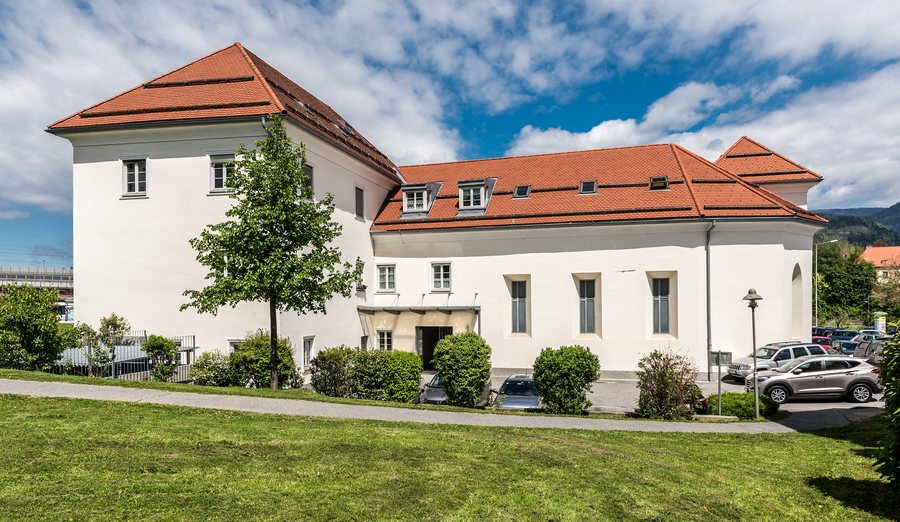 File:Villach Burgplatz 1 Villacher Burg mit Kapelle SO-Ansicht 10052017 8405.jpg
Photo: Johann Jaritz via Wikimedia Commons, CC BY-SA 4.0
File:Villach Burgplatz 1 Villacher Burg mit Kapelle SO-Ansicht 10052017 8405.jpg
Photo: Johann Jaritz via Wikimedia Commons, CC BY-SA 4.0
- The ski area of Gerlitzen Alpe comprises 34 ski runs of all difficulty levels across 53 kilometres of excellently prepared pistes, as well as 12 kilometres of natural ski routes.
- The Austria, Slovenia & Italia Loop hike is 6.87 kilometres long and takes approximately 4 hours and 30 minutes.
- Gerlitzen Alpe offers paved panoramic and themed trails for walking and lingering.
- At Lake Faak, four lidos provide practical infrastructure and carefree days.
- The unspoilt Lake Aichwald invites visitors to go ice skating and play ice hockey in winter.
- Dobratsch has been protected as a nature park in Carinthia since 2002.
- Rosegg Wildlife Park is the largest wildlife park in the Austrian province of Carinthia; at the petting zoo, visitors may pet and feed sheep, goats, donkeys, llamas and other domestic animals.
Winter sports for different ability levels
Gerlitzen Alpe provides a clear reference point both for experienced skiers and for groups with different ability levels. The combination of runs of all difficulty levels, prepared pistes and natural ski routes describes a varied range of terrain. Those travelling with children or less experienced people do not have to choose the same pistes as ambitious skiers; however, suitability for specific individuals or a particular age group is not generally established.
Hiking, views and nature
There are also clearly identifiable points of interest in the Villach area beyond skiing. At the Gailitz Chapel, a constructed footpath leads to a view over the villages of Gailitz and Arnoldstein. From Finkenstein, the Alpe Adria Trail offers an opportunity for hiking. These two options have different emphases: the footpath combines a historic building with a viewpoint experience, while the trail is described as a separate hiking option starting from Finkenstein.
Dobratsch complements the nature perspective with its protected status as a nature park. For day planning, this is a different category from a prepared winter trail or a ski run: here, the focus is on the protected natural area. Accommodation in Villach can therefore be considered as a base for a stay in which winter sports, walks and nature observation exist side by side, without this implying any particular accessibility or a shared route.
Shared experiences between wildlife park and lake
Rosegg Wildlife Park combines a visit to the largest wildlife park in the Austrian province of Carinthia with a petting zoo where visitors may pet and feed sheep, goats, donkeys, llamas and other domestic animals. The Rosegg Maze, with more than 3,000 hornbeams, is also located between the castle and the wildlife park. Both destinations offer specific opportunities for shared activities, but they differ in character: at the petting zoo, direct contact with domestic animals is the focus, while in the maze, the focus is on finding one’s way among the tall hornbeams.
At Lake Faak, four lidos provide practical infrastructure and carefree days. For your stay, this lake is therefore a complement to the mountain and cultural programme.
Cultural history in Arnoldstein and the surrounding area
The Arnoldstein monastery ruins date back to a once-powerful Benedictine monastery with an 800-year history. Restoration of Arnoldstein Monastery Castle began in 1993. Due to numerous events in recent years, the monastery ruins have developed into Arnoldstein’s cultural centre.
The Arnoldstein Bunker Museum presents an original fortification built by the Austrian Armed Forces between 1963 and 1995. It includes various bunkers, prepared positions and barriers from the Cold War. The museum therefore covers a much more recent period of history than the monastery ruins. Arnoldstein is also home to the Shot Tower: it was built in 1814 as a shot factory on the remains of Fuggerau Castle, built by the Fugger brothers in 1495.
The Gailitz Chapel was built in 1490 as a pilgrimage church and is dedicated to Saint Mary. In Thörl-Maglern, St Andrew’s Church has Gothic interior frescoes by Master Thomas von Villach, an important 15th-century artist. The traditional Untergail Valley festive costume is also part of the region’s cultural history: in 2018, it was included by the Austrian Commission for UNESCO in the national inventory of Austria’s intangible cultural heritage.
The Thörl-Maglern Grocery Museum is housed in a building that has been used as a commercial premises for more than 300 years. Visitors can learn which products people bought in this shop during the time of Maria Theresa. Terra Montana offers 14 stations with information about historic and modern mining methods and the lives of miners. These attractions provide different approaches to history: trade and everyday life, mining, church art and military history.
The Museum of the Nötsch Circle is located in the idyllic village of Nötsch in the Gail Valley, a special place in Austrian art history. Since its opening on 16 May 1998, it has been a home for Austrian art shaped in particular by four artist friends. At the Frög Celtic World, the mysterious era of the Hallstatt culture comes to life. Around 3,000 years ago, members of an upper class were buried at Frög beneath huge burial mounds with valuable grave goods such as jewellery and weapons. A magnificent funerary wagon made of lead, unique in Europe, was also found there.
Cycling, climbing and winter alternatives
New sections of the Alpe-Adria Cycle Path were created near Arnoldstein and elsewhere and connected with existing cycle paths. Trains or bicycle buses are available for the return journey to the starting point; bicycle buses must be booked well in advance.
Kanzianiberg offers a climbing opportunity from Finkenstein. The unspoilt Lake Aichwald invites visitors to go ice skating and play ice hockey in winter.
When choosing accommodation in Villach, you can therefore weigh up different priorities: ambitious skiing on Gerlitzen Alpe, nature and hiking experiences, cultural history in Arnoldstein and Thörl-Maglern, or shared activities at Lake Faak and Lake Aichwald. These places and activities differ considerably; your accommodation decision should therefore be based on the activities you are planning and not merely on the destination’s general name.
Other places for regional orientation include Arriach, Stockenboi, Winklern, Feistritz An Der Gail, Petschnitzen, Äußere Einöde, Gerlitzen, Oberfederaun, Arnoldstein, Sankt Magdalen, Riegersdorf, Rosenbach, Goritschach, Laastadt, Innere Einöde, Sankt Andrä, Wernberg, Hohenthurn, Heiligengeist, Schloß Treffen, Treffen Am Ossiacher See, Drobollach Am Faakersee, Sankt Jakob Im Rosental, Köstenberg, Fahrendorf, Pölling, Bad Bleiberg, Villach, Verditz, Landskron, Afritz, Nötsch Im Gailtal and Feld Am See.
For the overarching travel overview: Carinthia.

