
Snowboard Freestyle on a Winter Holiday: Equipment, Rules and Planning
Snowboard freestyle can add an athletic dimension to a winter holiday, but it calls for a realistic assessment of your ability, the conditions and what is available. If you are trying the activity for the first time, plan a short session with instruction rather than a demanding program without preparation.
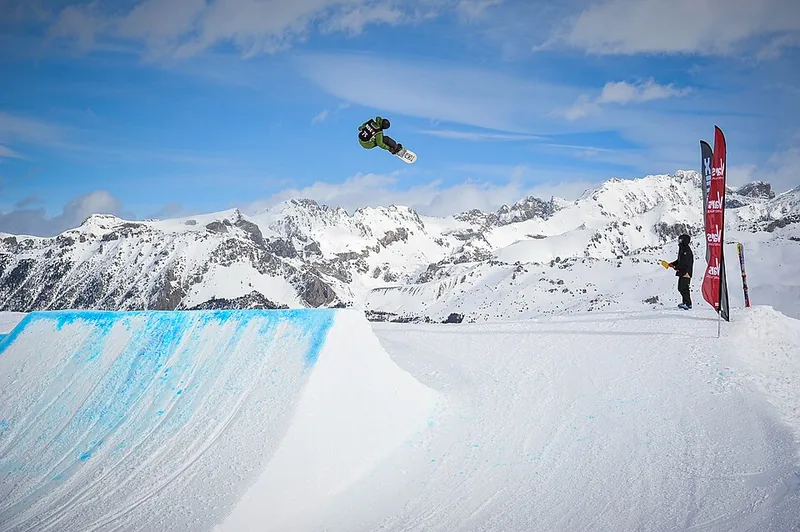 Snowboarder bei einem Freestyle-Sprung in einem Snowpark.
Photo: Ugo Vignal
Snowboarder bei einem Freestyle-Sprung in einem Snowpark.
Photo: Ugo Vignal
Understanding snowboard freestyle
Snowboard freestyle involves jumps, spins, slides and other features that are practised in a designated snowpark or on a suitable training area. Difficulty ranges from simple rollers and small boxes to challenging jumps. The size of a feature alone does not determine whether it suits your ability. The approach, landing, run-out, visibility and current park rules all matter.
Before your first attempt, watch the park and plan your line. Beginners should first ride slowly through the area without using any features and pay attention to spacing. Use only features that are open and marked. If you fall, clear the run-out and give others a clear signal. Only start building up tricks once you can confidently hold a basic stance, brake and make a controlled landing.
Choosing and preparing
Before booking or travelling, check the specific facility: Is there a suitable area, a lesson, rental equipment or a supervised introduction? The operator sets opening hours, admission fees, minimum age, reservation requirements, local rules and current operating status. General information from sports associations can provide useful context, but does not replace local advice.
For families and groups, the program should accommodate different ability levels. Agreeing on a meeting point outside the sports area helps avoid unnecessary searching. If you combine several winter activities, allow time to rest and bring dry clothes to change into. Water, a small snack and a charged phone are useful for longer outings.
Equipment suited to your ability
Equipment must suit the sport, the area and your experience. Before setting off, check rental equipment for size, fit, fastenings and visible damage. Warm, flexible clothing in several layers offers better protection than one very heavy layer. Gloves, dry socks and a windproof outer layer are essentials for outdoor activities. Protective gear such as a helmet, back, knee or wrist guards may be advisable or required, depending on the discipline and your ability.
Weather, exertion and safety
Snow, ice, wind, visibility and temperature can change over the course of a day. Before setting off, check the facility’s latest updates and, where relevant, weather or avalanche information. End the session if visibility is poor, you hear unusual noises, equipment is damaged or your concentration starts to wane. Beginners should choose clear, designated areas and increase difficulty and duration only gradually. Children need clear rules, short sessions and adult supervision.
Be considerate on areas shared with others: follow the direction of travel, keep your distance, and observe marked routes and closures. If you fall or notice an injury, move safely out of the traffic area and get help. Outside managed facilities, only people with suitable experience and equipment who have assessed the current hazards should venture out.
A sensible plan for the day
It is best to start the session with a quick check of the weather, opening status, equipment and meeting point. Then take a gentle warm-up before increasing duration or speed. Build in breaks between attempts; do not try to overcome cold or fatigue through sheer determination. At the end, check that everyone is back and that equipment can be packed away dry and complete. This simple routine makes planning clearer and leaves room to adapt to changing weather.
Your snowboard, bindings and boots should fit well and suit your riding style. A helmet is essential; depending on the feature and your ability, a back protector and other protective gear are also advisable. Check the edges, bindings and fastenings before use. Backpacks, camera straps and loose items can be dangerous in a fall, so bring them only if the park rules allow it.
Expert information and local checks
The WSL Institute for Snow and Avalanche Research SLF provides expert information on snow and avalanche conditions. This information does not replace the operator’s snowpark rules or an individual assessment of hazards.
Frequently asked questions about snowboard freestyle
Is a snowpark suitable for beginners?
Yes, if a suitable beginner area is open and you understand the features. Taking small steps and getting instruction are advisable.
Why should you watch the park first?
This lets you see the direction of travel, spacing, landing areas and possible waiting zones. It reduces the chance of surprises while the park is in use.
Can a feature be closed at short notice?
Yes. Preparation work, damage, snow, visibility or operating conditions may require a closure. Follow the markings on site.
