
Snowboard Freeriding on a Winter Holiday: Equipment, Rules and Planning
Snowboard freeriding can add a sporty dimension to a winter holiday, but it requires a realistic assessment of your ability, conditions and available options. If you are trying the activity for the first time, it is better to plan a short session with instruction than an ambitious program without preparation.
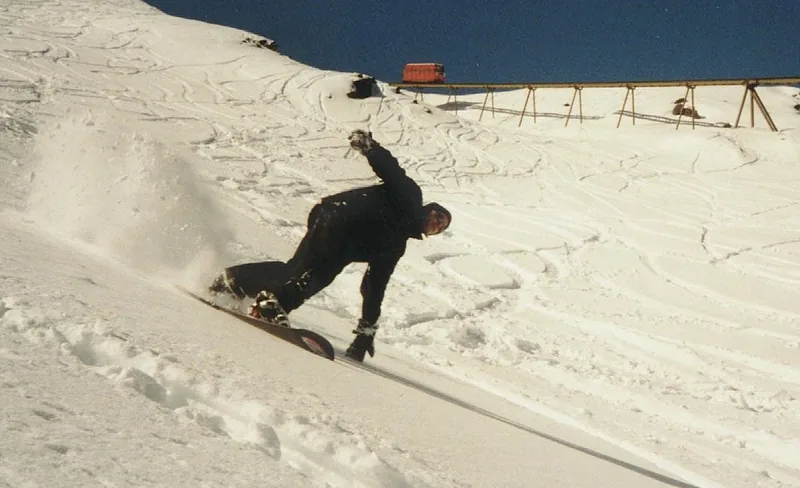 Snowboarder fährt im Tiefschnee in Axamer Lizum in Österreich.
Photo: Pittigrilli~commonswiki
Snowboarder fährt im Tiefschnee in Axamer Lizum in Österreich.
Photo: Pittigrilli~commonswiki
Understanding snowboard freeriding
Snowboard freeriding means riding in unprepared terrain, which involves a different level of risk than riding on a marked piste. Deep snow, changing snow layers, terrain features and natural obstacles all affect the ride. A familiar descent is not automatically safe, and a visible set of tracks does not mean the route is open. Freeride decisions must be reassessed for the area and the conditions on each day.
Before a tour, check the avalanche bulletin, weather, snowpack, visibility and local closures. The group should discuss the route, turnaround point, spacing and emergency plan. If you cannot assess this information confidently, stay in the secured ski area or choose a professionally guided option. Take warning signs such as fresh cracks, settling noises or spontaneous avalanches seriously, and abandon the tour.
Choosing and preparing
Before booking or setting out, check the specific facility: Is there a suitable area, a course, rental equipment or a supervised introduction? Opening hours, admission, minimum age, reservations, local rules and current operating status are determined by the operator. General information from associations can help put things in context, but it does not replace local advice.
For families and groups, the program should accommodate different skill levels. A shared meeting point outside the activity area helps avoid unnecessary searching. If you combine several winter activities, plan time to rest and bring dry changes of clothes. Water, a small snack and a charged phone are useful for longer outings.
Equipment suited to your ability
Equipment must be appropriate for the activity, the area and your experience. Before starting, check rental equipment for size, fit, fastenings and visible damage. Warm, flexible clothing in several layers provides better protection than one very heavy layer. Gloves, dry socks and a windproof outer layer belong in your bag for outdoor activities. Protective gear such as a helmet, back, knee or wrist protection may be advisable or required, depending on the discipline and your ability.
Weather, exertion and safety
Snow, ice, wind, visibility and temperature can change over the course of a day. Before setting out, check the facility’s latest notices and, where appropriate, weather or avalanche information. End the session if visibility is poor, you hear unusual noises, equipment is damaged or concentration starts to fade. Beginners should choose clearly visible, authorized areas and increase the difficulty and duration only gradually. Children need clear rules, short sessions and adult supervision.
Be considerate on areas shared with others: follow the direction of travel, keep your distance, and observe marked routes and closures. If you fall or notice an injury, move safely out of the way and get help. Outside secured areas, only people with suitable experience and equipment and a current assessment of the hazards should venture out.
A sensible plan for the day
It is best to start the session with a quick check of the weather, opening status, equipment and meeting point. Then warm up at a relaxed pace before increasing the duration or speed. Allow time for breaks between attempts; do not try to push through cold or fatigue. At the end, check that everyone is back and that equipment can be packed away dry and complete. This simple sequence makes planning clearer and leaves room to adapt if the weather changes.
A freeride board and suitable boots support your riding technique, but they do not replace training. Depending on the terrain, a helmet and a backpack with safety equipment—and the ability to use it correctly—are essential. Also plan for warm clothing, spare gloves, a phone and reserve supplies. Before setting out, check that everyone in the group knows how to use their equipment and can realistically assess the planned route.
Expert information and local checks
The WSL Institute for Snow and Avalanche Research SLF provides information on avalanche bulletins and snow conditions. This information does not replace local closure notices or an individual decision about a tour.
Frequently asked questions about snowboard freeriding
Can beginners try freeriding?
Going outside secured areas without suitable training and equipment is not recommended. Beginners should stay on authorized pistes or choose a qualified guide.
Is an avalanche bulletin enough?
No. It is an important basis, but it must be considered alongside the weather, observations, route, local closures and your ability.
What does a closure mean?
It is mandatory and must not be bypassed. Even an apparently harmless alternative may cross hazardous or closed areas.
